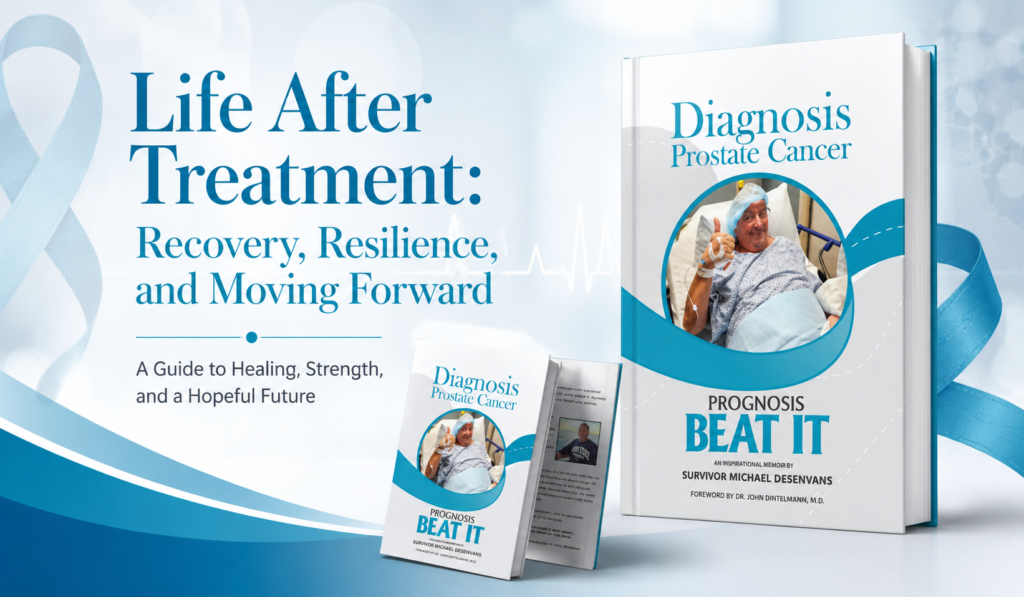

Completing prostate cancer treatment is a significant milestone. For many patients, ringing the bell at the end of treatment, receiving positive test results, or hearing the words “no evidence of disease” represents a hard-earned victory. Yet for many survivors, life after treatment comes with its own set of challenges and opportunities.
Amazon: BEAT IT: Diagnosis Prostate Cancer MARCH 2026
Recovery is about much more than being cancer-free. Rebuilding physical strength, handling prolonged health issues, adjusting to changes, and discovering a new sense of purpose are all part of it. Although each person’s journey may be unique, survivorship is a chapter full of resiliency, development, and hope.
Learning how to navigate life after treatment can help survivors embrace the future with confidence while maintaining a focus on long-term health and well-being.
Recovery Is More Than Being Cancer-Free
Many people assume that once treatment ends, life immediately returns to normal. In reality, recovery is often a gradual process that continues long after the final appointment.
Treatment for cancer can have long-term effects on the body, mind, and emotions. While some survivors are relieved and hopeful, others are unsure of what lies next. After treatment is over, it’s normal to feel conflicted.
Regular appointments and frequent engagement with healthcare providers may be abruptly discontinued by patients. This might be a sign of improvement, but it can also make people feel vulnerable.
Survivors can approach this stage with patience and reasonable expectations when they understand that recovery takes time. Healing is a process, not a single event.
Monitoring for Recurrence
One of the most important aspects of survivorship is ongoing monitoring.
Even after successful treatment, healthcare providers typically recommend regular follow-up appointments, PSA testing, imaging studies, or other evaluations to monitor for signs of recurrence.
For many survivors, these appointments can create anxiety. Waiting for test results may trigger fears that cancer could return. This experience is often referred to as “scanxiety” and is common among cancer survivors.
Although these emotions are reasonable, follow-up care is crucial to preserving health and identifying probable issues as soon as they arise.
Regular monitoring gives healthcare providers important peace of mind and enables them to act fast in the event that further treatment is required.
Rebuilding Confidence and Independence
Cancer treatment can affect confidence in unexpected ways.
Some survivors experience changes in physical abilities, appearance, energy levels, or daily routines. These changes may temporarily affect self-esteem and independence.
Rebuilding confidence often begins with small victories. A sense of normalcy can be restored by going back to regular activities, meeting fitness objectives, handling obligations, or attending social gatherings.
Instead of comparing present abilities to pre-treatment expectations, it is crucial to recognize development. Recovery is rarely a straight line, and every milestone deserves recognition.
Many survivors eventually find strengths they were unaware they had. They often consider the difficulties they faced during treatment as a source of resilience and confidence in the future.
Returning to Hobbies and Passions
One of the most rewarding aspects of recovery is reconnecting with activities that bring joy and fulfillment.
People with cancer often have to put their hobbies, interests, and personal objectives on hold. Survivorship offers an opportunity to gradually return to those meaningful pursuits.
Traveling, gardening, golfing, volunteering, spending time with family, following artistic pursuits, or taking part in outdoor activities are all examples of preferred pastimes that can enhance mental well-being and give one a fresh sense of purpose.
After treatment, many survivors say they have a deeper appreciation for these experiences. Activities that once seemed routine may take on greater significance and bring a stronger sense of gratitude.
Reconnecting with passions reminds survivors that life extends beyond medical appointments and treatment plans.
Embracing the Next Chapter
Life after prostate cancer treatment is not about returning to the person you were before diagnosis. It is about moving forward with the knowledge, strength, and perspective gained through the experience.
Physical healing, continuous monitoring, ensuring long-term side effect management, confidence restoration, and rediscovering enjoyable and meaningful activities are all part of recovery. It also offers opportunities for personal growth, deeper relationships, and meaningful contributions to others.
Even if there can be difficulties along the way, there are plenty of opportunities. Survivors have already demonstrated remarkable courage and resilience by facing cancer and completing treatment.
Illness does not define the next chapter. It is defined by the choices made moving forward, the lessons learned along the way, and the determination to live fully. Survivors can build a future that is not only healthy but also profoundly meaningful by embracing recovery with patience, optimism, and purpose.