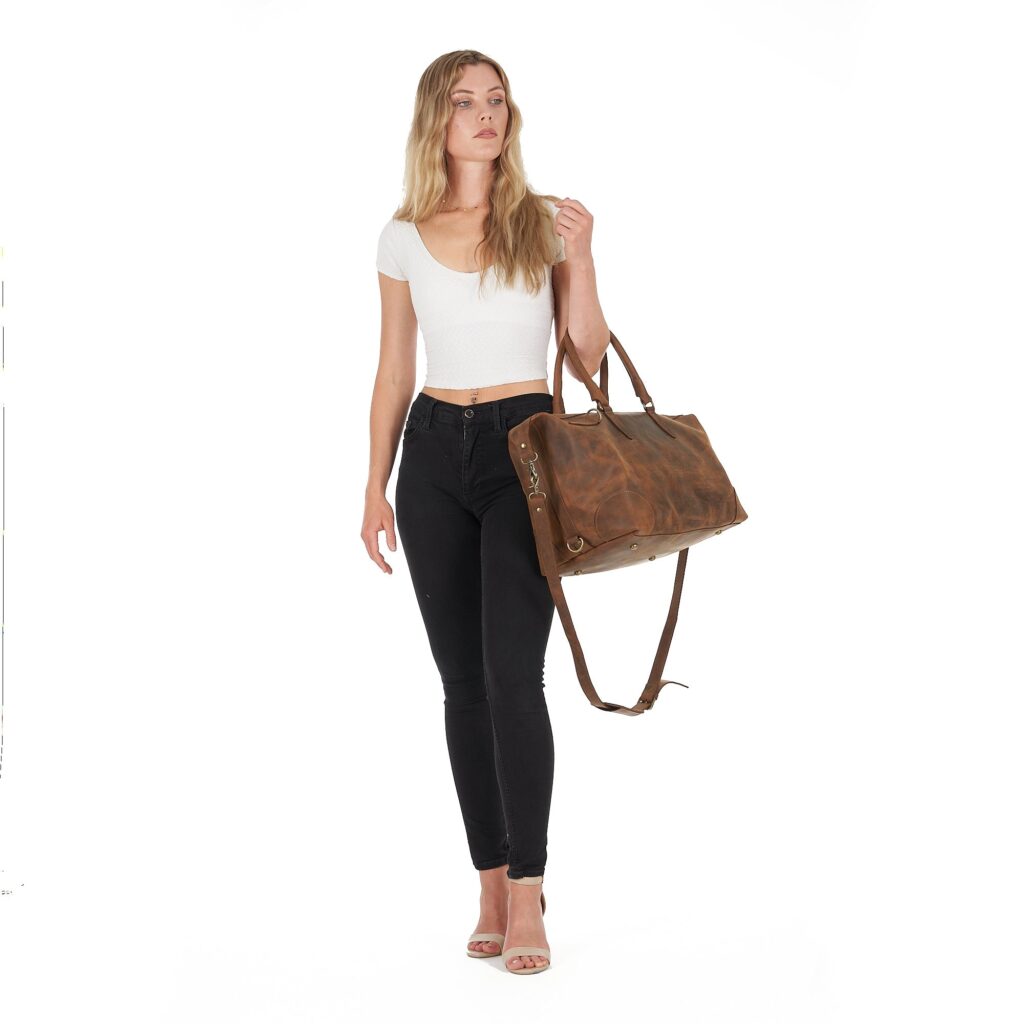

I met a woman at a coffee shop once who showed me her handbag and told me she’d spent three years saving up for it. Three years. I asked her why she waited that long, and she said she kept buying cheaper bags that fell apart or looked worn out after a few months. She was tired of wasting money on stuff that didn’t last. So she saved up, bought one really good leather handbag, and honestly, she said it was the smartest money she’d ever spent.
Here’s the thing though. Most people don’t know what to look for when they’re shopping for leather handbags. They just see something that looks nice and buy it, without really thinking about whether it’s actually good quality. Then they end up disappointed six months later when the leather starts cracking or the stitching comes apart.
That’s exactly why knowing what to check before you buy a leather handbag actually matters. It saves money, saves frustration, and saves you from making purchases you regret.
What Real Leather Actually Feels Like
This is where most people get confused right away. A lot of bags claim to be leather but they’re not really. They’re plastic coated to look like leather, or they’re low-quality leather that feels stiff and artificial.
Real genuine leather handbags feel completely different. When you touch quality leather, it feels soft and natural. It has texture. It feels like something real instead of plastic. If a bag feels plastic-y or waxy when you touch it, it’s probably not real leather or it’s really poor quality.
The best women’s leather handbags actually improve with age. They get softer and more comfortable as you use them. Cheap fake leather just falls apart.
Check The Stitching Carefully
This is something people almost never look at, but it matters way more than they realize. The stitching is literally holding the whole bag together. If the stitching is bad, the bag will fall apart no matter how good the leather is.
Look at the seams carefully. The stitches should be close together and even. They shouldn’t have loose threads hanging out. They shouldn’t look messy or uneven. A high-quality leather handbag will have stitching that looks like someone actually cared about making it right.
If you see loose stitches or uneven seams, walk away. That’s a sign the bag isn’t going to last.
The Lining Tells You A Lot
Most people never look inside their bags, but the lining is actually really important. A good leather handbag has a quality lining that doesn’t feel cheap or flimsy. It should be sewn in properly, not glued in a sloppy way.
Run your hand along the inside of the bag. The lining should feel nice. It shouldn’t have loose fabric or torn areas. If the inside looks like someone just threw it together, the outside probably isn’t much better either.
Quality matters everywhere on the bag, not just where people can see it.
The Hardware Should Be Solid
Those metal parts on your bag, the clasp or the D-rings or whatever hardware is there, that stuff needs to be good quality too. Cheap hardware gets all corroded and tarnished really fast. It can also get loose and fall off.
Feel the weight of the hardware. Real quality is heavier. It feels substantial. Cheap hardware feels light and flimsy. Also look at it closely. Is the finish even? Does it look like it was put together carefully? Or does it look like someone just glued something on and called it done.
The Shape Should Hold Up
Here’s something a lot of people don’t think about. A good women’s leather handbags should hold its shape. Not perfectly rigid, but it shouldn’t just collapse or go all floppy when you set it down.
If you’re looking at a bag in the store, put it on a table and step back. Does it look like it’s going to stay standing, or does it look like it’s just deflating? A bag with decent structure inside and good quality leather will hold itself up pretty well.
The Color Should Be Even
Look at the leather carefully. Is the color even across the whole bag? Or are there blotchy spots or uneven areas? High-quality leather handbags have consistent color throughout.
Uneven coloring usually means either poor quality leather or poor quality dyeing. Either way, it’s not a good sign.
Feel The Leather Weight
Hold the bag in your hands. Does it feel substantial? Real leather has weight to it. It feels like something real and solid. Fake leather or cheap leather feels light and hollow.
This is probably one of the easiest ways to tell if what you’re holding is actually good quality or not.
Check For Flexibility
Bend the leather gently with your hand. Quality leather should be flexible, and move smoothly. It shouldn’t feel stiff and plastic. It should feel like genuine material, that can move.
If the leather feels like it’s going to crack, when you bend it, that’s not good leather. Good leather is supple and flexible.
Ask About The Source
If you’re buying from a reputable seller, they should be able to tell you where the leather comes from. What kind of leather is it? How was it tanned? Where was the bag made? If they can’t answer these questions, that’s usually a red flag.
Real companies that care about quality genuine leather handbags are happy to talk about where their materials come from and how they make their products.
Think About Functionality
Besides the quality stuff, think about whether the bag actually works for your life. Does it have enough pockets? Is it the right size for what you carry? Does it have a shoulder strap if you need one? Can you actually use this bag in your daily life, or is it just going to sit in your closet?
The best leather handbag in the world doesn’t help you if it doesn’t actually fit your needs.
Final Thoughts
Buying a good leather handbag from a good source like Melbourne Leather Co. can be an investment. It’s okay to spend money on something that’s actually going to last. And honestly, a really good bag lasts for years and years. It becomes something you love using instead of something you regret buying.
Before you buy, check the leather, look at the stitching, feel the weight, and ask questions about where it comes from. These things take just a few minutes but they completely change whether you end up with a bag that lasts or one that falls apart.