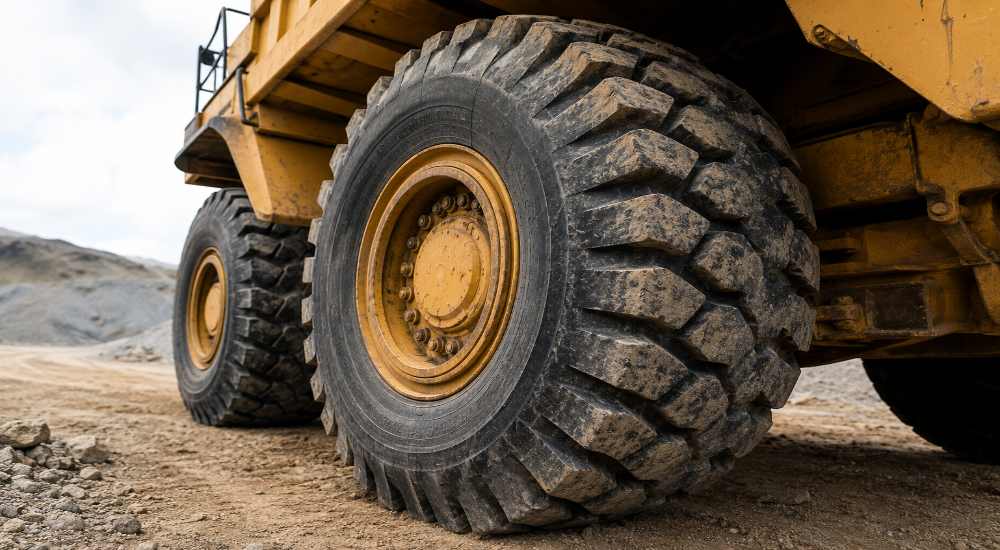

Latin America Off-Road OTR Tire demand is gaining significant attention as mining operations and infrastructure activities continue to expand across the region. Heavy-duty vehicles used in construction, agriculture, and mineral extraction rely heavily on durable off-road tires to operate efficiently in challenging environments. Countries such as Brazil, Chile, Peru, and Mexico are witnessing increasing investments in transportation networks, industrial projects, and resource extraction activities. These developments are creating steady demand for specialized tires capable of handling rough terrain, extreme loads, and continuous operational pressure.
Mining Activities Continue to Support Equipment Tire Usage
Mining remains one of the strongest contributors to the demand for off-road OTR tires across Latin America. The region holds substantial reserves of copper, lithium, iron ore, gold, and other valuable minerals. Large-scale mining projects require heavy machinery such as dump trucks, loaders, graders, and excavators that depend on highly durable tire systems for daily operations.
Countries like Chile and Peru continue to strengthen their positions in global copper production, while Brazil remains a major producer of iron ore. These operations often take place in difficult environments that expose equipment tires to sharp rocks, uneven surfaces, and high temperatures. As a result, mining companies increasingly focus on tire quality, durability, and performance efficiency to reduce downtime and improve productivity.
The use of advanced tire technologies, including heat-resistant compounds and automated tire monitoring systems, is also becoming more common. These innovations help operators improve equipment performance while reducing maintenance costs and operational risks in remote mining locations.
Infrastructure Investments Are Expanding Heavy Equipment Operations
Large infrastructure projects across Latin America are creating additional opportunities for off-road OTR tire applications. Governments in several countries are investing in highways, rail systems, ports, airports, and urban construction projects to improve regional connectivity and economic activity. Heavy construction equipment used in these projects requires reliable tires capable of operating under harsh conditions.
According to a study by MarkNtel Advisors, Latin America Off-Road OTR Tire adoption is expected to benefit from ongoing investments in mining operations and infrastructure development across multiple economies in the region. Construction companies are increasingly prioritizing equipment efficiency and operational durability, which directly supports demand for advanced OTR tire solutions.
Bulldozers, cranes, backhoes, and wheel loaders frequently operate in muddy, rocky, or unstable environments where standard tires may fail quickly. This has encouraged contractors to adopt specialized tire designs with improved traction, stronger sidewalls, and enhanced wear resistance. The increasing use of modern construction machinery is expected to support long-term tire replacement demand as well.
Construction and Agricultural Equipment Depend on Reliable Tire Systems
Beyond mining and infrastructure, agricultural activities also contribute to the use of off-road OTR tires across Latin America. Agriculture remains a major economic sector in countries such as Argentina and Brazil, where tractors, harvesters, and irrigation equipment are used extensively throughout the year.
Modern agricultural machinery requires tires that can support heavy loads while minimizing soil damage and improving fuel efficiency. Many equipment operators are shifting toward radial tire designs because they provide better traction and longer operational life compared to conventional alternatives.
The increasing mechanization of farming activities has further strengthened demand for durable tire systems that can perform efficiently across large agricultural areas. Equipment downtime during planting or harvesting seasons can lead to operational losses, making tire reliability an important factor for agricultural businesses.
According to the Food and Agriculture Organization, agricultural modernization and mechanization continue to influence equipment adoption across developing regions, including Latin America.
Regional Development Projects Are Strengthening Equipment Demand
Several Latin American governments are focusing on regional development projects to improve logistics and industrial productivity. Road expansion, energy infrastructure, and public transportation projects are increasing the deployment of heavy machinery across urban and rural areas.
Brazil continues to invest in transportation and logistics infrastructure to support trade and industrial activities. Mexico is also expanding industrial corridors and manufacturing zones, which require significant construction equipment deployment. These activities contribute to steady demand for replacement tires and aftermarket services.
The expansion of lithium mining operations in countries such as Argentina and Chile is also influencing the regional equipment landscape. Lithium extraction projects often require continuous use of heavy-duty vehicles in demanding environmental conditions, increasing the importance of tire durability and maintenance efficiency.
According to the World Bank, infrastructure investment plays a critical role in supporting economic development and improving industrial productivity in emerging economies.
Operational Challenges Continue to Influence Tire Performance Needs
Despite growing demand, the off-road OTR tire segment continues to face several operational challenges. Extreme weather conditions, rough terrain, and fluctuating raw material costs can affect tire manufacturing and long-term equipment performance. In remote mining regions, replacing damaged tires can also become expensive and time-consuming.
Fleet operators are increasingly adopting predictive maintenance practices and tire pressure monitoring systems to reduce unexpected failures. Proper tire management helps improve operational efficiency while extending the lifespan of expensive equipment tires.
Environmental concerns are also influencing tire manufacturers to explore more sustainable production methods. Recycling programs, fuel-efficient tire designs, and reduced rolling resistance technologies are gradually becoming important considerations within the sector.
According to the International Energy Agency, sustainable industrial practices and energy-efficient technologies are becoming increasingly important across heavy industrial operations worldwide.
Key Companies Operating Across the OTR Tire Segment
Several global tire manufacturers continue to strengthen their presence across Latin America to support rising equipment demand. Companies such as Bridgestone, Michelin, Goodyear, Continental, Yokohama, and BKT are actively involved in supplying off-road tire solutions for mining, agriculture, and construction applications.
These companies are focusing on product durability, improved tread technology, and digital monitoring capabilities to meet the evolving operational requirements of heavy equipment operators. Partnerships with mining contractors and construction firms also remain important for expanding regional distribution networks and aftermarket support services.
Latin America Off-Road OTR Tire demand is expected to remain closely connected to infrastructure modernization, mining expansion, and industrial equipment deployment across the region. As countries continue investing in transportation systems, energy projects, and resource extraction activities, the need for durable and efficient off-road tire solutions may continue to increase. Advances in tire technology, sustainability initiatives, and predictive maintenance systems could further shape how heavy equipment operators manage operational efficiency in the years ahead.