
Kidney stones are a common yet painful health condition affecting millions of people worldwide. These hard mineral deposits can develop in the kidneys and travel through the urinary tract, causing severe discomfort, urinary problems, and even complications if left untreated. Fortunately, medical advancements have introduced effective treatment options, and one of the most widely recommended methods is lithotripsy treatment.
Lithotripsy is a non-invasive or minimally invasive procedure designed to break kidney stones into smaller fragments, allowing them to pass naturally through the urinary tract. For patients suffering from recurring kidney stones or severe pain, lithotripsy offers fast relief with minimal downtime. In this blog, we will explore what lithotripsy is, how it works, its benefits, types, preparation, recovery, and who may need this treatment.
What Are Kidney Stones?
Kidney stones are hard deposits made of minerals and salts that form inside the kidneys. They can vary in size, from tiny grains to larger stones that may block the urinary tract. Common causes of kidney stones include:
- Dehydration
- High salt intake
- Excess calcium or uric acid in urine
- Obesity
- Family history of kidney stones
- Certain medical conditions and medications
Symptoms of kidney stones may include:
- Severe pain in the back or side
- Pain during urination
- Blood in urine
- Frequent urge to urinate
- Nausea and vomiting
- Fever or chills in case of infection
Small stones may pass naturally with hydration and medication, but larger stones often require medical intervention such as lithotripsy treatment.
What Is Lithotripsy Treatment?
Lithotripsy is a medical procedure used to break kidney stones into smaller pieces using shock waves, lasers, or ultrasonic energy. Once the stones are fragmented, they can pass more easily through urine.
The term “lithotripsy” comes from Greek words meaning “stone crushing.” It is considered one of the safest and most effective treatments for kidney stones, especially when the stones are too large to pass naturally.
Types of Lithotripsy Treatment
There are different types of lithotripsy procedures depending on the size, location, and type of kidney stone.
1. Extracorporeal Shock Wave Lithotripsy (ESWL)
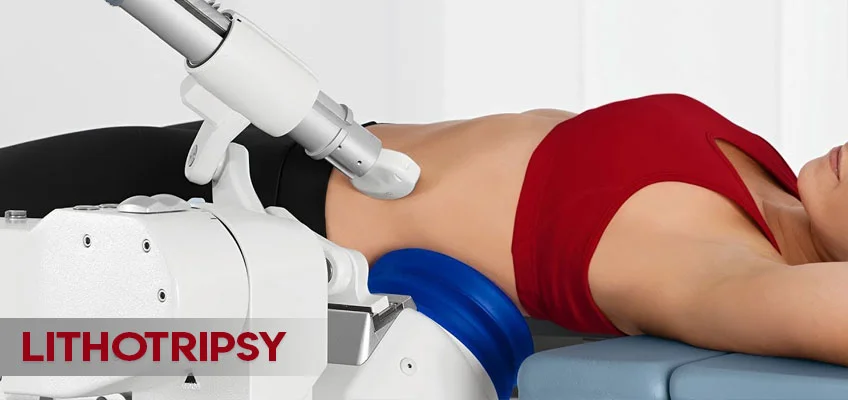
ESWL is the most common form of lithotripsy. In this procedure, shock waves are directed toward the kidney stones from outside the body. These waves break the stones into smaller fragments without making any surgical incision.
Benefits of ESWL:
- Non-invasive procedure
- Minimal recovery time
- No major surgery required
- Usually performed on an outpatient basis
ESWL is most effective for small to medium-sized kidney stones.
2. Laser Lithotripsy
Laser lithotripsy uses a thin instrument called a ureteroscope, which is inserted through the urinary tract to reach the stone. A laser is then used to break the stone into tiny pieces.
Advantages:
- Highly precise treatment
- Effective for hard or larger stones
- Suitable for stones located in the ureter
This method is minimally invasive and often provides immediate relief.
3. Ultrasonic Lithotripsy
In ultrasonic lithotripsy, ultrasonic vibrations are used to break stones into smaller fragments. This method is often combined with other surgical procedures for larger kidney stones.
Who Needs Lithotripsy?
Doctors may recommend lithotripsy if:
- Kidney stones are too large to pass naturally
- Severe pain persists
- Stones cause urinary blockage
- There is repeated urinary tract infection
- Kidney function is affected
- Other conservative treatments fail
The choice of lithotripsy depends on several factors, including stone size, location, patient health, and medical history.
How to Prepare for Lithotripsy Treatment
Before the procedure, your doctor may perform several tests, including:
- Blood tests
- Urine tests
- Ultrasound or CT scan
- X-rays
Patients are usually advised to:
- Avoid eating or drinking for several hours before treatment
- Stop certain medications such as blood thinners
- Inform the doctor about allergies or existing medical conditions
Following medical instructions carefully helps ensure a smooth procedure and recovery.
For patients searching for the best lithotripsy treatment in Bangalore, modern healthcare facilities and advanced urology care have made treatment safer, faster, and more comfortable than ever before. Hospitals and specialty centers like SSUrocare Hospital are helping patients receive advanced kidney stone care with minimally invasive techniques and experienced specialists.
What Happens During the Procedure?
The lithotripsy process varies depending on the treatment type.
During ESWL:
- The patient lies on a treatment table.
- Shock waves are directed toward the stone using imaging guidance.
- The procedure usually lasts 45–60 minutes.
- Mild sedation or anesthesia may be given.
During Laser Lithotripsy:
- A ureteroscope is inserted through the urinary tract.
- The laser breaks the stone into smaller particles.
- Stone fragments may be removed or allowed to pass naturally.
Most patients can return home the same day.
Recovery After Lithotripsy
Recovery from lithotripsy is generally quick, especially for non-invasive procedures like ESWL.
Common Recovery Experiences:
- Mild discomfort or soreness
- Blood in urine for a few days
- Passing stone fragments in urine
- Frequent urination
Doctors may recommend:
- Drinking plenty of water
- Taking prescribed medications
- Avoiding strenuous activity temporarily
Most patients recover within a few days, although complete stone passage may take several weeks.
Benefits of Lithotripsy Treatment
Lithotripsy has become a preferred treatment option because of its many advantages.
Key Benefits Include:
- Non-surgical or minimally invasive
- Reduced hospital stay
- Faster recovery time
- Effective stone removal
- Lower risk of complications
- Minimal scarring
For many patients, lithotripsy offers relief without the risks associated with traditional surgery.
Are There Any Risks?
Like any medical procedure, lithotripsy may involve some risks, although serious complications are rare.
Possible side effects include:
- Bleeding around the kidney
- Infection
- Incomplete stone removal
- Temporary blockage from stone fragments
- Mild pain during recovery
Choosing an experienced urologist and following post-treatment care instructions can significantly reduce these risks.
Tips to Prevent Kidney Stones
Preventing kidney stones is important, especially for individuals with a history of recurrence.
Prevention Tips:
- Drink plenty of water daily
- Reduce salt intake
- Limit sugary beverages
- Maintain a balanced diet
- Avoid excessive animal protein
- Follow medical advice for underlying conditions
Regular health checkups and lifestyle changes can help lower the risk of future stone formation.
Conclusion
Kidney stones can be extremely painful and disruptive, but modern medical treatments like lithotripsy provide safe and effective relief. Whether through shock waves, laser technology, or ultrasonic methods, lithotripsy helps break down stones without the need for major surgery.
Understanding the procedure, recovery process, and preventive measures can help patients feel more confident about their treatment journey. If you experience symptoms of kidney stones, consulting a healthcare professional early can lead to timely diagnosis and appropriate care.
Lithotripsy continues to transform kidney stone treatment by offering faster recovery, less discomfort, and improved patient outcomes.
Original Sources : – Kidney Stone Relief: Understanding Lithotripsy Treatment