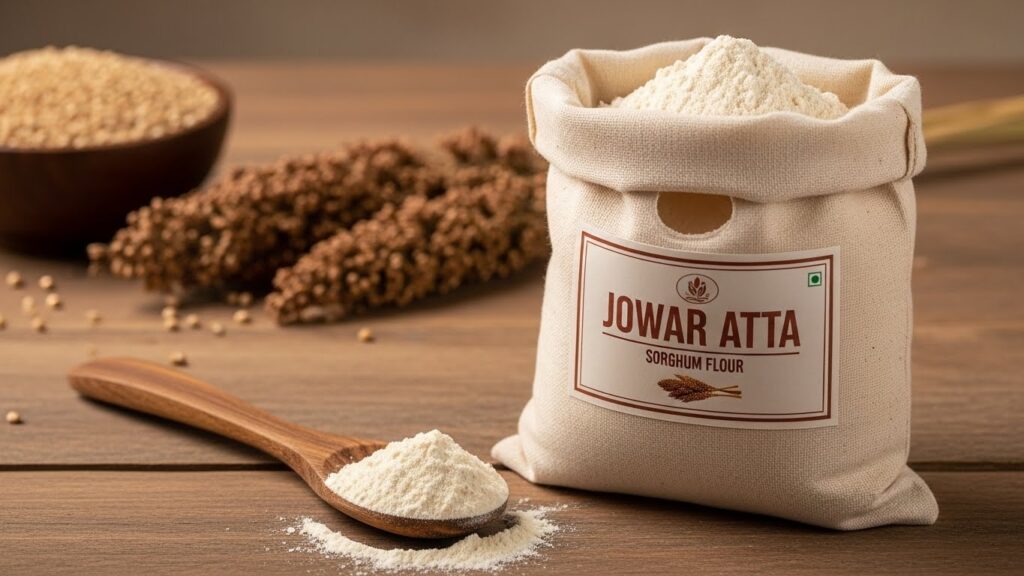

Walk into any traditional Indian kitchen and you’ll find rotis made from jowar — a grain that has quietly fed generations across Maharashtra, Karnataka, and Rajasthan. Today, as more families look beyond refined wheat flour for healthier, cleaner options, Jowar Atta is making a well-deserved comeback.
But not all jowar flour is the same. The way it is milled, the freshness at the time of grinding, and whether additives are used — all of these factors change the flavour, texture, and nutrition you actually get. This blog covers everything: what jowar atta is, why its nutrition profile is genuinely impressive, how to use it every day, and why stone-milled makes a difference that you can taste in the very first roti.
1. What Is Jowar Atta?
Jowar, known scientifically as Sorghum bicolor, is one of the oldest cultivated grains in the world. In India it has been grown for over 3,000 years, long before wheat became the staple of choice. The grain is milled into a fine powder to make jowar atta — also called sorghum flour in the international context.
Unlike wheat, jowar contains no gluten. This makes jowar atta a naturally gluten-free flour that is suitable for people with celiac disease, gluten sensitivity, or anyone who simply wants to reduce gluten in their daily diet. It has a mildly earthy, slightly nutty flavour and produces rotis, bhakris, and flatbreads that are soft, filling, and deeply satisfying.
Jowar grows well in dry regions with little rainfall, which makes it a climate-resilient crop. It requires far less water than wheat or rice, making it not just a healthy choice for your body but also a responsible one for the environment.
2. Nutritional Profile of Jowar Flour (Per 100g)
Jowar atta is not just popular because of tradition — it backs that popularity with a strong nutritional composition. Here is a breakdown of what 100 grams of jowar flour typically provides:
NutrientAmount (per 100g)
Why It MattersCalories~349 kcal
Moderate energy without empty calories
Protein~11g
Supports muscle repair and satiety
Dietary Fibre~7g
Aids digestion and gut health
Carbohydrates~72g
Complex carbs for sustained energy
Fat~3.5g
Mostly unsaturated, heart-friendly
Iron~4.1mgEssential for blood health
Calcium~25mg
Bone strength support
Phosphorus~287mg
Energy metabolism and cellular repair
Magnesium~165mg
Muscle function and nerve health
Potassium~350mg
Heart health and blood pressure balance
Manganese~1.6mg
Antioxidant protection
Gluten
Naturally gluten-free grain
The combination of protein, fibre, and a low glycaemic index makes jowar flour a genuinely nutritious choice for everyday meals — not just a trendy substitute.
3. Seven Health Benefits of Jowar Atta
Naturally Gluten-Free
Jowar atta contains zero gluten, making it a safe and nutritious option for those managing celiac disease or gluten sensitivity.
Supports Blood Sugar Balance
With a low glycaemic index, jowar flour digests slowly, helping prevent sharp blood sugar spikes after meals — important for diabetics and pre-diabetics.
Good for Heart Health
High fibre content and the presence of antioxidants like policosanols help reduce bad cholesterol levels and support overall cardiovascular health.
Improves Digestion
Seven grams of dietary fibre per 100g makes jowar flour excellent for regular bowel movement, reducing bloating and supporting a healthy gut microbiome.
Supports Weight Management
High fibre and protein keep you fuller for longer, reducing the urge to snack between meals — helpful for anyone managing their weight mindfully.
Strengthens Bones
Jowar atta is a notable source of magnesium, phosphorus, and calcium — three minerals that play a key role in bone density and long-term skeletal health.
Bonus: Rich in Antioxidants
Jowar contains tannins and phenolic compounds that act as antioxidants in the body. These compounds help neutralise free radicals, reducing oxidative stress that is linked to chronic inflammation, ageing, and several lifestyle diseases. Dark-variety jowar, in particular, has a higher antioxidant concentration than lighter varieties.
4. Why Stone-Milled Jowar Atta Is Different
Most flours are milled by machine at high speeds — the heat generated in the process strips away a significant portion of the grain’s natural oils, fibre, and micronutrients before the flour ever reaches your kitchen.
Stone milling is the traditional method — heavy circular stones grind the grain slowly, generating almost no heat. This low-heat process means the natural oils in the grain remain intact, the bran and germ are preserved, and the flour retains its full nutritional value. The result is a flour that smells earthy and fresh, cooks into softer rotis, and has a distinctly fuller flavour compared to commercially milled alternatives.
Milled After You Order
At 10on10Foods, stone-milled Jowar Atta is ground only after your order is placed — not weeks in advance sitting in a warehouse. This on-demand milling approach means your flour arrives at peak freshness, without any preservatives to extend its shelf life artificially. The aroma when you open the pack tells the story — it smells like the grain, not like processed flour.
No Additives, No Compromise
Commercial flour brands often add anti-caking agents, bleaching compounds, or flow enhancers to improve shelf life and appearance. Stone-milled jowar atta from 10on10Foods contains one ingredient: sorghum. Nothing else — no chemicals, no artificial additives, no hidden ingredients.
5. Jowar Atta vs Regular Wheat Flour
Regular Wheat Flour
Jowar Atta
✗ Contains gluten
✓ Naturally gluten-free
✗ High glycaemic index
✓ Low glycaemic index
✗ Lower fibre (~2.5g)
✓ Higher fibre (~7g)
✗ Less iron
✓ Richer in iron
✗ Heavily processed variants common
✓ Stone-milled, preservative-free
Good for binding
✓ Lighter on digestion
This comparison is not about declaring wheat flour “bad” — wheat has its place in a balanced diet. The point is that jowar atta offers a genuinely superior nutritional profile for daily use, especially for families looking to manage blood sugar, support digestion, or reduce gluten intake without sacrificing taste.
6. How to Use Jowar Atta in Daily Cooking
Jowar atta is one of the most versatile flours in the Indian kitchen. Once you understand how to work with its texture, it becomes a natural part of your daily cooking routine.
- Jowar Roti (Bhakri)The classic preparation. Use warm water to knead the dough and roll out thick rotis. Jowar rotis are best eaten fresh and warm — they don’t stay soft as long as wheat rotis, but the flavour is far more satisfying.
- Jowar Paratha Stuff with spiced potato, paneer, or mixed greens for a wholesome meal. Mix jowar atta with a small amount of whole wheat flour if you need more elasticity for rolling.
- Jowar Cheela A quick savoury pancake made by mixing jowar flour with water, grated vegetables, and spices. Ready in under 10 minutes — ideal for busy mornings.
- Jowar Porridge (Ambali)A traditional Maharashtrian preparation — jowar flour simmered in water to a smooth, creamy consistency. Lightly seasoned and deeply nourishing, especially for children and elderly family members.
- Jowar Dhokla Snacks Jowar flour works beautifully in steamed dhokla, chakli, and even baked crackers. Its mild earthy taste complements both spicy and subtle flavour profiles.
- Flour Blending If you’re new to jowar atta, start by blending it in a 50:50 ratio with whole wheat flour. Gradually increase the jowar proportion as your family adjusts to the taste and texture.
Tips for Getting the Best Results
Always use warm or hot water to knead jowar dough — it helps bind the flour and makes rolling easier. Stone-milled jowar atta, being fresher and richer in natural oils, tends to produce softer rotis than commercial variants. Keep the dough covered while you roll each roti to prevent it from drying out.
7. Who Should Eat Jowar Atta?
Jowar atta is one of those rare foods that benefits a wide range of people without needing special preparation or medical guidance. Here is a quick overview of who gains the most:
People with Diabetes or Pre-Diabetes
The low glycaemic index and high fibre content of jowar flour make it one of the best flour choices for managing blood sugar. The complex carbohydrates digest slowly, providing sustained energy without the sharp post-meal glucose spikes associated with refined wheat flour.
Those with Celiac Disease or Gluten Sensitivity
Jowar is inherently gluten-free, making it safe for people who must avoid gluten entirely. Unlike some other gluten-free flours that taste bland or gummy, jowar atta makes rotis and flatbreads that genuinely taste good.
Children and Elderly Family Members
The mineral density of jowar atta — particularly its iron, magnesium, and phosphorus content — makes it an excellent flour for growing children and older adults who benefit from nutrient-dense, easily digestible meals.
Anyone Trying to Eat Healthier
You don’t need a medical reason to switch to jowar atta. Higher fibre, more protein, better mineral density, and no gluten — these are benefits that support everyday health for anyone. If your family eats rotis daily, making the switch to stone-milled jowar flour is one of the simplest upgrades you can make to your regular diet.
8. Frequently Asked Questions
Is jowar atta good for weight loss?
Yes, jowar atta supports weight management in a meaningful way. Its high fibre content (approximately 7g per 100g) promotes satiety — meaning you feel full after a meal and are less likely to snack unnecessarily. It also has a low glycaemic index, which prevents the insulin spikes that encourage fat storage. Replacing refined wheat flour with jowar atta in your daily rotis is a simple, sustainable dietary change for weight management.
Can jowar atta be eaten every day?
Absolutely. Jowar has been a staple grain in several Indian states for thousands of years. It is light on the stomach, easy to digest, and provides a well-rounded nutritional profile that supports daily health. Whether you eat it as rotis, bhakris, or porridge, daily consumption of jowar atta is safe and beneficial for most people.
What is the difference between jowar atta and maize (corn) flour?
While both are gluten-free, jowar atta and corn flour are quite different. Jowar has a higher protein content and a lower glycaemic index than corn flour. Jowar rotis are also lighter and easier on digestion. Corn flour tends to be used for specific preparations, while jowar atta works across a wider range of everyday dishes including rotis, parathas, and porridge.
Why does freshly stone-milled jowar atta taste different?
Freshly stone-milled flour retains natural oils present in the grain. These oils carry the true flavour of jowar — earthy, slightly nutty, and deeply aromatic. When flour sits in storage for weeks or months, these oils oxidise and the flavour becomes flat or slightly rancid. Flour milled to order and consumed fresh has a richness that commercially packed flour simply cannot replicate.
Does jowar atta need to be stored differently?
Because stone-milled jowar atta retains its natural oils and is free from preservatives, it is best consumed within 30 to 45 days of milling. Store it in an airtight container in a cool, dry place away from direct sunlight. In warm, humid climates like India, keeping it in the refrigerator after opening can extend its freshness.
Is jowar atta suitable for children?
Yes, jowar atta is an excellent flour choice for children. It provides iron for healthy blood development, calcium and magnesium for growing bones, and protein for muscle and tissue growth. The naturally mild, earthy flavour is well-accepted by most children, especially when used in soft rotis or cheelas.
The Bottom Line
Jowar atta is not a health trend — it is a return to something that Indian kitchens have known for centuries. The grain is nutritionally dense, naturally gluten-free, and gentle on the digestive system. When it is stone-milled fresh without additives, it also happens to taste genuinely delicious.
The question is not whether jowar flour is worth eating. The question is whether the jowar flour you buy gives you all of those benefits — or whether it has sat in storage long enough for most of them to quietly disappear. That is exactly the difference that freshness and traditional stone milling make.
If you have been curious about making the switch, this is the place to start.