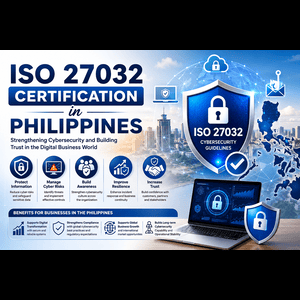

As businesses in the Philippines continue expanding their digital operations, cybersecurity has become a major concern across industries such as banking, healthcare, e-commerce, BPO, telecommunications, education, and government services. Organizations are increasingly relying on cloud platforms, remote access systems, online payment technologies, and interconnected digital infrastructure, which also increases exposure to cyber threats, ransomware attacks, phishing attempts, and data breaches.
In this evolving digital environment, ISO 27032 has gained importance as an international cybersecurity guideline that helps organizations strengthen cybersecurity practices, improve cyber resilience, and manage online security risks more effectively.
What is ISO 27032?
ISO 27032 is an internationally recognized cybersecurity guideline that provides guidance for improving cybersecurity, protecting digital information, and securing cyberspace interactions. The standard focuses on collaboration between organizations, users, and systems to reduce cybersecurity risks and improve the protection of sensitive information.
Unlike traditional information security standards that mainly focus on internal controls, ISO 27032 emphasizes broader cybersecurity risks such as:
- Cyber attacks
- Malware and ransomware
- Phishing and social engineering
- Data breaches
- Online fraud
- Network vulnerabilities
- Internet-based threats
The framework supports organizations in developing stronger cybersecurity awareness, incident response practices, and risk management strategies.
Growing Cybersecurity Challenges in the Philippines
The Philippines has experienced rapid digital transformation in recent years, especially in sectors such as fintech, online retail, healthcare technology, and outsourcing services. While digital growth creates business opportunities, it also increases cybersecurity risks for organizations handling customer information and critical business data.
Several industry reports and cybersecurity monitoring agencies have highlighted increasing concerns related to:
- Phishing attacks targeting businesses and consumers
- Ransomware incidents affecting operational systems
- Data privacy and customer information protection
- Third-party vendor security risks
- Weak cybersecurity awareness among employees
- Cloud security management challenges
- Cyber threats targeting small and medium-sized businesses
As organizations adopt hybrid work environments and cloud-based platforms, cybersecurity governance has become an important business priority.
Why ISO 27032 Matters for Businesses
ISO 27032 helps organizations establish structured cybersecurity practices that support long-term digital security and operational resilience. The framework encourages businesses to identify cyber risks, improve coordination between stakeholders, and strengthen cybersecurity awareness across the organization.
Key areas supported by ISO 27032 include:
Cyber Risk Management
Organizations can identify potential cybersecurity threats and implement preventive measures to reduce risks to business operations and sensitive data.
Improved Incident Response
The standard encourages organizations to establish procedures for detecting, responding to, and recovering from cybersecurity incidents more effectively.
Data Protection and Privacy
Businesses handling customer data, financial records, and confidential information can strengthen protection measures and improve trust among stakeholders.
Security Awareness
ISO 27032 Registration in Philippines – Human error remains one of the leading causes of cybersecurity incidents. ISO 27032 supports employee awareness and cybersecurity education initiatives.
Support for Digital Business Operations
Organizations using e-commerce systems, cloud technologies, online payment platforms, and remote working environments can improve cybersecurity governance and operational stability.
Industry Relevance in the Philippines
ISO 27032 is becoming increasingly relevant for industries that rely heavily on digital systems and online services, including:
- Banking and financial services
- Healthcare and medical technology
- IT and software companies
- E-commerce businesses
- Business Process Outsourcing (BPO)
- Educational institutions
- Telecommunications providers
- Government and public sector organizations
Many businesses are also integrating ISO 27032 practices alongside information security management systems such as ISO 27001 to build stronger cybersecurity frameworks.
Current Cybersecurity Trends
Recent cybersecurity developments across Southeast Asia and the Philippines highlight several emerging focus areas:
- Increased adoption of cloud security controls
- Stronger third-party cybersecurity assessments
- Greater emphasis on ransomware preparedness
- Multi-factor authentication implementation
- Cybersecurity awareness training for employees
- AI-driven threat detection systems
- Protection of remote and hybrid work environments
Organizations are also paying closer attention to regulatory compliance, customer privacy expectations, and cybersecurity governance as digital ecosystems continue to expand.
Conclusion
ISO 27032 Certification Services in Philippines– ISO 27032 plays an important role in helping businesses in the Philippines improve cybersecurity awareness, manage digital risks, and strengthen protection against evolving cyber threats. As cyberattacks continue to affect organizations of all sizes, adopting structured cybersecurity guidelines can support operational resilience, customer trust, and long-term business sustainability in an increasingly connected digital environment.