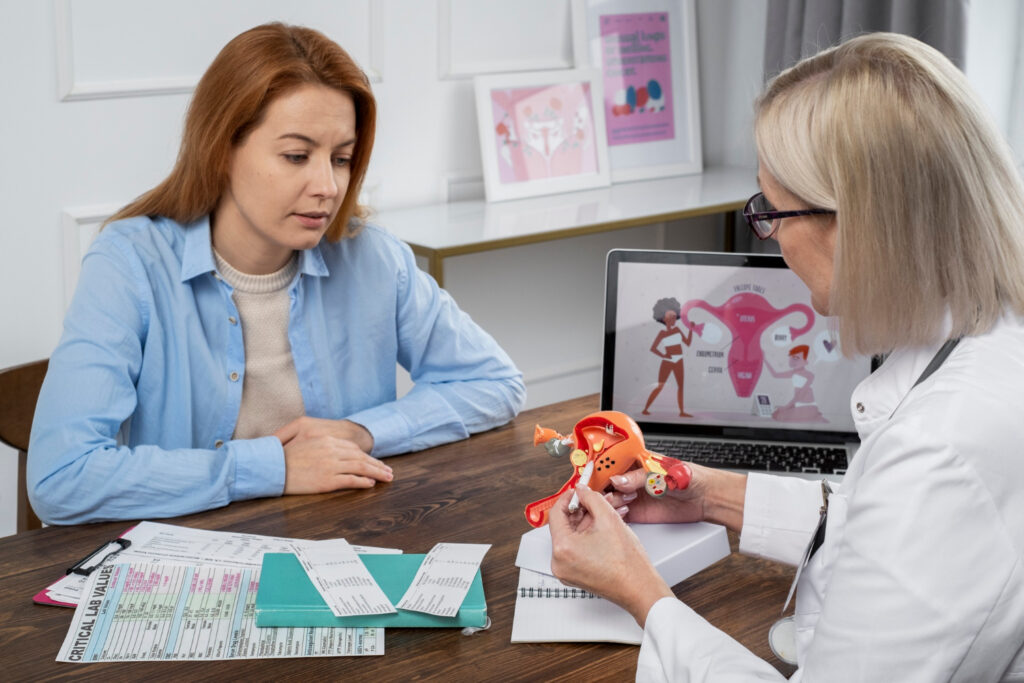

You’ve already been through one IVF cycle, or maybe more. You followed every step, stayed hopeful, and still didn’t get the result you were waiting for. Now you’re standing at a difficult crossroads: try IVF again, or consider something different. Is that relatable?
Okay, so this is where ovarian rejuvenation treatment often comes into the conversation. It’s not a miracle solution, and it’s not for everyone, but for some women, it offers a different path worth exploring before committing to another cycle.
Let’s break it down in a way that actually helps you decide.
What Is Ovarian Rejuvenation Treatment?
Ovarian rejuvenation is a newer fertility option for women whose ovaries aren’t responding well or who have a lower egg reserve. The most common method uses PRP (platelet-rich plasma). In simple terms, a small sample of your blood is processed to concentrate platelets, which contain growth factors, and then placed into the ovaries.
The goal?
To potentially improve the ovarian environment and stimulate follicular activity.
It’s important to understand this clearly:
- It does not “reverse aging.”
- It does not guarantee pregnancy.
- It is still being studied.
But it may help improve how your ovaries respond, especially in certain cases.
Why Women Consider It Before Another IVF Cycle
After a failed IVF cycle, most patients aren’t just looking for “another try.” They’re asking:
- Will the outcome be different this time?
- Is my ovarian reserve too low?
- Am I just repeating the same process, expecting a different result?
That’s exactly why PRP for ovarian rejuvenation is being considered as a step before repeating IVF.
It may help when:
- AMH levels are low
- Previous cycles produced few eggs
- Egg quality is a concern
- Ovaries showed a poor response to stimulation
Instead of going straight into another cycle with the same baseline, the idea is to optimize the ovarian environment first.
What the Research Actually Says
Let’s keep this real, because this is where most people get misled. Research on ovarian rejuvenation treatment is ongoing. Some studies suggest:
- Improved AMH levels in certain patients
- Increased antral follicle count
- Better ovarian response during IVF stimulation
However:
- Results are inconsistent
- Not all patients benefit
- Strong evidence for improved live birth rates is still limited
What does this imply?
- It’s not a guaranteed fix.
- But it may improve your starting point before IVF.
The key is not asking “Does it work?” The better question is: “Could it improve my specific situation?”
Who May Benefit the Most?
Not every patient is a good candidate, and this is where clarity matters. You may be a stronger candidate if you:
- Have low AMH or diminished ovarian reserve
- Experienced poor response in previous IVF cycles
- Are dealing with early ovarian aging
- Are trying to improve egg yield before another IVF attempt
You may not benefit as much if:
- Ovarian function is already completely inactive
- There are other dominant fertility factors (like uterine issues or severe male factor infertility)
A proper evaluation always matters more than assumptions.
How PRP for Ovarian Rejuvenation Fits Into Your IVF Plan
This isn’t an “either-or” decision. In most cases, PRP for ovarian rejuvenation is used alongside IVF, not instead of it.
Here’s how it typically fits:
- PRP procedure is done first
- You wait for a few weeks to months
- Ovarian response is monitored
- IVF cycle is planned based on updated markers
The idea is simple:
Give your ovaries a better chance before stimulation begins. For some women, even a small improvement in response can make a meaningful difference in outcomes.
What to Expect From the Procedure?
One of the reasons this treatment is gaining attention is that it’s relatively straightforward.
- Blood is drawn (similar to a routine test)
- Platelets are separated using specialized equipment
- PRP is injected into the ovaries under ultrasound guidance
- Typically done as an outpatient procedure
Most patients describe it as comparable to an egg retrieval process in terms of experience. Recovery is usually quick, and normal activities can often resume shortly after.
Benefits You Get with PRP for Ovarian Rejuvenation
You’ll often see broad claims online, but here’s what potential benefits actually look like:
- May support ovarian function
- May improve follicular activity in some patients
- May enhance response during IVF stimulation
- Uses your body’s own biological material
The value of ovarian rejuvenation treatment lies in the possibility, not certainty. And for many patients, that possibility is worth exploring, especially when options feel limited.
Risks, Limitations, and What You Should Consider
Before deciding, it’s important to weigh the full picture.
Limitations:
- Not all patients respond
- Improvements may be modest
- Effects may not be long-lasting
Consider:
- Cost vs expected benefit
- Your previous IVF response
- Your timeline and urgency
Also, expectations need to be grounded. This is not a replacement for IVF. But it’s a potential enhancement strategy.
The Emotional Side of the Decision
This part often gets ignored, but it matters. After IVF failure, the decision isn’t just medical. It’s emotional.
- You don’t want false hope
- But you also don’t want to miss an opportunity
- You want something different, but something that makes sense
This treatment is not about chasing trends. But it’s about asking:
“Is there a way to improve my chances before trying again?” For some, the answer is no. For others, it’s worth a thoughtful discussion.
So, Is It Worth Trying Before Another IVF Cycle?
The honest answer?
It depends on your specific fertility profile.
Ovarian rejuvenation isn’t a fix for everyone, but in some situations, it can make sense before jumping into another IVF cycle.
If your last round felt disappointing, like fewer eggs than expected, a weak response, or results that just didn’t match the effort, you’re not alone. That’s usually where PRP for ovarian rejuvenation could be a reasonable move. Not as a replacement, but as a way to give your ovaries a better starting point before trying again. It’s less about changing the path completely and more about preparing your body so the next attempt has a stronger chance.
Final Thought
You don’t need another cycle that feels exactly the same as the last one. Sometimes, the difference isn’t in trying again, but in trying differently.
Before moving forward, take the time to understand your options, review your previous results, and explore whether improving your baseline could change your next outcome. In fertility treatment, those small shifts can matter more than you think.