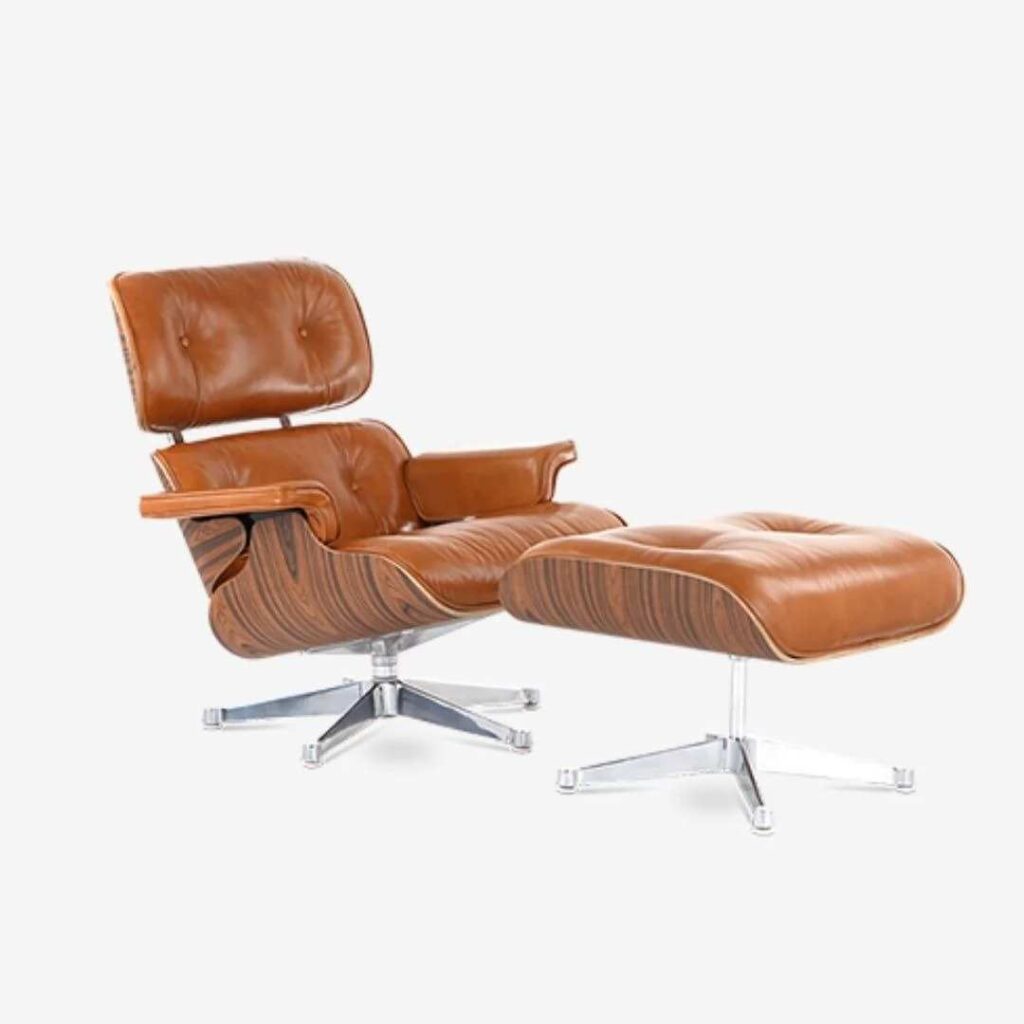

At some point, if you’re doing up a living room, an office reception, or one of those design-led studio flats, you’ll run into the Barcelona chair. You’ll know it when you see it chrome frame, buttoned leather cushions, that unmistakable “I’ve done my homework on mid-century design” look. Then you start actually shopping for one, and things get confusing fast. Some cost a few hundred quid. Others run into the thousands. Same chair, apparently, but a wildly different price tag. So what’s the actual difference, and does it matter? We get asked this constantly at Furnish Meister, so let’s go through it properly.
Where the Design Actually Came From
Mies van der Rohe and Lilly Reich designed the chair in 1929 for the German Pavilion at the International Exposition in Barcelona that’s the “Barcelona” bit sorted. It was made for royalty visiting the pavilion, which is probably why it still looks vaguely like a throne almost a century on. It went on to become one of the defining pieces of modernist furniture, up there with things like the Eames Lounge Chair and Ottoman, and it’s still on the syllabus in design schools now.
Being that influential comes with a downside, though: everyone’s copied it. Which is really the whole reason you’re reading this.
What “Original” Actually Means Here
When someone says Barcelona chair original, they mean the licensed version made by Knoll, the American company that holds the rights to it. These are built to Mies van der Rohe’s exact original specs hand-welded stainless steel, leather panels tufted one at a time by hand. It’s slow work, and that’s reflected in the price.
A genuine Knoll chair usually comes with a certificate of authenticity or maker’s mark somewhere on it, full-grain leather rather than anything synthetic, a solid stainless steel frame instead of plated tubing, and a price that’s genuinely in the thousands. That’s a lot to spend on one chair, and honestly, most people can’t justify it which is exactly why the replica market exists in the first place.
Replicas: The Bit Nobody Explains Properly
A replica sometimes called a reproduction, sometimes dressed up as “inspired by” copies the shape and proportions but comes from a completely different manufacturer, usually for a fraction of the price. Here’s what most articles won’t tell you though: not all replicas are the same quality, not even close. Some use real leather and solid steel and hold up almost as well as the original. Others are chrome-plated tubing with bonded leather glued on, and they start looking sad after eighteen months.
Two chairs can look nearly identical in a product photo and be worlds apart once you actually sit in them for a year. That’s really the crux of the whole decision.
Where the Money Actually Goes
Strip it back and the gap between an original and a cheap replica comes down to three things, mostly.
The frame is the big one. Originals use solid stainless steel, hand-welded and polished, and there’s a real heft to them you notice it the moment you pick one up. Replicas often swap that for chrome-plated steel tubing, which looks fine on day one but scratches more easily and can flex or corrode over time.
Then there’s the leather. Knoll’s upholsterers cut and stitch it into that signature buttoned pattern, using leather that’s meant to age well actually improve with age, in the way good leather does. Cheaper replicas lean on PU or bonded leather instead, and that stuff tends to crack or peel within a couple of years. It happens faster than people expect in UK homes too, because central heating dries leather out.
And then, obviously, there’s price. For most people this is really the whole conversation. If you’re furnishing a first flat, a rental, or a client-facing office, spending several thousand pounds on a single chair just isn’t on the table, no matter how much you like the design.
It’s worth mentioning this isn’t unique to the Barcelona chair, either. The same conversation happens around the eames style lounge chair, which takes its cues from the original eames lounge chair and ottoman that Herman Miller still makes, with reproductions available at every price point imaginable. The eames soft pad chair a cushier cousin from the Eames aluminium group range – gets the same treatment. If you’re kitting out a whole room with statement furniture, chances are you’ll be having this exact debate more than once before you’re done.
Is Buying a Replica Even Legal in the UK?
This comes up a lot, and fairly enough. Furniture design rights are genuinely messy – they vary by country, and a good chunk of mid-century designs have had their protections expire, get extended, or get argued over in court at some point. In the UK, selling reproduction or “inspired-by” furniture is generally legal, as long as the seller isn’t claiming it’s an actual Knoll product or misusing their trademarks. A retailer that’s actually reputable will just tell you upfront that it’s a reproduction, no fuss.
If a seller’s a bit vague about whether it’s genuine, or the price feels suspiciously low, just ask them directly before you buy anything.
Telling a Decent Replica From a Bad One
A few things worth checking before you commit. What’s the frame actually made of – ask directly, because “steel” can mean a lot of different things and solid steel feels noticeably heavier in the hand than tubing. What grade is the leather, since full-grain or top-grain will hold up far better over time than bonded or faux leather. Have a proper look at the tufting too – uneven stitching or lopsided buttons are a pretty reliable sign of a rushed production line. Check what warranty comes with it, because a retailer confident in their own furniture tends to back it with a decent one. And it’s worth digging up reviews from other UK buyers specifically, since how a chair looks in month one tells you almost nothing about how it’ll hold up after a year of actual daily use.
So Which One Should You Actually Buy?
Honestly, there’s no single right answer. If you’re furnishing a heritage building, a serious studio, or you want something that’ll hold its value for the next thirty years, the original earns its price tag. But if you love the look and just want it for a home office or living room without committing thousands to a single chair, a well-made replica gets you most of the way there for a lot less money.
At Furnish Meister, we help people across the UK find pieces that suit both the look they’re after and what they’re actually willing to spend whether that’s a Barcelona chair, an eames style lounge chair, or something else from that same mid-century family.
Frequently Asked Questions
What’s the real difference between a Barcelona chair original and a replica? The original is made under licence by Knoll, using solid stainless steel and premium leather built to Mies van der Rohe’s exact specs. Replicas come from other manufacturers and vary hugely in how close they actually get to that quality.
Is it legal to buy a Barcelona chair replica in the UK?
Generally, yes as long as the seller’s upfront that it’s a reproduction and isn’t pretending it’s a genuine Knoll piece.
How can I tell if a replica is actually decent quality?
Check the frame material (solid steel over chrome tubing, every time), the leather grade, how neat the tufting is, and whether there’s a real warranty behind it.
Are there reproductions of the Eames Lounge Chair and Ottoman too?
Yes, plenty. Just like the Barcelona chair, the eames lounge chair and ottoman has inspired a whole market of reproductions, including the eames style lounge chair and the eames soft pad chair, at pretty much every price point you can imagine.
Will a replica last as long as the original?
Depends entirely on how it’s made. A good one, with a solid frame and proper leather, can genuinely last years. It probably won’t outlive an original built to last decades, but a well-made replica isn’t some throwaway purchase either.
Where can I actually buy one in the UK?
Furnish Meister stocks both authentic and reproduction mid-century pieces, and we’re happy to talk through what actually makes sense for your space and budget.