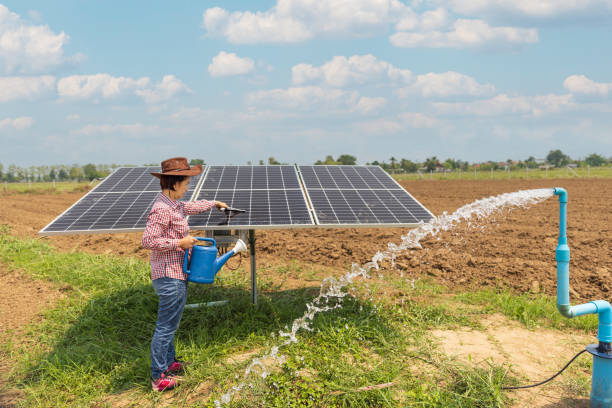

India’s solar pump sector is gaining relevance as agriculture, rural energy access, and water management increasingly intersect. Solar pumps help farmers reduce dependence on diesel and unreliable grid electricity while supporting irrigation in areas where conventional power supply remains limited. As climate variability and input costs affect farm operations, renewable-powered pumping is becoming a practical tool for improving irrigation reliability.
According to MarkNtel Advisors, the India Solar Pump Market was valued at around USD 154 million in 2025 and is projected to grow from USD 165 million in 2026 to USD 248 million by 2032. The solar irrigation outlook reflects an estimated CAGR of 7.03% during 2026–2032, supported by government schemes, agricultural demand, rural electrification, and the transition from diesel-based pumping to cleaner alternatives.
Agriculture Remains the Core Demand Driver
Agriculture accounted for more than 90% of total solar pump installations in India in 2026, according to the MarkNtel study. This dominance reflects the central role of irrigation in Indian farming, especially in regions where rainfall is seasonal, groundwater dependence is high, and electricity access can vary. Solar pumps are most relevant for small and medium farmers seeking predictable water access without recurring diesel expenses.
The Ministry of Agriculture & Farmers Welfare continues to support programs linked with farm productivity, resource management, and rural development. Solar pumps fit into this wider agricultural agenda because irrigation reliability can influence crop planning, yield stability, and farmer income. However, adoption also depends on financing, awareness, maintenance support, and responsible groundwater use.
PM-KUSUM Supports Adoption at Scale
Government policy is one of the strongest drivers for India’s solar pump adoption. The PM-KUSUM scheme has played a major role by supporting solarization of agricultural pumps, decentralized renewable energy generation, and reduced reliance on diesel or conventional grid electricity. Subsidy support is particularly important because upfront equipment cost remains a barrier for many farmers.
The Ministry of New and Renewable Energy provides policy support for renewable energy deployment, including solar applications in agriculture. Programs such as PM-KUSUM are important because they connect clean energy goals with rural livelihood needs. When implemented effectively, solar pumps can reduce operating costs, improve irrigation access, and lower emissions from diesel pumping.
Submersible Solar Pumps Lead the Market
Submersible solar pumps held a dominant position, representing approximately 95% of India’s solar pump market share in 2026. Their popularity is closely linked with groundwater-based irrigation, which is common across many agricultural states. These pumps are installed below the water level and are suitable for lifting water from borewells, wells, and deeper sources.
This segment’s strong position also reflects farmer preference for systems that can serve reliable irrigation needs in areas where surface water availability is limited. However, the growth of submersible pumps also increases the importance of groundwater governance. Solar-powered pumping must be paired with efficient irrigation methods and local water management to avoid over-extraction in stressed aquifers.
Solar Pumps Support Cleaner Rural Energy Use
Solar pumps contribute to India’s broader clean energy transition by replacing or reducing diesel use in farm irrigation. Diesel pumps remain costly to operate and can expose farmers to fuel price volatility. Solar systems, once installed, can reduce recurring energy costs and provide a more predictable source of power during daylight hours.
The International Energy Agency highlights solar PV as a central technology in global renewable energy deployment. In India’s rural context, solar pumping shows how decentralized renewable energy can support productive economic activity. The value is not only environmental; it also relates to farm economics, energy access, and resilience in remote areas.
Water Efficiency Must Remain Central
While solar pumps improve energy access, they also raise an important water-management question. If pumping becomes cheaper and easier, groundwater use can increase unless systems are linked with water-efficient practices. This makes drip irrigation, crop planning, community-level water governance, and pump sizing important parts of sustainable deployment.
The FAO’s sustainable agriculture work emphasizes the need to improve productivity while managing land, water, and energy resources carefully. For India, solar irrigation must be viewed as part of a broader farming system. The most effective outcomes will come when solar pumps are combined with efficient irrigation, soil-health practices, and water-conscious cropping decisions.
Outlook: Growth Depends on Affordability and Responsible Use
India’s solar pump sector is expected to grow steadily as policy support, rural energy needs, and agricultural modernization continue to shape demand. Future adoption will likely come from subsidy-backed deployments, replacement of diesel pumps, solarization of existing grid-connected pumps, and demand from water-stressed farming regions.
The World Bank’s agriculture work highlights the importance of sustainable and climate-resilient farming systems. Solar pumps can support this direction, but long-term success will depend on affordability, service networks, farmer training, financing access, and groundwater safeguards. As India balances food security, clean energy, and rural livelihoods, solar pumping is likely to remain an important part of agricultural infrastructure planning.