
The global white pepper trade is bigger than most buyers realize.
White pepper has been a spice traded worldwide for centuries, but its relevance in contemporary B2B trade has gone way beyond the traditional culinary applications. Today, it is a vital component in food processing, seasoning blends, pharmaceuticals, packaged foods, ready-to-eat meals and wellness products. Its cleaner look, milder taste, and refined finish makes it especially useful for industrial uses where looks and consistency are important.
That said, it’s not always that easy for importers to buy white pepper in bulk from a low-cost supplier. The real challenge is consistent quality, reliable suppliers, transparent pricing, and smooth execution through international trade channels.
Why Global Demand for White Pepper Keeps Growing
Meanwhile, white pepper is still in constant demand worldwide because it is versatile and well-known by consumers. It is widely used in processed foods, sauces, soups, snacks, meat products, and premium spice blends where black specks from black pepper are not desirable.
White pepper is more than just a culinary spice; it is also known for its digestive and antioxidant benefits, making it applicable in herbal and wellness formulations. The demand to buy high-quality white pepper from the industrial sector continues to grow across Europe, the Middle East, Asia, and North America as the global food manufacturing industry expands and clean-label products gain traction.
For B2B buyers, this creates a strong and recurring procurement opportunity—but also intensifies competition for reliable supply.
Trust: The Issue in Bulk White Pepper Imports
The global spice trade has traditionally been characterized by fragmented supplier networks, intermediaries and relationship-based negotiations. This system may have worked for smaller markets but presents major challenges for modern bulk importers.
Buyers often struggle with:
- Verify supplier authenticity
- Quality is not consistent across different shipments
- Delayed communication and unclear negotiations
- Lack of pricing transparency
- Shipment and documentation risks
It takes importers weeks, sometimes months, to find reliable suppliers through referrals, trade fairs, brokers, and scattered online directories. Even after spending time and resources, there still remains uncertainty around execution capability and product consistency.
For businesses that operate at scale, this uncertainty directly affects profitability and commitments to customers.
B2B White Pepper Trade: Consistency in Quality is the Key
Bulk-buying white pepper is a matter of specifications, not the same as buying retail spices. Buyers are not simply purchasing a spice—they are purchasing consistency.
White pepper is assessed by industrial buyers on:
- Color and cleanliness
- Moisture content
- Aroma strength
- Processing standards
- Contamination control
- Packaging and storage quality
A small discrepancy in a single shipment can impact food processing yields, product appearance and brand integrity. That’s why experienced importers look for verified suppliers with demonstrated export capabilities instead of selecting on pricing alone.
The Hidden Costs of Traditional Supplier Sourcing
What a lot of companies don’t realize is the hidden cost of operation that goes into traditional supplier discovery.
Importers often spend large amounts on:
- International trade exhibitions
- Supplier verification and audits
- Product sample testing
- Overseas travel and negotiations
- Manual documentation coordination
But despite these investments, buyers still face fragmented communication and a lack of visibility into real-time market pricing. It gets even more complicated if you have to deal with multiple suppliers in different countries.
In today’s fast-moving commodity market, this outdated procurement model slows growth and increases operational risk.
Why Digital Procurement Platforms Are a Necessity
There is a good reason why the global B2B trade ecosystem is quickly evolving towards structured digital procurement systems.
Modern platforms remove many of the inefficiencies that have historically plagued commodity imports. Gone are the days of fragmented supplier networks and manual negotiations; buyers now have access to verified suppliers, transparent pricing environments and centralized trade management systems.
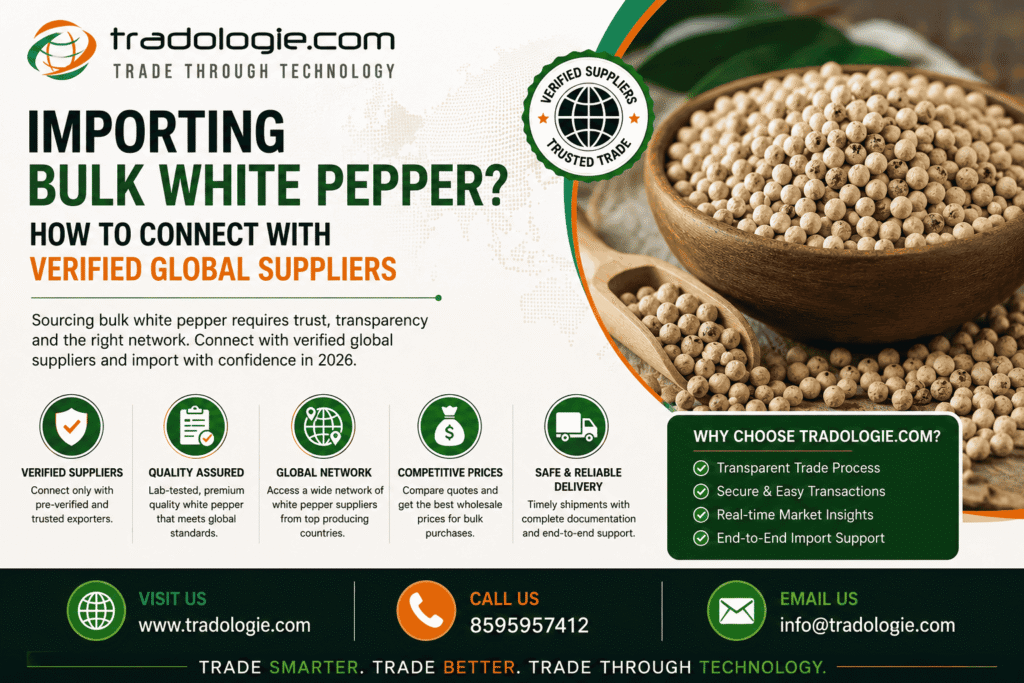
Tradologie.com, one of the platforms that is redefining bulk commodity sourcing, is bringing global buyers and verified suppliers onto a single AI-powered ecosystem.
This leads to a more dependable procurement experience for white pepper importers.
How Tradologie.com Solves the Biggest B2B Pain Points
Tradologie.com addresses the exact issues faced by bulk importers engaged in the global spice trade.
As a result, buyers no longer need to search endlessly for trustworthy suppliers; they have direct access to verified exporters who can handle bulk orders. The platform’s AI-powered procurement system allows real-time negotiation, enabling buyers to transparently compare offers and ensuring better price discovery.
Centralized dashboards simplify communication, documentation, and trade coordination, reducing delays and operational friction at the same time.
It turns procurement from a fragmented process into a structured, scalable system.
With more than 1 million+ global B2B participants and billions of dollars of trade facilitated in the last decade, Tradologie.com has emerged as a trusted ecosystem for businesses looking to streamline commodity sourcing globally.
Digital procurement is no longer optional, it’s becoming essential in a marketplace where quality, speed and trust drive profit.
In conclusion
Today, importing large quantities of white pepper entails much more than just ensuring supply. Supplier verification, quality control, logistics management, pricing transparency, and execution dependability must all be handled concurrently by buyers. This process is slow, costly, and unpredictable when using traditional sourcing techniques.
By systematizing international procurement through AI-powered matchmaking, verified supplier networks, and open negotiations, platforms like Tradologie.com are transforming that reality. This cutting-edge strategy gives B2B buyers a significant competitive edge in international trade in addition to convenience when building dependable and scalable white pepper supply chains.