
Global trade is no longer limited to large corporations with massive budgets. Today, businesses of all sizes buy products from international suppliers, sell goods across borders, and explore opportunities in new markets. While global expansion creates exciting possibilities, it also introduces challenges that many companies are not prepared to handle alone.
This is where trade experts become valuable. Businesses often hear terms like import consultant and export consultant, but many people are unsure about the difference between the two. Some assume both roles are the same, while others believe they only apply to large import-export companies.
In reality, each consultant serves a different purpose. Understanding these roles can help businesses make smarter decisions, avoid costly mistakes, and grow more efficiently.
If you are wondering whether your business needs an import consultant or an export consultant, this guide will help you understand the key differences, responsibilities, and benefits of each role.
Understanding International Trade Support
Before comparing the two roles, it helps to understand why trade consulting matters in the first place.
International trade involves much more than shipping products from one country to another. Businesses must deal with:
- Customs regulations
- Taxes and duties
- Product restrictions
- Shipping documentation
- Supplier and buyer communication
- Trade compliance rules
Even small mistakes can create delays, fines, or financial losses. Trade consultants help businesses navigate these challenges with confidence.
The main difference is simple:
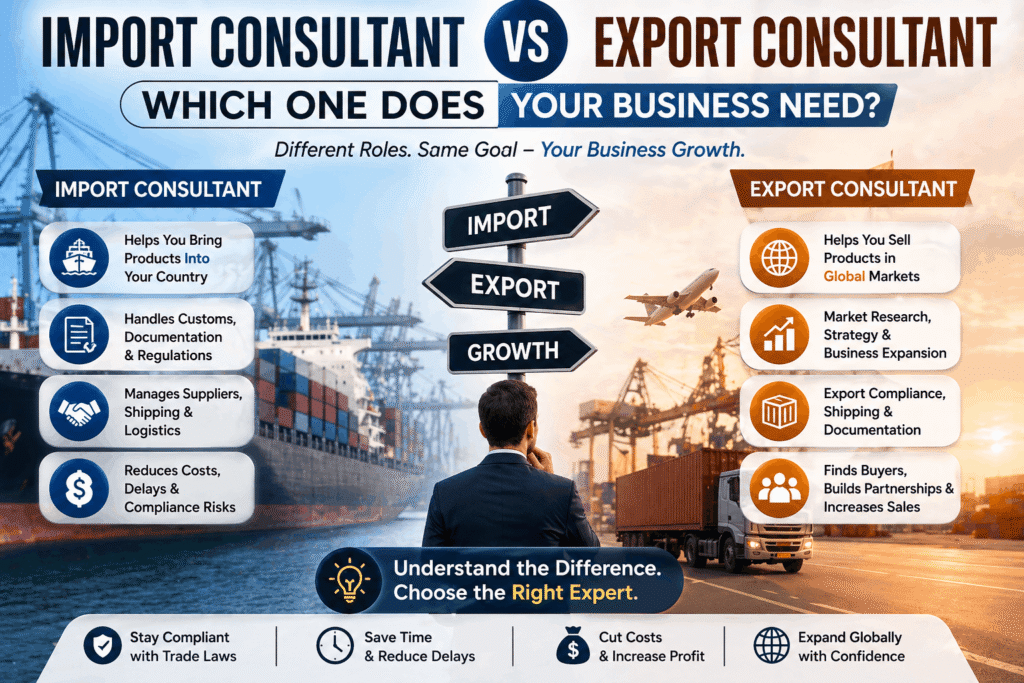
- An import consultant helps businesses bring products into a country
- An export consultant helps businesses sell products into foreign markets
Although the goals are different, both roles focus on improving efficiency and reducing risk.
What Does an Import Consultant Do?
An import consultant specializes in helping businesses purchase and receive goods from international suppliers. Their main focus is making sure imported products arrive legally, efficiently, and cost-effectively.
Businesses that rely on imported materials, products, or inventory often work closely with an import consultant.
Key Responsibilities of an Import Consultant
The role involves several important tasks.
Managing Import Regulations
Every country has its own import laws. An import consultant helps businesses understand and follow these regulations.
This includes:
- Import permits
- Product restrictions
- Customs requirements
- Tariff classifications
Without proper guidance, businesses may face shipment delays or penalties.
Handling Documentation
Importing products requires detailed paperwork. Missing or incorrect documents can stop shipments at customs.
An import consultant helps prepare and review:
- Commercial invoices
- Packing lists
- Bills of lading
- Customs declarations
Accurate documentation reduces delays and confusion.
Supplier Coordination
Many businesses source products from overseas manufacturers. Communication challenges, time zone differences, and quality concerns can complicate the process.
An import consultant often helps businesses:
- Evaluate suppliers
- Understand shipping terms
- Coordinate logistics
- Reduce sourcing risks
This support improves supply chain reliability.
Cost Management
Importing involves multiple expenses beyond product cost.
These may include:
- Shipping fees
- Customs duties
- Warehousing charges
- Insurance costs
An import consultant helps businesses manage these expenses and identify cost-saving opportunities.
What Does an Export Consultant Do?
An export consultant focuses on helping businesses sell products internationally. Their role involves guiding companies through the process of entering foreign markets and complying with export regulations.
Businesses looking to expand globally often rely on an export consultant to avoid costly mistakes and improve market entry strategies.
Key Responsibilities of an Export Consultant
An export consultant handles several important areas of international business.
Market Research and Expansion
Selling products internationally requires understanding foreign markets.
An export consultant helps businesses:
- Identify promising countries
- Study market demand
- Understand customer behavior
- Analyze competition
This information helps businesses choose the right expansion strategy.
Export Compliance
Countries have strict export laws and trade restrictions. Some products require licenses or special approvals before they can be exported.
An export consultant ensures businesses follow legal requirements and avoid compliance issues.
Shipping and Logistics Guidance
International shipping can become complicated without proper planning.
An export consultant may assist with:
- Freight coordination
- Packaging standards
- Shipping methods
- Delivery timelines
Efficient logistics improve customer satisfaction and reduce delays.
International Business Strategy
Expanding globally involves more than just selling products abroad.
An export consultant helps businesses develop strategies related to:
- Pricing
- Distribution
- Market positioning
- Cross-border partnerships
This guidance supports long-term growth.
The Main Difference Between an Import Consultant and Export Consultant
The difference between the two roles becomes clearer when looking at their primary objectives.
| Role | Main Focus |
|---|---|
| Import Consultant | Bringing products into a country |
| Export Consultant | Selling products to foreign markets |
An import consultant manages inbound trade, while an export consultant supports outbound trade.
Although their responsibilities sometimes overlap, each role serves a unique purpose.
When Does a Business Need an Import Consultant?
Not every business needs the same type of support. Some companies rely heavily on imported products and materials.
You may benefit from an import consultant if your business:
- Sources inventory internationally
- Imports raw materials
- Struggles with customs delays
- Faces rising import costs
- Wants to improve supplier relationships
Businesses involved in retail, manufacturing, and eCommerce often work with import consultants.
When Does a Business Need an Export Consultant?
An export consultant becomes valuable when businesses want to reach customers in other countries.
You may need an export consultant if your business:
- Plans to enter international markets
- Wants to increase global sales
- Needs help understanding foreign regulations
- Faces challenges with export logistics
- Wants to build international partnerships
Companies in manufacturing, agriculture, technology, and consumer goods frequently use export consulting services.
Can a Business Need Both?
Yes. Many businesses both import and export products.
For example:
- A company may import raw materials and export finished products
- An online retailer may source products globally and sell internationally
- A manufacturer may rely on overseas suppliers while expanding into foreign markets
In these situations, businesses may benefit from both an import consultant and an export consultant.
Working with experts on both sides of the supply chain creates a smoother operation overall.
Common Challenges in Importing
Importing products sounds straightforward until businesses experience real-world issues.
Some common challenges include:
Customs Delays
Incorrect paperwork or compliance issues can hold shipments at customs for days or weeks.
An import consultant helps reduce these risks by ensuring accuracy and preparation.
Hidden Costs
Many businesses underestimate import expenses.
Unexpected charges may include:
- Duties
- Taxes
- Inspection fees
- Storage costs
Proper planning helps businesses avoid financial surprises.
Supplier Reliability Issues
Working with international suppliers introduces risks related to quality, communication, and delivery timelines.
An import consultant helps businesses build stronger supplier relationships and reduce sourcing problems.
Common Challenges in Exporting
Exporting also comes with its own difficulties.
Understanding Foreign Markets
Products that succeed locally may not perform the same way internationally.
An export consultant helps businesses adapt strategies for different regions and customer preferences.
Regulatory Compliance
Export laws vary between countries. Some products require certifications or restrictions before shipment.
Failure to comply can create legal and financial problems.
Logistics and Delivery Issues
International shipping involves customs clearance, freight coordination, and packaging standards.
An export consultant helps businesses manage these processes more effectively.
Benefits of Working With an Import Consultant
The support of an import consultant offers several long-term advantages.
Reduced Risk
Trade regulations constantly change. Consultants help businesses stay compliant and avoid penalties.
Better Supplier Relationships
Experienced consultants often improve communication between buyers and suppliers.
Improved Cost Control
Managing import costs efficiently protects profit margins and improves budgeting.
Faster Operations
Well-organized import processes reduce delays and improve inventory flow.
Benefits of Working With an Export Consultant
An export consultant also provides valuable support for businesses pursuing global growth.
Easier Market Entry
Consultants help businesses enter foreign markets with more confidence and fewer mistakes.
Better Expansion Strategies
Instead of guessing, businesses make decisions based on research and planning.
Improved Global Reach
An export consultant helps businesses connect with distributors, buyers, and international opportunities.
Stronger Competitive Position
Businesses that understand international markets often outperform competitors who rely on trial and error.
How to Choose the Right Consultant
Choosing the right expert is just as important as deciding which role you need.
When selecting an import consultant or export consultant, look for:
- Relevant industry experience
- Knowledge of trade regulations
- Strong communication skills
- Problem-solving ability
- Practical business understanding
A good consultant should simplify complex processes rather than create confusion.
Signs Your Business Needs Trade Consulting Support
Some businesses wait too long before seeking expert help.
Here are a few signs that outside guidance may be necessary:
- Frequent shipping delays
- Rising trade costs
- Compliance issues
- Difficulty expanding internationally
- Supplier communication problems
- Lack of understanding of trade regulations
Addressing these problems early can save time and money later.
The Growing Importance of Trade Consulting
Global trade continues to evolve rapidly. Technology, regulations, and consumer demand constantly change.
Businesses now face challenges related to:
- Supply chain disruptions
- New tariffs and trade agreements
- International competition
- Digital commerce growth
As international business becomes more complex, the value of experienced consultants continues to grow.
Import Consultant vs Export Consultant: Which One Is Right for You?
The answer depends entirely on your business goals.
Choose an import consultant if your main challenge involves bringing products into your country efficiently.
Choose an export consultant if your priority is selling products in international markets.
If your business handles both activities, combining both forms of expertise may provide the strongest results.
Frequently Asked Questions (FAQs)
1. What does an import consultant do?
An import consultant helps businesses bring products into a country by managing customs regulations, import documentation, supplier coordination, and shipping processes.
2. What does an export consultant do?
An export consultant helps businesses sell products internationally by guiding them through foreign market research, export compliance, logistics, and global expansion strategies.
3. What is the difference between an import consultant and export consultant?
The main difference is their focus. An import consultant manages inbound trade and importing products, while an export consultant focuses on outbound trade and selling products in international markets.
4. Does a small business need an import consultant?
Yes, small businesses can benefit from an import consultant, especially when sourcing products internationally or dealing with customs regulations and shipping challenges.
5. When should a business hire an export consultant?
A business should hire an export consultant when planning to enter international markets, expand global sales, or improve export operations and compliance.
6. Can one business use both an import consultant and export consultant?
Yes, many businesses use both an import consultant and export consultant, especially companies that import raw materials and export finished products internationally.
Final Thoughts
International trade creates exciting opportunities, but it also introduces risks and complexity. Businesses that try to manage everything alone often face delays, compliance problems, and unnecessary costs.
Understanding the difference between an import consultant and export consultant helps businesses make smarter decisions about growth and operations.
An import consultant focuses on sourcing and inbound trade efficiency. An export consultant supports international expansion and outbound trade success.
Both roles play an important part in helping businesses operate confidently in global markets.
The right support can simplify trade processes, improve efficiency, and create a stronger foundation for long-term international growth.