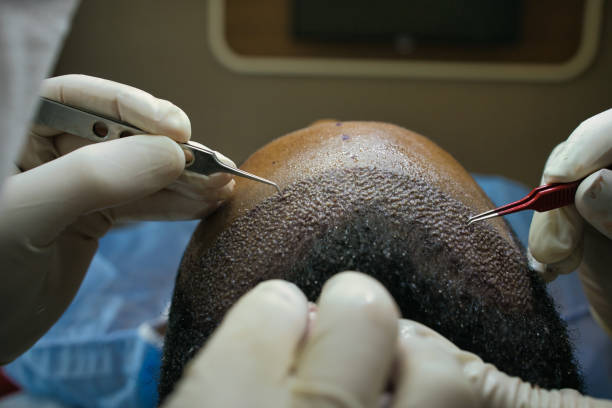

The primary fear for many considering a hair transplant is the risk of a “thin” or “see-through” result. Traditional methods often struggle to provide full coverage in a single session, especially for those with advanced thinning. A Hybrid Hair Transplant in Dubai addresses this by combining Follicular Unit Extraction (FUE) with Follicular Unit Transplantation (FUT) or regenerative therapies. This dual-action approach maximizes the graft count while preserving the donor area’s future viability. By merging surgical precision with biological stimulation, we can achieve a level of density that was previously difficult to reach, helping patients move past the anxiety of inadequate coverage.
Why Is the Hybrid Technique Becoming the Standard for Advanced Loss?
In clinical settings, we observe that patients with Grade 5 or 6 on the Norwood Scale often lack sufficient donor hair for a standard FUE procedure alone. The hybrid approach allows surgeons to harvest more follicles without “over-harvesting” specific zones. By utilizing the strengths of multiple techniques, we can provide a high-definition hairline while simultaneously filling the crown, ensuring a balanced and age-appropriate aesthetic.
How Does the Hybrid Approach Differ from Standard FUE?
A hybrid hair transplant integrates different harvesting methods or pairs surgery with advanced growth factor treatments. While standard FUE extracts individual follicles, a hybrid protocol might involve a strip harvest for volume and FUE for refining the hairline. This synergy ensures the highest possible graft survival rate and a significantly more opaque, dense appearance in the recipient area.
What Does the Procedure Actually Feel Like?
Patients often arrive with significant anxiety regarding the “surgical” nature of the procedure. However, based on post-procedure follow-ups, most report that the discomfort is confined to a very small window at the start of the day.
Is the Numbing Process Uncomfortable?
The initial 5 to 10 minutes involve a series of local anesthetic injections. Patients often report a “stinging” or “burning” sensation that lasts for a few seconds per injection. Once the anesthesia takes effect, the scalp becomes entirely numb. From that point forward, you may feel pressure or a “tugging” sensation, but you should not feel any sharp pain.
What Are the Sensations During Graft Extraction and Placement?
During the extraction phase, you may hear a rhythmic “clicking” or “tapping” sound from the micro-punch tool. During the placement phase, patients describe the feeling as someone gently tapping their fingertip against the scalp. Because the procedure can take 6 to 8 hours, the most common “complaint” from patients is actually back stiffness from lying in one position, rather than scalp pain.
“The first few minutes were a bit intense with the needles, but after that, I literally didn’t feel a thing. I spent the afternoon watching a movie series and even drifted off for a bit.” — Hamad
Realistic Recovery: What to Expect Day-by-Day
Information gain regarding downtime is often missing from promotional materials. A hybrid procedure is more complex than a standard session, and the recovery timeline reflects that.
How Long Is the Actual Downtime?
While you can return to a desk job within 3 to 4 days, “social recovery” usually takes 10 to 14 days. During the first week, there will be visible scabbing and mild swelling around the forehead and eyes. By Day 10, most scabs naturally shed, and the donor area begins to look like a short, faded haircut.
Step-by-Step Healing Timeline
-
Days 1–3: Expect a “tight” feeling in the scalp. You must sleep with your head elevated at 45 degrees to minimize facial swelling.
-
Day 5: Itching is common and is a clinical sign of the nerves and skin healing. Patients find that a saline spray provides significant relief.
-
Week 2: The recipient area transitions from pink to a normal skin tone. You can now wear a loose-fitting hat if needed.
-
Month 1: The “shedding phase” begins. This can be alarming, but it is a normal biological reset where the hair shafts fall out to make room for new, permanent growth.
Technical Comparison of Transplant Methodologies
Choosing between techniques depends on your hair type, scalp elasticity, and the total area of baldness.
| Feature | Standard FUE | Standard FUT | Hybrid Approach |
| Max Graft Count | Moderate (3,000) | High (4,000) | Very High (5,000+) |
| Scarring | Micro-dots | Linear scar | Combined/Minimized |
| Pain Level | Low | Moderate | Controlled |
| Best For | Early thinning | Advanced balding | Maximum density |
Safety and Suitability: Who Should Avoid This Procedure?
Not everyone is a candidate for a hybrid hair transplant. Clinical observation shows that patient selection is the single most important factor in a successful outcome.
Who Is Not a Good Candidate for a Hybrid Transplant?
Individuals with “diffuse unpatterned alopecia” (DUPA) should avoid this procedure, as their donor hair is not stable. Additionally, patients with active inflammatory scalp conditions like Lichen Planopilaris or those with unrealistic expectations regarding a “perfect” head of hair are advised against surgery. We also screen for cardiovascular health, as the long duration of the procedure requires a stable heart rate and blood pressure.
What Are the Potential Risks?
While rare, risks include localized infection or “shock loss,” where existing hair temporarily thins due to the trauma of the surgery. In clinical settings, we mitigate these risks through strict sterilization and the use of intra-operative growth factors to support the surrounding hair.
“I was worried about the scar from the FUT portion of the hybrid, but the way they closed it makes it impossible to find, even when my hair is cut short. The density I have now is something I didn’t think was possible.” — Steven
What Feels Surprisingly Easy During the Process?
Patients often find that the “maintenance” part of the recovery is much less daunting than they anticipated.
-
Washing: The specialized washing technique—using a foam cleanser and a cup of water—is easy to master and becomes a soothing ritual.
-
Pain Management: Most patients find that they only need paracetamol for the first 48 hours. The need for stronger pain relief is rare.
-
The “Wait”: While 12 months for full results sounds long, the “baby hairs” that appear at month 4 provide an immediate psychological boost.
Why Choose Tajmeels Clinic?
At Tajmeels Clinic, we specialize in high-complexity cases that require a Hybrid Hair Transplant in Dubai. Our surgeons prioritize the “Donor Management” philosophy, ensuring that we never compromise the health of your scalp for a short-term result. By utilizing advanced magnification and ultra-fine instrumentation, we ensure that every graft is placed at the precise angle and depth required for a natural, lifetime result.
Frequently Asked Questions
Is a hybrid transplant more expensive than FUE?
Yes, typically. Because a hybrid procedure involves more staff, a longer duration in the operating room, and a higher number of grafts, the investment is higher. However, it often eliminates the need for a second or third surgery later in life.
Will the linear scar from the FUT part be visible?
We use a “trichophytic closure” technique. This allows hair to grow directly through the scar tissue, making the line nearly invisible even with shorter hair lengths.
When can I return to the gym?
You should avoid heavy lifting and high-intensity cardio for at least 14 to 21 days. Increased blood pressure can cause the grafts to “pop” out of their sites or lead to increased swelling.
How do I know if I need a hybrid or just FUE?
This is determined during a physical exam. If your balding area is large and your donor area is of average density, a hybrid approach is usually recommended to ensure you don’t end up with a “see-through” result.
Is the growth permanent?
The transplanted hair is taken from the “permanent zone” at the back of the head. These follicles are genetically resistant to the hormones that cause balding, meaning they will continue to grow for the rest of your life.