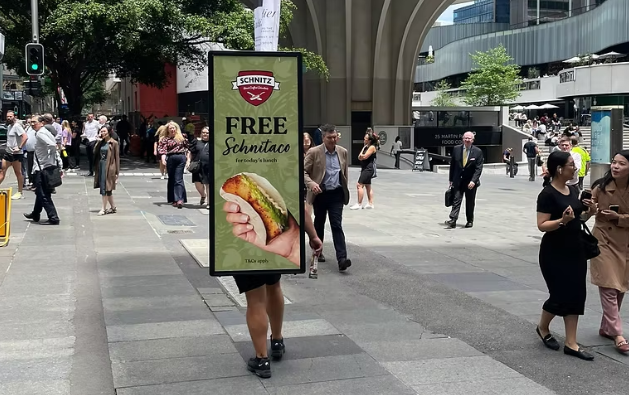

In today’s competitive marketing landscape, local businesses are constantly seeking effective ways to stand out and connect with their target audience. Traditional advertising channels such as print ads, static billboards, or generic social media campaigns often struggle to grab attention in an era dominated by visual overload. That’s where walking billboard advertising comes in, a dynamic, mobile form of outdoor marketing that brings your brand directly into high‑traffic environments. By turning pedestrians into moving advertisements, this innovative approach helps local businesses increase visibility, engage audiences in person, and generate measurable results.
What Is a Walking Billboard?
A walking billboard is a type of advertising where brand messaging is displayed on wearable or human‑carried signage that moves through populated areas. Unlike static billboards fixed in a single location, these mobile ads travel through shopping strips, transit hubs, event venues, and pedestrian zones, ensuring your message reaches diverse audiences in real time. This form of advertising often includes double‑sided displays mounted on a harness or suit worn by a brand ambassador who serves as both a walking advertisement and a point of engagement.
Walking billboard campaigns are especially effective for local businesses because they combine high visibility with mobility and direct audience interaction. Unlike conventional billboards, walking billboards place your brand at eye level, making it more likely to capture pedestrians’ attention and remain memorable.
Enhancing Local Visibility and Recognition
One of the most immediate advantages of walking billboard advertising is enhanced visibility in key areas where customers live, work, and shop. Because walking billboards move through high-foot-traffic areas such as downtown streets, shopping centres, or near public transit stops, they create repeated impressions with pedestrians who might otherwise overlook stationary advertisements.
This visibility helps reinforce brand recognition within a community. For example, a local restaurant using walking billboards near a busy market or commercial district can ensure its promotions, special offers, or events are seen by thousands of potential customers each day. Consistent exposure builds familiarity, helping small businesses compete effectively with larger brands that rely on expensive media buys.
Real-Time Audience Engagement
Walking billboard advertising goes beyond visual appeal by encouraging real-time interaction between brand ambassadors and the public. Unlike traditional billboards that deliver a passive message, walking billboards allow ambassadors to answer questions, distribute flyers, provide directions, and engage with potential customers directly.
This personal connection enhances brand recall and fosters trust. Customers who interact with a friendly, informative ambassador are more likely to remember the message and act on it, whether that means visiting a store, attending an event, or engaging with the brand online. This unique combination of advertising and customer service makes walking billboards an especially effective tool for small and medium-sized local businesses.
Targeted Local Marketing
Another significant advantage is precise targeting. Businesses can choose routes and timings based on peak foot traffic and specific events, ensuring their message reaches the most relevant audience. Retail stores might deploy walking billboards near malls during weekends, while cafés or quick-service restaurants could target commuter areas during morning and evening rush hours.
Targeting ensures marketing budgets are spent efficiently and helps maximize ROI, delivering exposure to people who are most likely to convert into loyal customers.
Cost-Effective Outdoor Advertising
Walking billboard advertising is also a cost-effective option for local businesses. Unlike traditional billboards that require expensive long-term leases and fixed locations, walking billboards can be deployed quickly and adjusted to meet campaign needs. Businesses can scale campaigns up or down depending on seasonality, special events, or marketing objectives, making walking billboards a flexible and budget-friendly strategy.
Conclusion
Walking billboard advertising provides local businesses with a dynamic way to increase brand visibility, engage directly with customers, and target high-traffic locations effectively. By turning individuals into moving advertisements, businesses can create memorable marketing moments that go beyond passive impressions and foster genuine connections. Whether promoting a new product, seasonal sale, or community event, partnering with a mobile billboard company ensures your campaign reaches the right audience with maximum impact. When executed strategically, walking billboard campaigns transform how local businesses communicate with customers and deliver measurable, long-term results.