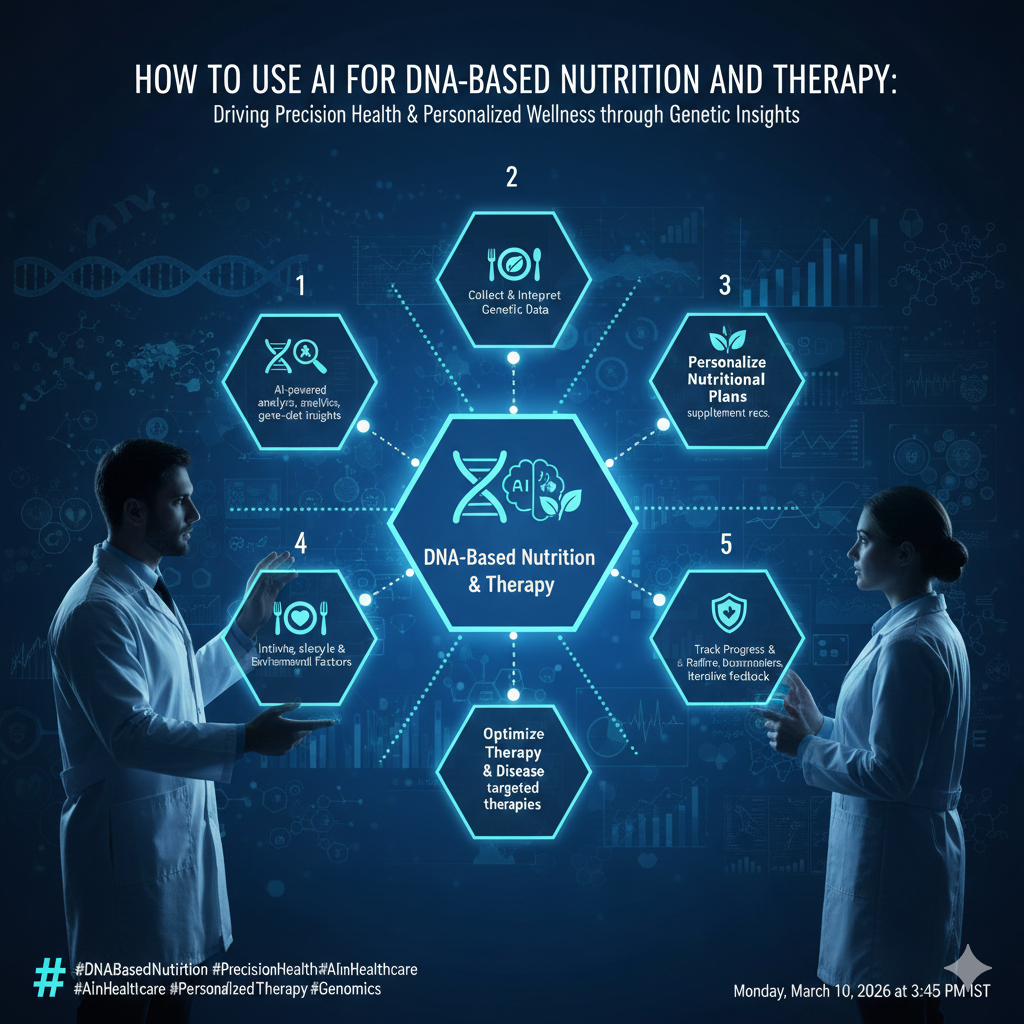

Advancements in artificial intelligence (AI) and genomics have opened a new frontier in personalized health. DNA-based nutrition and therapy combine genetic insights with AI-driven analysis to create customized diet plans, supplement recommendations, and treatment strategies tailored to an individual’s unique biology. This approach moves beyond generalized health advice and offers highly targeted interventions that can optimize health outcomes.
Understanding how to use AI for DNA-based nutrition and therapy can empower both healthcare providers and individuals to make data-informed decisions that support long-term wellness.
1. Collect and Interpret Genetic Data
The first step in DNA-based nutrition and therapy is understanding your genetic makeup.
- Collect DNA samples through saliva or blood tests provided by certified labs.
- Use AI-powered algorithms to analyze genetic variants related to metabolism, nutrient absorption, and disease susceptibility.
- Identify gene-diet interactions, such as how certain variants may affect sensitivity to carbohydrates, fats, or vitamins.
AI simplifies the interpretation of complex genomic data, making it accessible for creating personalized nutrition and therapy plans.
2. Personalize Nutritional Plans
AI-driven insights from DNA can transform standard nutrition advice into personalized dietary strategies.
- Create meal plans that align with your genetic predispositions for metabolism and nutrient utilization.
- Recommend supplements to address potential deficiencies identified through DNA analysis.
- Optimize macronutrient ratios based on genetic tendencies toward fat, protein, or carbohydrate metabolism.
Personalized nutrition improves adherence, supports optimal energy levels, and enhances overall health outcomes.
3. Integrate Lifestyle and Environmental Factors
While DNA provides the blueprint, lifestyle and environment significantly impact health. AI can combine genomic data with lifestyle inputs to refine recommendations.
- Monitor physical activity, sleep patterns, stress levels, and medical history.
- Adjust dietary and supplement plans based on lifestyle metrics and environmental factors.
- Provide predictive insights into how changes in behavior may affect health outcomes.
This holistic approach ensures nutrition and therapy plans are dynamic and responsive to real-life conditions.
4. Optimize Therapy and Disease Prevention
AI for DNA-based therapy extends beyond nutrition into disease prevention and management.
- Identify genetic predispositions to chronic conditions such as diabetes, cardiovascular disease, or obesity.
- Recommend preventive measures, lifestyle modifications, or targeted therapies to reduce risk.
- Use AI to simulate and predict patient responses to therapies, helping clinicians fine-tune treatment strategies.
Combining AI and genetics allows for proactive interventions rather than reactive healthcare.
5. Track Progress and Refine Recommendations
Continuous monitoring is key to maximizing the benefits of DNA-based nutrition and therapy.
- Use AI-powered apps and wearable devices to track biomarkers, diet compliance, and physical activity.
- Compare real-time health data with initial genetic insights to refine nutrition and therapy plans.
- Update recommendations based on changes in genetics-related responses or emerging research.
This iterative process ensures that interventions remain effective and personalized over time.
6. Ensure Privacy and Ethical Use
AI in genomics requires careful attention to data privacy and ethics.
- Choose platforms and providers that follow strict data security standards.
- Obtain informed consent before sharing genetic information.
- Understand how AI algorithms use your data and ensure transparency in decision-making.
Responsible use of AI protects individuals while maximizing the benefits of DNA-based nutrition and therapy.
Conclusion
How to use AI for DNA-based nutrition and therapy lies in integrating genetic insights with advanced data analysis to create highly personalized interventions. By combining genetic testing, AI-driven interpretation, lifestyle monitoring, and continuous refinement, individuals and healthcare providers can achieve optimized nutrition, targeted therapies, and proactive disease prevention. This approach represents the future of precision health, offering smarter, data-informed strategies that cater to each person’s unique biology.
The power of AI in genomics is not just about technology—it is about translating complex data into actionable health decisions that enhance quality of life.
Hashtags:
#DNABasedNutrition #PrecisionHealth #AIinHealthcare #PersonalizedTherapy #Genomics