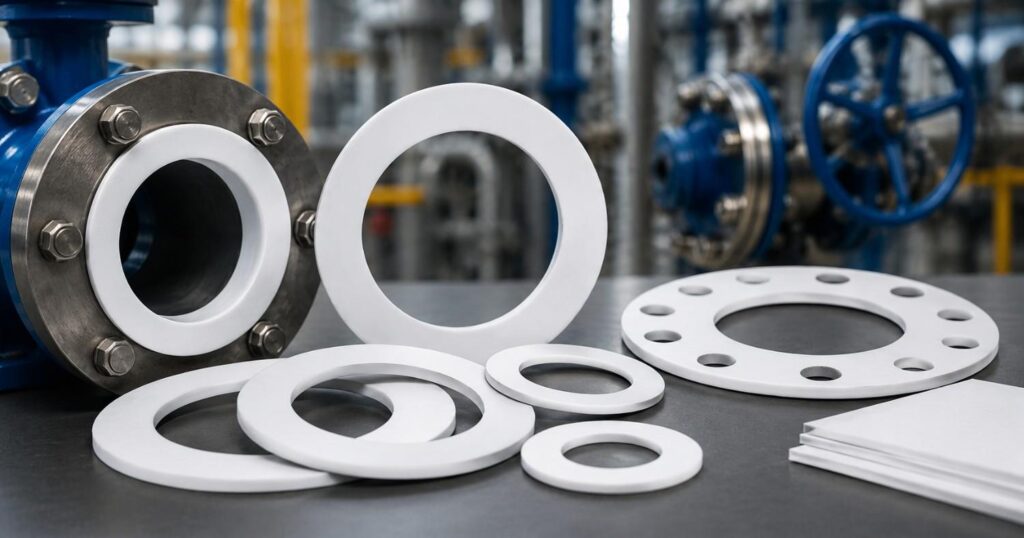

Industrial sealing plays a major role in keeping equipment safe, efficient, and leak-free. Whether you work in chemical processing, food manufacturing, pharmaceuticals, oil and gas, or water treatment, choosing the right PTFE Gasket can improve equipment performance and reduce maintenance costs. However, with different types, sizes, and grades available, selecting the best gasket for your application requires careful consideration.
This guide explains the important factors to consider before buying a PTFE Gasket and how the right choice can improve the reliability of your industrial operations.
What Is a PTFE Gasket?
A PTFE Gasket is a sealing component made from Polytetrafluoroethylene (PTFE), a high-performance material known for its excellent chemical resistance, temperature tolerance, and low friction properties. It is designed to create a tight seal between two mating surfaces, preventing leaks of liquids, gases, or chemicals.
Because PTFE is non-reactive and durable, it is widely used in industries where safety, cleanliness, and corrosion resistance are essential.
Why Choosing the Right PTFE Gasket Matters
Not every gasket is suitable for every industrial application. Selecting the wrong gasket may result in:
- Leakage of chemicals or fluids
- Equipment damage
- Frequent maintenance
- Production downtime
- Increased operating costs
On the other hand, a properly selected PTFE Gasket provides reliable sealing, extends equipment life, and supports smooth industrial operations.
Factors to Consider When Selecting a PTFE Gasket
1. Understand the Operating Temperature
Temperature is one of the first things to consider. PTFE performs exceptionally well across a wide temperature range, making it suitable for both hot and cold applications.
Before choosing a gasket, check the maximum and minimum operating temperatures of your equipment. Selecting a gasket that matches these conditions helps maintain sealing performance over time.
2. Check Chemical Compatibility
One of the biggest advantages of a PTFE Gasket is its outstanding resistance to chemicals. It performs well with acids, alkalis, solvents, and many corrosive substances.
However, every industrial process is different. Make sure the gasket material is compatible with the specific chemicals used in your system. This ensures long service life and reduces the risk of seal failure.
3. Consider Pressure Requirements
Industrial systems often operate under varying pressure conditions. Some applications require low-pressure sealing, while others involve high-pressure pipelines or processing equipment.
Choose a PTFE Gasket that can handle your operating pressure without deforming or losing its sealing capability.
4. Select the Correct Gasket Size
Even the highest-quality gasket will fail if the dimensions are incorrect.
Measure carefully before purchasing, including:
- Inner diameter
- Outer diameter
- Thickness
- Bolt hole alignment (if applicable)
A correctly sized gasket creates uniform pressure across the sealing surface and minimizes leakage.
5. Evaluate the Flange Surface
The condition of the flange directly affects gasket performance.
Inspect the flange for:
- Scratches
- Corrosion
- Uneven surfaces
- Damage
A clean and smooth sealing surface allows the PTFE Gasket to perform more effectively.
Types of PTFE Gaskets
Depending on the application, different types of PTFE gaskets are available.
Virgin PTFE Gasket
Virgin PTFE is made from pure PTFE resin without fillers. It offers outstanding chemical resistance and is ideal for pharmaceutical, food processing, and chemical industries.
Filled PTFE Gasket
Filled PTFE contains materials such as glass, carbon, or graphite to improve strength, wear resistance, and dimensional stability. These are commonly used in demanding industrial environments.
Expanded PTFE Gasket
Expanded PTFE is softer and more flexible. It conforms well to irregular flange surfaces, making it suitable for older equipment or applications requiring excellent sealing performance.
Industry Requirements Should Guide Your Choice
Different industries have different sealing needs.
For example:
- Chemical plants require maximum chemical resistance.
- Food processing industries need hygienic, contamination-free sealing.
- Pharmaceutical facilities demand high purity materials.
- Water treatment plants need durable and corrosion-resistant gaskets.
- Oil and gas industries require reliable performance under challenging conditions.
Understanding your industry’s specific requirements helps you select the most suitable PTFE Gasket.
Installation Is Just as Important
Even the best gasket can fail if installed incorrectly.
Follow these simple installation tips:
- Clean flange surfaces before installation.
- Avoid over-tightening bolts.
- Tighten bolts evenly using a cross pattern.
- Use the recommended torque values.
- Inspect the gasket after installation.
Proper installation helps maximize gasket life and prevents unnecessary leakage.
Signs That You Need to Replace Your PTFE Gasket
Regular inspection helps avoid unexpected failures.
Replace your gasket if you notice:
- Fluid leakage
- Visible cracks
- Surface wear
- Permanent deformation
- Reduced sealing performance
- Damage caused during maintenance
Replacing worn gaskets at the right time reduces costly downtime and protects equipment.
Choose a Reliable Manufacturer
The quality of the gasket is just as important as selecting the right material.
A trusted manufacturer ensures:
- High-quality raw materials
- Accurate dimensions
- Consistent manufacturing standards
- Reliable performance
- Timely product availability
Goa Polymer is recognized for manufacturing premium-quality PTFE Gasket solutions designed for various industrial applications. With a strong focus on quality, precision, and customer satisfaction, Goa Polymer offers durable sealing products that meet the demanding requirements of modern industries. Whether your application involves chemicals, food processing, pharmaceuticals, or heavy industrial equipment, the company provides dependable gasket solutions tailored to your operational needs.
Maintenance Tips for Longer Gasket Life
Proper maintenance improves sealing performance and extends service life.
Some useful practices include:
- Perform routine inspections.
- Monitor pressure and temperature changes.
- Replace damaged flanges when necessary.
- Store gaskets in a clean, dry environment.
- Avoid exposing unused gaskets to direct sunlight for long periods.
These simple maintenance steps help reduce replacement costs and improve equipment reliability.
Conclusion
Selecting the right PTFE Gasket is an important decision that directly affects the safety, efficiency, and reliability of industrial systems. By considering factors such as temperature, pressure, chemical compatibility, gasket size, flange condition, and application requirements, you can choose a sealing solution that delivers long-lasting performance.
Partnering with an experienced manufacturer like Goa Polymer further ensures you receive high-quality PTFE gasket solutions that meet industry standards and provide dependable sealing in demanding environments. Investing in the right gasket today can help reduce maintenance, prevent leaks, and improve overall operational efficiency for years to come.
Read More Blog: