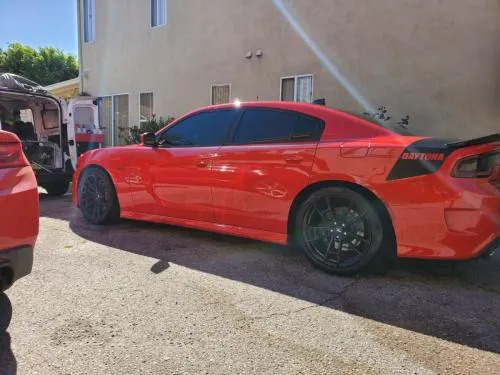

Why Water Spots Form on Vehicle Paint
Water spots are caused by minerals left behind when water evaporates. Tap water, sprinkler water, and even rainwater can contain calcium, magnesium, and other dissolved minerals.
When water dries on the surface:
- The water evaporates
- Minerals remain behind
- These minerals bond to the clear coat
Over time, repeated exposure can lead to etched spots that are harder to remove.
One thing I often notice is that people assume water spots are just a surface stain. In reality, light spotting can become a chemical imprint if left in direct sun too long, especially on dark-colored vehicles where it shows more clearly.
Avoid Letting Water Dry on the Surface
The simplest and most effective habit is also the most overlooked: do not let water dry on the paint.
After washing or exposure to rain:
- Dry the vehicle promptly
- Avoid parking under sprinklers or trees that drip water
- Do not leave wet sections in direct sunlight
Heat accelerates evaporation, which increases the likelihood of mineral deposits forming.
Even a short delay in drying can make a noticeable difference, especially on hood and roof panels that heat up quickly.
Use the Right Drying Technique
Drying plays a major role in preventing water spotting.
A proper drying routine includes:
- Clean microfiber drying towels
- A dedicated drying aid or quick detail spray
- Gentle blotting instead of aggressive wiping
Instead of dragging towels across the surface with pressure, it is often better to glide lightly or blot moisture.
Insider Tip: Dry in Sections, Not the Entire Car at Once
One mistake I see frequently is attempting to dry the entire vehicle before any section is fully addressed. By the time you return to the first panel, water has already dried again.
A better approach is to:
- Wash one section
- Dry immediately
- Move to the next section
This reduces the chance of water sitting long enough to spot.
Choose the Right Water Source When Washing
Not all water behaves the same on paint.
Hard water, commonly found in many regions, contains higher mineral content. When used for washing vehicles, it increases the likelihood of spotting.
If possible:
- Use filtered water for final rinse
- Avoid washing in direct sprinkler spray
- Consider a deionized rinse system for frequent washing
While most owners won’t install specialized systems, even simple changes in water exposure habits can help reduce spotting significantly.
Drying Aids Make a Noticeable Difference
Drying aids are often overlooked but extremely effective in preventing water spotting.
These products:
- Add lubrication during drying
- Reduce friction on paint
- Help water sheet off more easily
- Leave a thin protective layer
Even a light application can reduce mineral bonding after washing.
However, they should complement proper drying technique—not replace it.
Maintain a Consistent Protective Layer
Paint protection is one of the strongest defenses against water spotting.
When a surface has protection, water tends to:
- Bead and roll off faster
- Sit less aggressively on the clear coat
- Leave fewer bonded minerals
Common protection options include:
- Wax
- Sealants
- Ceramic coatings
- Spray sealants for maintenance
The key is consistency. A well-maintained protective layer reduces the surface tension that allows minerals to bond deeply.
Be Mindful of Sun Exposure After Washing
Sunlight plays a major role in water spotting.
After washing a vehicle:
- Avoid leaving it in direct sun while still wet
- Dry shaded panels first if possible
- Move the vehicle if needed to reduce heat exposure
I’ve seen cases where a perfectly clean car develops spotting within 20 minutes simply because it was parked under strong sun before drying was completed.
Timing matters more than most people realize.
Spot Removal Should Be Gentle and Timely
If water spots do appear, early removal is important.
For light spotting:
- Use a quick detail spray
- Wipe with a clean microfiber towel
- Repeat gently if needed
For moderate spotting:
- Diluted vinegar solution can help dissolve minerals
- Follow with a rinse and dry
For severe etching, polishing may be required, but that goes beyond routine maintenance.
The key is not letting spots sit for weeks or months.
Keep Exterior Trim and Glass in Mind
Water spotting doesn’t only affect paint.
It also appears on:
- Glass surfaces
- Chrome trim
- Gloss black panels
- Rubber moldings
These areas often show spotting more clearly than paint itself.
Cleaning them regularly helps maintain a uniform appearance across the entire vehicle.
Avoid Common Mistakes That Increase Water Spotting
Many water spot issues come from simple habits that seem harmless at first.
Leaving Water to Air Dry
This is the most common cause of spotting. Even clean water leaves minerals behind.
Washing in Full Sun
Hot panels accelerate evaporation, increasing spotting risk.
Using Dirty Drying Towels
Contaminants in towels can drag minerals across the surface.
Ignoring Post-Wash Inspection
Small droplets in crevices often get missed and later dry into visible spots.
I’ve personally noticed that door handles, mirror housings, and window trim edges are the most frequently overlooked areas.
Real-World Example of Preventable Spotting
I once worked on a dark sedan that had been regularly washed but always left to dry in direct sunlight. The owner was frustrated with persistent spotting despite frequent cleaning.
The issue wasn’t washing technique—it was timing. Water was evaporating faster than it could be removed. Once the routine changed to shaded drying and section-based wiping, the spotting reduced dramatically without any product changes.
Sometimes small adjustments in process make the biggest difference.
Professional Insight on Prevention Strategy
According to detailing professionals who handle vehicles exposed to frequent washing conditions, the combination of proper drying technique and surface protection is far more effective than reactive cleaning alone.
This approach is similar to maintenance practices outlined in this guide on car wash montrose ca, where controlled washing and consistent surface care help reduce long-term paint issues in challenging environments.
Seasonal Factors That Increase Water Spotting
Different weather conditions affect spotting risk.
Summer
High heat speeds up evaporation, making spotting more likely.
Winter
Hard water usage and slower drying conditions can leave mineral residue behind.
Spring
Frequent washing combined with pollen and dust increases residue buildup.
Fall
Organic debris mixed with moisture can leave stains if not cleaned promptly.
Adjusting maintenance habits based on season helps reduce long-term spotting issues.
Final Thoughts
Water spotting is not just a cosmetic inconvenience—it’s a gradual process that affects paint clarity and surface condition over time. The good news is that it is highly preventable with consistent habits.
Prompt drying, mindful washing techniques, proper protection, and attention to environmental conditions all work together to reduce spotting significantly. Once these practices become routine, maintaining clean, spot-free paint becomes far more manageable.