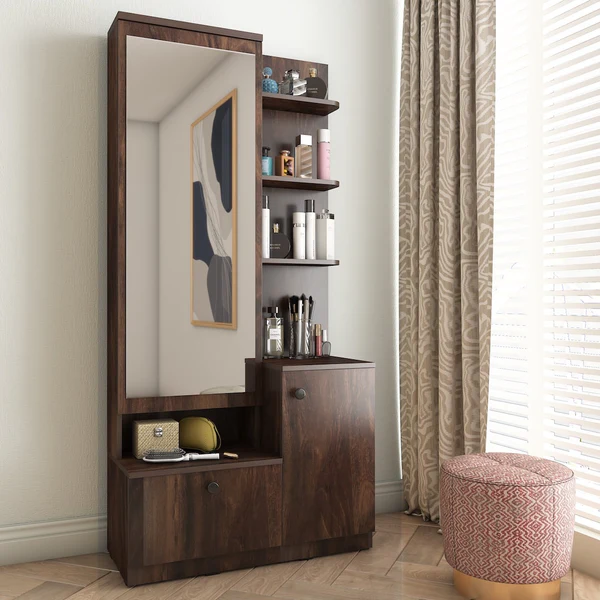

Designing a bedroom that feels cohesive and comfortable requires attention to detail, especially when adding functional furniture pieces. A dressing table is more than just a place to get ready—it can influence the overall look and feel of your room. Choosing the right one means making sure it blends naturally with your existing furniture while still serving your daily needs.
Start with Your Bedroom’s Overall Style
Every bedroom follows a certain design language, whether it’s modern, traditional, minimalist, or a mix of styles. Before selecting a dressing table, observe the key elements already present—your bed design, wardrobe finish, and side tables.
If your room leans toward a modern aesthetic with clean lines and neutral tones, a sleek and simple design will fit right in. On the other hand, a room with classic wooden furniture pairs better with a more detailed and warm-toned piece. Matching the overall style helps create a space that feels intentional rather than mismatched.
Pay Attention to Materials and Finishes
One of the easiest ways to achieve harmony is by aligning materials and finishes. If your bed and wardrobe feature natural wood textures, try to choose a dressing table in a similar tone or grain pattern. Even if the wood type isn’t identical, keeping the finish consistent—like matte or glossy—can make a big difference.
For rooms with engineered wood or laminate furniture, look for similar surface textures and colors. Small details like handles, edges, and polish can subtly tie everything together.
Choose the Right Size for Your Space
Proportion is often overlooked but plays a major role in how your room feels. A large unit in a compact bedroom can make the space look cramped, while a very small one in a spacious room may feel out of place.
Measure your available area before making a decision. Make sure there’s enough room to move around comfortably and that the table doesn’t block pathways or other furniture. In smaller bedrooms, compact or wall-mounted options can help save space without compromising usability.
Work Within a Coordinated Color Palette
Color coordination doesn’t mean everything has to match exactly. Instead, aim for a palette that feels balanced. If your bedroom features light tones like white, beige, or soft pastels, choose a piece that complements these shades. For darker furniture, deeper wood tones or muted finishes often work well.
You can also introduce subtle contrast for visual interest, but it should feel intentional rather than random. A well-chosen color can act as a bridge between different elements in the room.
Balance Style with Practical Needs
While appearance matters, functionality should be just as important. Think about how you plan to use the table every day. Do you need extra storage for cosmetics, accessories, or personal items? Would drawers or shelves make your routine easier?
A thoughtfully designed piece helps keep your room organized and reduces clutter. When everything has its place, the entire bedroom feels more relaxed and visually appealing.
Consider the Mirror Design
The mirror is often the focal point of a dressing table, so its design should align with your room’s style. A simple, frameless mirror suits modern interiors, while a wooden or decorative frame works better in traditional settings.
You can also explore options with built-in lighting for added convenience. The key is to ensure that the mirror complements the furniture around it rather than overpowering it.
Placement Makes a Difference
Where you position your dressing table can affect both its usability and the overall layout of your room. Placing it near a window allows natural light to enhance visibility, which is especially helpful for daily grooming.
If natural light is limited, consider adding soft lighting around the mirror. Proper placement not only improves functionality but also helps maintain a balanced arrangement of furniture within the room.
Decide Between Blending In or Standing Out
There are two common approaches when adding a new furniture piece. You can either make it blend seamlessly with the rest of the room or use it as a subtle focal point.
Blending works well if you prefer a clean and uniform look. On the other hand, a slightly contrasting design can add personality and depth. The key is to ensure that even a standout piece still feels connected to the overall theme.
Think About Space Efficiency
Modern homes often require smart use of space. If your bedroom is on the smaller side, look for designs that offer multiple functions or compact storage solutions. Foldable or wall-mounted options can be especially useful in tight areas.
Efficient furniture choices help you maintain both style and practicality without overcrowding the room.
Final Thoughts
Matching a dressing table with your bedroom furniture is about creating a sense of balance. By considering style, material, size, color, and functionality, you can find a piece that fits naturally into your space.
Instead of forcing a perfect match, focus on coordination and comfort. A well-chosen dressing table not only enhances your daily routine but also contributes to a bedroom that feels thoughtfully designed and easy to live in.