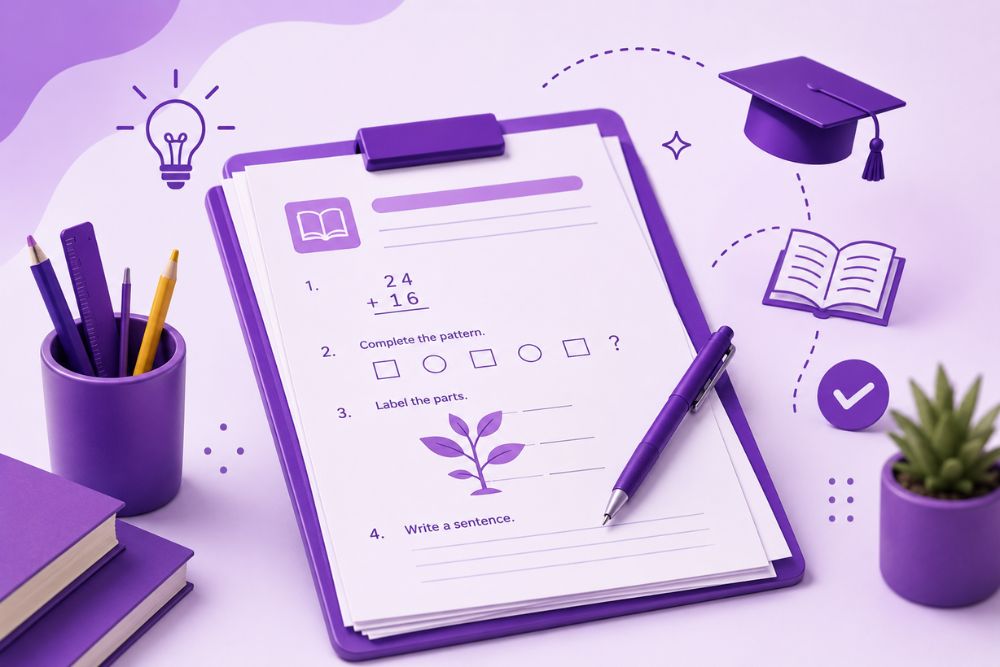

Creating effective classroom resources can be one of the most time-consuming parts of teaching. Whether you’re teaching math, science, language arts, history, or even specialized subjects, students need opportunities to apply what they have learned. This is where practice worksheets become incredibly valuable. A well-designed worksheet can reinforce concepts, improve retention, and help students build confidence through independent learning.
The good news is that creating useful worksheets does not have to be complicated. With a clear strategy and a focus on learning objectives, teachers, tutors, and homeschool parents can develop engaging resources for virtually any subject.
Start With a Clear Learning Goal
Before creating any worksheet, it is important to identify exactly what students should learn or practice.
Ask yourself a simple question: What should students be able to do after completing this activity?
For example, a math worksheet might focus on fractions, while a language arts worksheet may help students improve grammar or vocabulary skills. By defining a specific goal, you can create activities that directly support student learning rather than adding unnecessary content.
Clear objectives also make it easier to measure progress and identify areas where students may need additional support.
Keep the Content Focused
One common mistake is trying to cover too many topics in a single worksheet.
Students often learn more effectively when activities focus on one concept at a time. A worksheet dedicated to a specific skill allows learners to practice consistently without becoming overwhelmed.
For example:
- A science worksheet could focus on the parts of a plant.
- A history worksheet might cover a single historical event.
- A reading activity could concentrate on identifying the main idea.
Keeping content focused improves comprehension and makes learning more manageable.
Use a Variety of Question Types
Students respond well to different learning formats.
Instead of filling an entire page with the same type of question, consider mixing activities to maintain engagement. A combination of formats can help reinforce concepts while making the worksheet more enjoyable to complete.
Some effective options include:
- Multiple-choice questions
- Fill-in-the-blank exercises
- Matching activities
- Short-answer questions
- Problem-solving tasks
- True or false statements
- Discussion prompts
Variety encourages students to think in different ways and keeps learning interesting.
Make Instructions Simple and Clear
Even the best-designed activity can become frustrating if students do not understand what they are supposed to do.
Instructions should be concise, direct, and easy to follow. Whenever possible, include an example that demonstrates the expected response.
Clear instructions help students work independently and reduce confusion during lessons or homework assignments.
Match Difficulty to Student Ability
A worksheet should challenge students without discouraging them.
If activities are too easy, students may lose interest. If they are too difficult, learners may become frustrated and disengaged.
The ideal worksheet strikes a balance between support and challenge. Consider the age, grade level, and current understanding of your students when designing activities.
Many educators create multiple versions of the same worksheet to accommodate different learning levels within a classroom.
Include Opportunities for Critical Thinking
Worksheets do not need to focus solely on memorization.
Adding questions that encourage analysis, problem-solving, and reasoning can help students develop deeper understanding. Critical-thinking exercises allow learners to apply knowledge rather than simply recall information.
For example, instead of asking students to memorize facts, encourage them to explain why something happened, compare ideas, or predict outcomes.
These types of questions often lead to stronger learning outcomes.
Save Time With Technology
Creating educational resources manually can take hours, especially when teaching multiple subjects.
Today, many educators use digital tools and AI-powered platforms to generate customized worksheets quickly. These tools can help create questions, activities, and exercises based on specific topics and learning goals.
Rather than starting from a blank page every time, teachers can use technology to build high-quality practice worksheets while focusing more attention on instruction and student support.
This approach can significantly reduce preparation time without sacrificing educational value.
Review and Improve Over Time
The best worksheets are rarely perfect on the first attempt.
After using an activity, take note of how students respond. Were the instructions clear? Did students complete the worksheet successfully? Which questions generated the most confusion?
Small adjustments can improve effectiveness and make future lessons even more successful.
Building a collection of tested resources also helps teachers save time throughout the school year.
Final Thoughts
Creating effective educational materials does not require advanced design skills or endless hours of preparation. By focusing on learning objectives, keeping content clear, and incorporating a variety of activity types, educators can develop meaningful resources for any subject.
Whether you teach in a classroom, tutor students, or homeschool your children, well-designed practice worksheets can reinforce learning, improve engagement, and help students build confidence. When created thoughtfully, these simple resources become powerful tools that support long-term academic success.