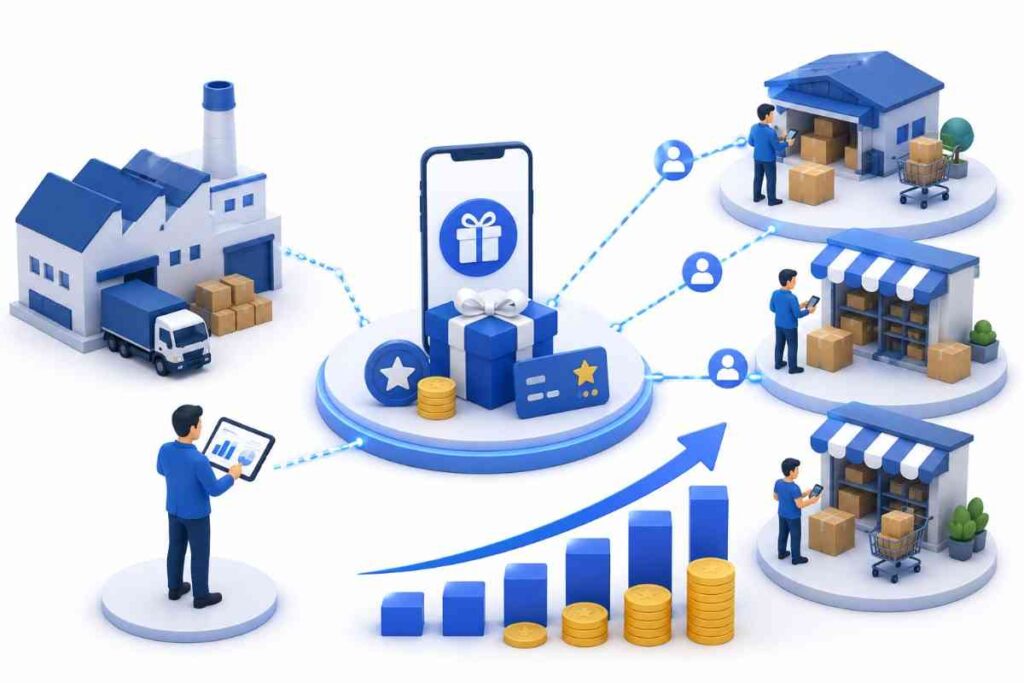

In today’s competitive B2B marketplace, winning a dealer’s business is no longer enough. Manufacturers, distributors, and brands face constant competition as channel partners are regularly approached by rival companies offering better prices, attractive incentives, and improved commercial terms. While product quality and pricing remain essential, they are rarely the only factors influencing purchasing decisions.
Dealers and distributors prefer to work with brands that consistently support their growth, recognise their contributions, and create long-term business value. A strong relationship often becomes the deciding factor when similar products are available from multiple suppliers.
This is where a B2B channel loyalty program becomes a strategic advantage. Rather than rewarding only transactions, these programs strengthen relationships with dealers, retailers, distributors, and other channel partners by encouraging long-term engagement and mutual success.
A well-designed loyalty program helps businesses improve dealer retention, increase wallet share, gather valuable market insights, and reduce dependence on price-based competition. As competition intensifies across industries, businesses that invest in structured dealer engagement strategies are better positioned to achieve sustainable growth.
Industry research highlights the impact of dealer loyalty. Even a small increase in channel partner retention can significantly improve long-term revenue, yet many organisations still operate without a structured loyalty strategy. This presents an opportunity for businesses that want to differentiate themselves through stronger partner relationships.
Why B2B Channel Loyalty Programs Are Different
Many businesses make the mistake of designing their dealer loyalty programs using the same principles as consumer rewards programs. Although both aim to encourage repeat business, B2B purchasing behaviour differs significantly from consumer buying behaviour.
Understanding these differences is essential for building a program that delivers measurable results.
Multiple Stakeholders Influence Every Purchase
Consumer loyalty programs generally focus on rewarding a single buyer. In contrast, business purchasing decisions usually involve multiple individuals within the dealer organisation.
These stakeholders may include:
- Business owners
- Dealer principals
- Sales representatives
- Inventory managers
- Procurement teams
- Service technicians
- Finance departments
Each of these people contributes to purchasing decisions in different ways. For example, a dealer owner may approve budgets, while the sales team recommends products to customers and inventory managers decide which products remain in stock.
A successful loyalty program recognises these multiple contributors instead of rewarding only one decision-maker.
Business Decisions Are Both Rational and Emotional
Although B2B purchases are often considered purely commercial decisions, relationships continue to play a major role.
Dealers naturally prefer brands that:
- Provide reliable support
- Resolve issues quickly
- Offer exclusive benefits
- Recognise achievements
- Build trust over time
Financial rewards certainly matter, but emotional loyalty should never be overlooked.
Recognition, appreciation, and a sense of belonging often create stronger loyalty than discounts alone. Dealers who feel valued are less likely to switch suppliers simply because another company offers a lower price.
Loyalty Programs Must Deliver Long-Term Value
Consumer campaigns often focus on short promotional periods.
Dealer loyalty programs, however, should be designed as long-term business strategies.
A successful program continues creating value throughout the entire dealer relationship—not only during its launch.
Businesses should continuously introduce:
- New campaigns
- Seasonal promotions
- Product education
- Sales challenges
- Recognition initiatives
- Exclusive rewards
This ongoing engagement ensures dealers remain interested and motivated year after year.
Compliance Is an Important Consideration
Companies operating dealer loyalty programs in India must also address several regulatory requirements.
These include:
- GST implications on rewards
- TDS requirements for certain reward types
- Data protection obligations under the Digital Personal Data Protection Act (DPDPA)
- Proper tax documentation
Compliance should be built into the program from the beginning rather than added later.
Ignoring these requirements can expose both businesses and dealers to unnecessary financial and legal risks.
Why Many Dealer Loyalty Programs Fail
Launching a loyalty program requires investment in technology, rewards, communication, and management. However, despite significant budgets, many programs fail to generate meaningful engagement.
The primary reason is not a lack of investment.
Instead, businesses often design programs around their own objectives without understanding what actually motivates dealers.
For example, companies may introduce complicated reward structures, low-value incentives, or difficult redemption processes that discourage participation rather than encourage it.
Dealers quickly lose interest when they cannot clearly understand:
- How to earn rewards
- How much rewards are worth
- How to redeem them
- Why the program benefits their business
The most successful loyalty programs are simple, transparent, and designed around dealer behaviour instead of internal assumptions.
The Business Value of a Well-Designed Loyalty Program
Dealer loyalty programs deliver benefits that extend far beyond increasing repeat purchases.
When managed effectively, they become valuable business growth platforms.
Higher Wallet Share
Dealers enrolled in loyalty programs often allocate a larger percentage of their purchases to participating brands.
Rather than splitting orders across multiple suppliers, they naturally prioritise manufacturers who consistently reward their business.
This increase in wallet share contributes directly to long-term revenue growth.
Better Dealer Intelligence
Every interaction within a loyalty platform generates useful business data.
Companies gain insights into:
- Purchase patterns
- Product preferences
- Regional demand
- Dealer engagement
- Campaign performance
- Inventory trends
These insights help improve forecasting, marketing, inventory planning, and product development.
Reduced Price Sensitivity
Businesses often compete aggressively on price.
However, dealers who receive ongoing value through rewards, recognition, and exclusive benefits are less likely to switch suppliers simply because of a temporary discount.
Instead, they evaluate the complete partnership, including service quality, support, and long-term rewards.
Improved Dealer Knowledge
Many loyalty programs encourage dealers to complete product training.
Rewarding educational activities helps dealers:
- Improve product knowledge
- Recommend products more confidently
- Increase premium product sales
- Deliver better customer experiences
Training incentives strengthen both dealer capability and overall brand performance.
Identifying Dealers at Risk
Modern loyalty platforms provide valuable engagement insights.
A sudden decline in participation often indicates that a dealer may be losing interest or beginning to purchase from competitors.
Early visibility allows businesses to intervene before valuable relationships are lost.
Instead of reacting after sales decline, companies can proactively strengthen dealer engagement through targeted campaigns, personalised communication, or additional support.