
How to Become a Digital Marketing Expert
Digital marketing has become a cornerstone of modern business. Companies today need professionals who can reach the right audience, build engagement, and drive measurable results. Becoming a digital marketing expert requires more than just knowing tools—it combines technical knowledge, creativity, strategy, and hands-on experience.
This guide explores the essential skills, responsibilities, tools, career steps, and future trends you need to succeed in digital marketing.
What Digital Marketing Experts Do
Digital marketing experts manage campaigns across online channels, including websites, social media platforms, search engines, and email marketing. Their primary objectives include:
- Driving targeted traffic to websites and landing pages
- Creating high-quality, engaging content
- Converting visitors into loyal customers
- Measuring performance and continuously optimizing campaigns
They play a critical role in helping businesses grow by aligning marketing strategies with overall business goals.
Key Skills to Develop
Technical Skills
A solid technical foundation is essential. Important areas include:
- HTML and CSS basics: Understanding website structure and design fundamentals
- Search Engine Optimization (SEO): Keyword research, on-page optimization, and link-building strategies
- Content Management Systems (CMS): Platforms like WordPress or HubSpot help publish, organize, and optimize content efficiently
These technical skills allow experts to build effective, high-performing online campaigns.
Analytical Skills
Data-driven decisions are at the heart of successful digital marketing. You should be able to:
- Track website traffic and analyze user behavior
- Measure conversions and ROI from campaigns
- Identify trends and insights to refine marketing strategies
Analytics skills help turn raw data into actionable decisions that improve campaign performance.
Creative Skills
Creativity is what makes campaigns stand out in a competitive market. Focus on:
- Writing compelling, high-quality content
- Developing clear, consistent brand messaging
- Designing campaigns that capture attention and drive engagement
Communication Skills
Collaboration is key to success. Digital marketers must:
- Present ideas clearly to team members and stakeholders
- Work with designers, developers, and content creators
- Manage multiple projects and deadlines efficiently
Strong communication ensures campaigns are cohesive and effective.
Core Responsibilities
- Campaign Management: Plan, implement, and manage marketing campaigns across multiple platforms
- Performance Monitoring: Track KPIs, analyze results, and optimize campaigns for better outcomes
- Strategic Planning: Conduct competitor analysis, research market trends, and create long-term marketing strategies
Essential Tools for Success
- Analytics Tools: Google Analytics, Hotjar
- Design Tools: Canva, Adobe Creative Suite
- Automation Tools: Email marketing platforms and CRMs like Mailchimp or HubSpot
- SEO Tools: SEMrush, Ahrefs, Google Search Console
Mastering these tools improves productivity, enhances campaign performance, and enables data-driven decision-making.
Steps to Start Your Career
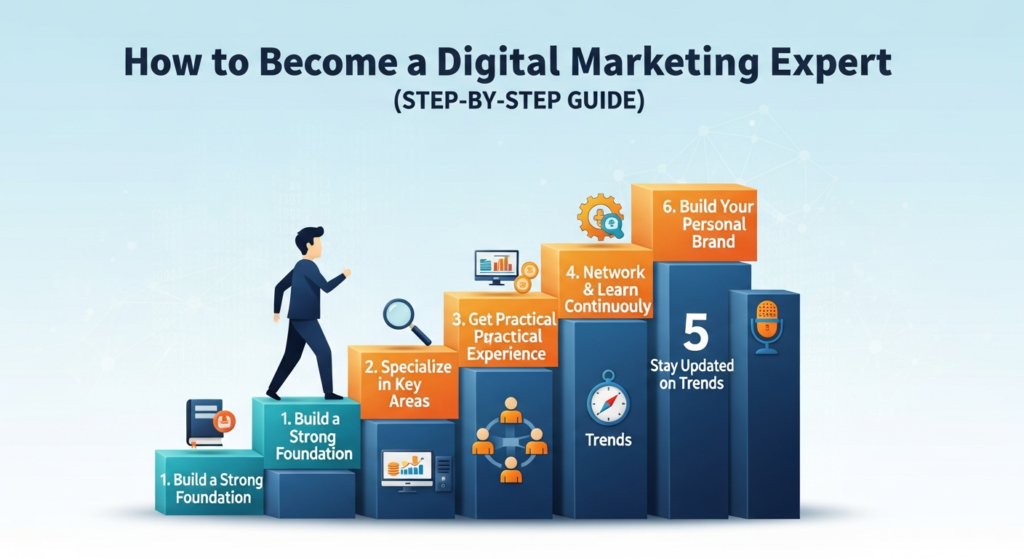
Learn the Fundamentals
Online courses and industry certifications provide a structured path to building expertise. While a degree in marketing, communications, or business can help, it is not mandatory.
Gain Practical Experience
Hands-on experience accelerates learning. You can:
- Start your own blog or website
- Work on projects for local businesses or nonprofits
- Take freelance opportunities to apply your skills
Stay Updated
The digital marketing landscape evolves rapidly. Regularly follow blogs, podcasts, webinars, and social media communities to stay informed about trends, algorithm updates, and best practices.
Build a Professional Network
Networking accelerates growth and opens new opportunities. Connect with fellow marketers, mentors, and industry professionals through conferences, forums, and online communities.
Trends Shaping the Future of Digital Marketing
- Artificial Intelligence and Automation: Smarter campaigns and personalized marketing
- Voice Search Optimization: Adapting SEO strategies for virtual assistants
- Short-Form and Video Content: Growing importance of video engagement
- Data Privacy and First-Party Data: Navigating regulations and building trust with users
Understanding these trends helps you remain competitive in an ever-evolving digital landscape.
Final Thoughts
Becoming a digital marketing expert is a continuous journey of learning, experimentation, and improvement. By developing technical, analytical, creative, and communication skills, gaining practical experience, staying updated with trends, and building a professional network, you can achieve a successful and fulfilling career in digital marketing.
more details : https://digitalvibevault.com/how-to-become-a-digital-marketing-expert/
Frequently Asked Questions (FAQs)
Do I need a degree to become a digital marketing expert?
No. Skills, certifications, and practical experience are more important than formal education.
How long does it take to become an expert?
Typically 3–5 years of consistent practice, learning, and real-world experience.
Is digital marketing a good career choice?
Yes. It offers strong demand, career flexibility, and long-term growth opportunities.