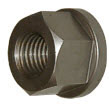

Anyone who has spent real time around a machine shop knows this already: precision starts long before the cutter touches metal. You can have a well-calibrated CNC machine, sharp tooling, and a clean program, but if the part shifts even slightly during the cut, the entire operation starts chasing problems. Poor finishes. Missed tolerances. Chatter marks that should not be there. A properly selected workholding device eliminates that instability at the source by securing the workpiece firmly to the machine table so it stays exactly where it belongs throughout the operation.
Why Workholding Matters in Machining?
Machining generates force from every direction. Side loads during milling, vibration from aggressive cuts, repeated tool entry points, heat buildup over longer cycles all of it puts stress on the setup. If the clamping arrangement is weak or uneven, the workpiece moves. Sometimes it is obvious. Sometimes it is just enough to throw a critical dimension out of tolerance.
That is why experienced machinists pay close attention to workholding. The setup is not an accessory to the process. It is part of the process.
At George H. Seltzer & Co., we manufacture setup hardware built specifically for these machining environments. Often referred to as jigs and fixtures, workholding systems are designed to secure billets and workpieces onto machine tables without movement during machining operations.
A typical workholding setup may include:
- T-slot bolts
- T-slot nuts
- Coupling nuts
- Extension nuts
- Step blocks
- Gooseneck clamps
- Extra-thick washers
- Forged steel clamps
Each component has a purpose. And when the setup is done correctly, the machine cuts cleaner, steadier, and more predictably.
Improved Stability Leads to Better Accuracy
The connection between stability and accuracy is straightforward. A rigid setup reduces vibration. Less vibration means more consistent cutting pressure, cleaner edge quality, and tighter dimensional control.
You see the difference immediately in demanding jobs. Deep milling passes become smoother. Hole locations stay true. Surface finishes improve because the tool is cutting material instead of fighting movement.
A properly constructed workholding device also helps to distribute clamping pressure more uniformly throughout the part. This is more important than people think, especially if you are using thinner materials or odd-shaped workpieces where distortion might creep in as you tighten.
Some of the practical benefits include:
- Improved dimensional consistency
- Better repeatability between production runs
- Reduced scrap rates
- Cleaner surface finishes
- Longer cutting tool life
- More stable machining under heavier loads
None of this is theoretical. Shops deal with these variables every day.
The Importance of Proper Component Selection
There is no universal clamping setup that works for every application. A large steel billet requires a different approach than a small precision-machined component. Thin materials behave differently under pressure. Odd-shaped parts introduce their own headaches. Good setups account for all of that.
Step blocks, for example, allow machinists to adjust clamp height without compromising support. Gooseneck clamps provide flexibility where standard clamps cannot reach effectively. T-slot bolts and T-slot nuts create the anchor points that hold the entire assembly together.
At George H. Seltzer & Co., we design machining hardware for real production conditions, not idealized catalog scenarios. A workholding device has one job above all else: maintain rigidity under load while keeping the workpiece properly aligned throughout the cut.
If it cannot do that consistently, accuracy disappears quickly.
Reducing Downtime and Production Errors
Bad setups waste time in ways that compound throughout the day. A part slips. The operator stops the machine. Measurements get checked again. Tool offsets are adjusted. Another piece gets scrapped. Productivity drops one interruption at a time.
Reliable workholding cuts down on those interruptions. Stable fixtures reduce the need for constant adjustment and help maintain repeatable setups across multiple production cycles. That consistency matters, particularly in shops running tight schedules or higher-volume work.
A dependable workholding device helps improve:
- Setup efficiency
- Machining consistency
- Tool protection
- Production throughput
- Overall operational reliability
It also gives machinists something they value quite a bit: confidence in the setup before the cycle starts.
Precision Starts with the Right Setup
The best machinists rarely rush through setup work. They know accuracy is built into the fixture long before the spindle reaches operating speed. Secure clamping, proper support, and rigid positioning all influence the final result sitting on the inspection table.
At George H. Seltzer & Co., we supply industrial setup hardware designed to perform in demanding machining environments where repeatability and stability matter every day. From T-slot bolts and forged clamps to step blocks and flanged hex nuts, our products are manufactured to support dependable, high-precision workholding device applications across a wide range of industries.
Contact George H. Seltzer & Co.
Looking for dependable setup hardware that holds up under real machining conditions? Contact George H. Seltzer & Co. to learn more about our industrial clamping and fixturing solutions built for precision machining and long-term workholding device performance.
FAQs
1. What is a workholding device?
A workholding device is a system used to securely hold a workpiece in place during machining operations such as milling, drilling, or tapping.
2. Why is proper workholding important in CNC machining?
Proper workholding helps prevent vibration, movement, and misalignment, which directly affect machining accuracy and surface finish quality.
3. What components are commonly used in workholding setups?
Common components include T-slot bolts, T-slot nuts, step blocks, forged clamps, washers, coupling nuts, and gooseneck clamps.
4. How does a workholding device improve machining consistency?
By stabilizing the workpiece throughout the operation, a workholding device helps maintain repeatable dimensions and reduces production errors.
5. What industries commonly use industrial workholding systems?
Workholding systems are widely used in aerospace, automotive, metal fabrication, precision machining, and tool and die manufacturing.