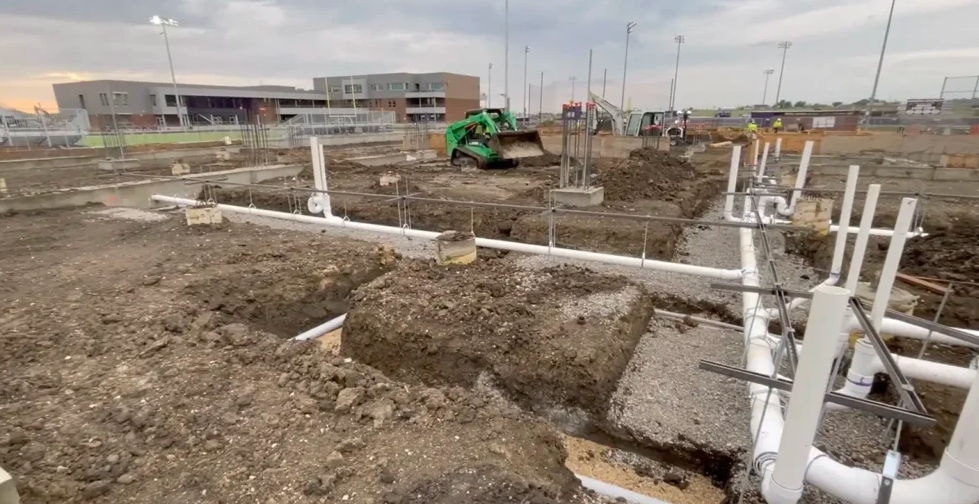

Under-slab plumbing doesn’t fail overnight. It fails slowly under pressure that most people don’t see coming.
Soil moves. It expands, contracts, and shifts with moisture and temperature. And when that movement transfers directly to rigid plumbing lines, the result is predictable: cracks, joint failures, and expensive repairs buried beneath finished structures.
Here’s where the conversation needs to change. Reliability in plumbing isn’t just about pipe quality. It’s about how well the system handles movement.
The real problem beneath the slab
Traditional plumbing systems are installed with one assumption: the ground stays relatively stable. But in regions with expansive soils, that assumption doesn’t hold.
When soil swells, it pushes upward. When it dries, it pulls away. That cycle puts constant stress on pipes that were never designed to flex with it.
What this really means is simple:
Even a perfectly installed system can fail if the ground beneath it keeps moving.
Rethinking how plumbing is supported
Instead of fighting soil movement, modern design approaches work around it.
This is where the mudskipper system comes into play.
Rather than anchoring plumbing directly into unstable soil conditions, it creates a controlled environment where pipes are isolated from ground movement. The system essentially decouples the plumbing from the forces acting on the slab.
That shift from resistance to isolation is what changes long-term performance.
How isolation improves reliability
When plumbing is isolated, it’s no longer absorbing the stress of soil expansion and contraction.
Here’s what that leads to:
- Reduced pipe stress and fewer cracks
- Better joint integrity over time
- Lower risk of leaks in critical areas
- Less need for invasive repairs
It’s not just about avoiding failure. It’s about extending the lifecycle of the entire plumbing system. Most failures don’t happen because of poor materials. They happen at transition points where systems meet, where movement is uneven, or where stress concentrates.
This is often overlooked during design.
The mudskipper system addresses this by introducing a more flexible, engineered approach to how plumbing interacts with the structure and the soil beneath it.
Instead of treating plumbing as a static installation, it treats it as something that needs to perform in a dynamic environment.
Why this matters for modern construction
Construction today is under pressure to deliver buildings that last longer with fewer maintenance issues.
Under-slab plumbing is one of the most disruptive and expensive systems to repair once a building is complete. Any failure means breaking through finished floors, halting operations, and absorbing high costs.
Improving reliability at the design stage isn’t optional anymore; it’s a necessity.
Using systems like the mudskipper system shifts the focus from reactive fixes to proactive performance.
The Takeaway
Under-slab plumbing reliability isn’t about assuming the ground beneath a structure will remain stable over time. In reality, soil is constantly shifting due to moisture changes, temperature variations, and natural settling. Because of this, the key to a durable plumbing system lies in designing with movement in mind rather than ignoring it.
By isolating plumbing systems from soil movement, you significantly reduce the risk of cracks, leaks, and long-term structural damage. This proactive approach prevents one of the most common causes of plumbing failure and helps maintain consistent performance over time. Instead of reacting to costly repairs, property owners can rely on a system that is built to handle environmental stress from the start.
When this risk is minimized, the benefits extend far beyond the pipes themselves. Maintenance costs decrease, system lifespan improves, and disruptions caused by unexpected failures are greatly reduced. It also provides peace of mind, knowing the infrastructure beneath your property is stable and dependable.
Ultimately, the real value lies in shifting perspective. It’s not just about installing a better plumbing system—it’s about understanding and planning for what’s happening below the surface, ensuring long-term reliability and efficiency.