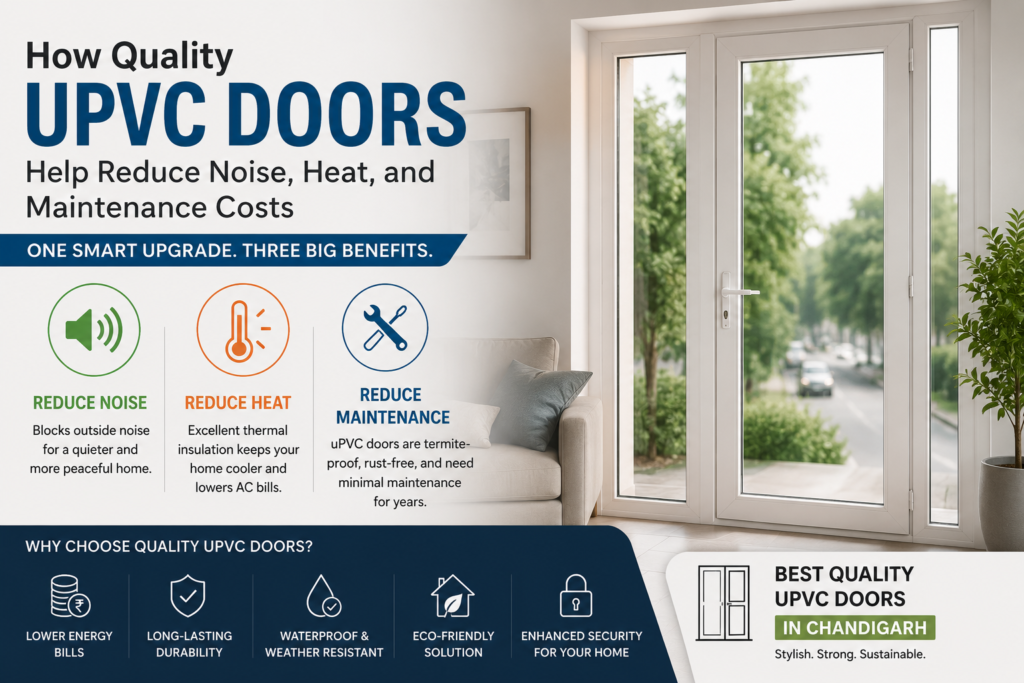

One thing most homeowners never realize. A bad door runs up three bills. The noise bill is paid with your sleep and focus. The heat bill is paid monthly through your AC. And the upkeep bill is paid in painting, polishing, and termite treatments year after year.
A quality uPVC door cuts all three at once, which is why it’s fast replacing wood and aluminum in Indian homes. But how does a “plastic-looking” door manage to do all this? The answer sits inside the frame, where nobody looks. Let’s open it up.
What’s Inside a Quality uPVC Door
Cut a good uPVC frame in half and you won’t find a solid block. You’ll find several small air pockets. This multi-chambered profile is the heart of everything. Trapped air carries sound and heat terribly, so each chamber becomes a barrier they must fight through.
Add a galvanized steel core, fusion-welded corners, and double rubber seals around the edges, and the door shuts like a fridge, snug, silent, and airtight.
Bill No. 1: The Noise You Live With
Traffic, honking, barking dogs, and the neighbor’s endless renovation. City noise never rests. A quality uPVC door fights it in layers:
- Air chambers absorb sound waves before they cross the frame.
- Dense, rigid uPVC doesn’t vibrate easily like metal or thin wood, so sound dies instead of travelling through.
- Double glazing with two panes with an air gap to stops noise plain glass would let in.
- Tight gaskets and seals close the tiny gaps where most sound sneaks in.
Together, a decent uPVC door with double glazing can cut outside noise by around 30–40 decibels. In simple words, loud traffic becomes a faint hum. It becomes the difference between a restless night and a proper one.
Bill No. 2: The Heat You Pay For Every Month
uPVC is naturally a poor conductor of heat, and for once, being poor at something is great. Wood absorbs heat, aluminum practically invites it in, and uPVC refuses to pass it along.
- In summer, the multi-chambered frame blocks outside heat, so your AC doesn’t have to work as hard.
- In winter, the same chambers hold warmth in.
- Double glazing adds another buffer, and the airtight seals kill drafts that leak cooled air out.
The result shows up in your electricity bill. Studies suggest homes with uPVC doors and windows can save up to 20% on annual heating and cooling costs. In a city swinging between scorching summers and chilly winters, the installed, best quality UPVC doors in Chandigarh homes can basically pay for themselves.
Bill No. 3: The Money and Time You Spend on Upkeep
This is where wood bleeds your wallet. A wooden door demands repainting every couple of years, termite treatments, and repairs when it swells or cracks. Aluminum fades and corrodes. The qualities of a uPVC door are:
- No need for painting or polishing: The color is part of the material, not a coat on top.
- Termite-proof: Termites can’t eat it. No pesticides, no panic.
- No rust, rot, or warping: Rain, humidity, and heat don’t bother it.
- Cleaning is a two-minute job: A wipe with soapy water, done.
Over a lifespan of 25–30 years, that’s thousands saved in repairs that a wooden door would have eaten.
Features That Separate a Quality Door From a Cheap One
Not every uPVC door delivers these savings. Cheap ones cut corners where it matters. When buying UPVC doors in Chandigarh or anywhere else, check the following:
- Profile thickness and chambers: More chambers, better insulation.
- Steel reinforcement inside: No steel, no strength.
- Quality of seals and gaskets: Thin seals leak sound and air.
- Glazing: Double glazing is always better than single glazing.
- Proper installation: Even the best door fails if fitted with gaps. Insist on professional fitting.
- Testing and certification: Genuine brands get their profiles lab-tested for weathering and strength.
Final Word
A quality uPVC door is three savings in one: peaceful rooms, cool summers, and years of zero upkeep. The trick is choosing one that’s genuinely well-built, not just well-marketed.
That’s where ArcEye Windoors, one of the top UPVC door and window manufacturers in Mohali, stands out. Their doors offer noise insulation, rainwater insulation, termite resistance, storm resistance, and no-maintenance durability, with laminates crafted for tropical climates and a dependable warranty. Their formulation is accredited by renowned European and UK testing institutions, including accelerated weathering up to 25,000 hours. Call +91 90562 22039 or write to info@arceyewindoors.com.
FAQs
- How much noise can a uPVC door actually block?
Ans: A quality uPVC door with double glazing and proper seals can cut outside noise by roughly 30–40 decibels. Loud traffic becomes a faint hum, a real difference in bedrooms and living rooms. - Do uPVC doors really lower electricity bills?
Ans: Yes. Since uPVC conducts very little heat and the frame is airtight, your AC and heater work less. Homes with uPVC doors and windows can save up to 20% on cooling and heating costs. - Are uPVC doors completely maintenance-free?
Ans: Almost. They never need painting, polishing, or termite treatment. An occasional wipe with soapy water is enough. Only the rubber seals may need replacing after many years. - How long do uPVC doors last?
Ans: A high-quality uPVC door easily lasts 25–30 years. It won’t rot, rust, warp, or fade quickly, which is why it works out cheaper than wood or aluminum over its life. - Is uPVC better than wood or aluminum for insulation?
Ans: Yes. Wood insulates decently but demands constant upkeep, while aluminum passes heat and sound easily. uPVC’s multi-chambered frame beats both while needing almost no care. - Does double glazing make a big difference in a uPVC door?
Ans: It does. The air gap between the panes blocks sound and heat much better than single-pane glass. If your door faces a road or the sun, double glazing is worth every rupee.