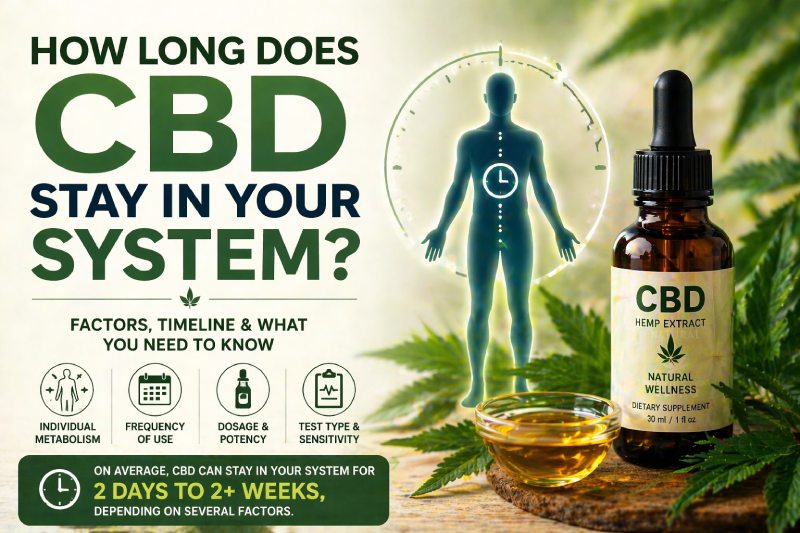

Cannabidiol (CBD), a non-psychoactive compound derived from the cannabis plant, has become a popular natural remedy for various health concerns. From alleviating pain and anxiety to improving sleep quality and supporting overall well-being, CBD has many potential benefits. However, many users wonder: how long does CBD stay in your system? This question is essential for those new to CBD, as well as those who may need to take drug tests for employment or legal reasons.
In this article, we will explore how long CBD remains in your body, the factors that influence its duration, and how you can manage its presence in your system. We’ll also address common questions about CBD’s effects and how long they last.
Understanding CBD: What Is It and How Does It Work?
CBD is one of the many cannabinoids found in the cannabis plant, but it is distinct from tetrahydrocannabinol (THC), the compound responsible for the “high” associated with marijuana. CBD is non-psychoactive, which means it doesn’t produce any intoxicating effects. Instead, it interacts with the body’s endocannabinoid system (ECS) to regulate essential functions like pain, mood, and sleep.
CBD works by interacting with CB1 and CB2 receptors in the ECS. While the CB1 receptors are mainly located in the brain and central nervous system, CB2 receptors are found in the immune system and peripheral tissues, including the skin and joints. By influencing these receptors, CBD can help regulate inflammation, reduce pain, and promote general wellness.
Factors That Affect How Long CBD Stays in Your System
The duration that CBD stays in your system can vary depending on several factors. These include your metabolism, body composition, dosage, frequency of use, and the method of consumption. Let’s take a closer look at each of these factors:
1. Method of Consumption
The method through which CBD enters your body significantly affects how long it stays in your system. Here are the common methods of consuming CBD:
- Oral Consumption (CBD Oil, Capsules, Edibles): When you ingest CBD in the form of oil, capsules, or edibles, it must pass through the digestive system before being absorbed into the bloodstream. This means the effects may take longer to kick in, but they also last longer in your body. Generally, CBD taken orally can stay in your system for 3 to 5 days.
- Sublingual Consumption (CBD Tinctures): With tinctures, you place CBD oil under your tongue, where it’s absorbed directly into the bloodstream. This method allows for quicker absorption compared to oral consumption. The effects may last for 1 to 2 days, depending on factors such as dosage.
- Vaping: When CBD is vaped, it enters the bloodstream through the lungs, providing rapid effects. The effects may be felt almost immediately, but they tend to last for a shorter duration (about 4 to 6 hours). However, vaping may not have as long-lasting an effect as edibles or tinctures.
- Topical Application (CBD Creams, Lotions): CBD topicals are applied directly to the skin and are absorbed into the localized area where they are applied. Since they don’t enter the bloodstream in significant amounts, the effects are usually localized, and the CBD doesn’t remain in the system for as long as other methods.
2. Metabolism and Body Composition
Your metabolism plays a significant role in how quickly your body processes CBD. Individuals with a faster metabolism will likely clear CBD from their system more quickly than those with a slower metabolism.
Additionally, body composition can impact how long CBD stays in your system. People with higher body fat percentages may retain CBD for a longer period because CBD is fat-soluble. This means it binds to fat cells, allowing it to stay in the body longer. On the other hand, people with lower body fat may metabolize CBD more quickly.
3. Dosage and Frequency of Use
The amount of CBD you take and how often you use it can also affect how long it stays in your system.
- Higher Doses: Taking a larger dose of CBD may result in the compound staying in your system longer, as your body has to process and break down the higher concentration of CBD.
- Regular Use: People who use CBD regularly may accumulate the compound in their system over time. As CBD builds up in your system, it may stay in your body for a longer duration.
4. CBD Product Type and Quality
The quality of the CBD product you’re using is another critical factor. Full-spectrum CBD products, which contain a range of cannabinoids, terpenes, and other plant compounds, may stay in your system longer than isolated CBD products. This is because the compounds work together in synergy, potentially prolonging their effects.
Additionally, CBD products with added ingredients or high potency may also have longer-lasting effects.
5. Hydration and Activity Level
Your hydration levels and physical activity can influence how quickly your body metabolizes CBD. Staying hydrated helps your body process substances more efficiently, including CBD. If you are physically active, your metabolism may be higher, which could lead to CBD clearing from your system more quickly.
How Long Does CBD Stay in Your System for a Drug Test?
One of the most common concerns about using CBD is its potential impact on drug tests. Since CBD is derived from cannabis, many wonder whether it will show up on a drug test, particularly in relation to THC levels.
It’s important to note that most drug tests are designed to detect THC, not CBD. However, if you are using a full-spectrum CBD product (which contains trace amounts of THC), it’s possible that small amounts of THC may accumulate in your system over time, potentially leading to a positive drug test result. This is particularly true for individuals who use high doses or take CBD regularly.
The best way to avoid testing positive for THC is to use CBD isolate products, which contain no THC. If you’re concerned about drug testing, it’s also advisable to check the THC content of your CBD product and ensure that it is within the legal limit of 0.3% THC.
How Long Do the Effects of CBD Last?
While CBD may stay in your system for several days, the effects typically do not last as long. Depending on the method of consumption, the effects of CBD can last anywhere from 4 hours to 24 hours. Here’s a breakdown:
- Vaping: The effects may last for 4 to 6 hours, as vaping provides fast relief but does not last long.
- Tinctures and Oils: The effects may last from 6 to 12 hours, depending on the dosage and individual metabolism.
- Edibles: Edibles tend to have the longest-lasting effects, lasting anywhere from 12 to 24 hours. However, they also take longer to kick in.
How to Eliminate CBD from Your System Faster
If you need to clear CBD from your system more quickly, there are a few strategies you can try:
- Exercise: Regular physical activity can increase metabolism and help the body eliminate CBD more quickly.
- Drink Plenty of Water: Staying hydrated can help your body flush out CBD faster, especially if you consume it in higher doses.
- Eat a Healthy Diet: Eating foods rich in fiber and antioxidants may help support your body’s natural detoxification processes.
- Avoid CBD Use Temporarily: If you’re trying to clear CBD from your system for a specific reason, the best approach is to stop using CBD and allow your body time to process it naturally.
Conclusion: How Long Does CBD Stay in Your System?
In conclusion, CBD can stay in your system for anywhere from 1 to 5 days, depending on various factors such as dosage, frequency of use, metabolism, and the method of consumption. While CBD may not stay in your body as long as some other substances, it’s important to be mindful of how long it lingers, especially if you have a drug test coming up.
CBD offers numerous benefits for health and wellness, from reducing anxiety to relieving chronic pain. Whether you’re a first-time user or a long-time enthusiast, understanding how long CBD stays in your system is essential for managing your dosage and maximizing its effects.