
This guide breaks down how it all works in plain terms, helping park managers and business owners understand the game-changing benefits.
The Fire Challenges in Industrial Parks
Picture a sprawling industrial park in Ghaziabad or nearby areas—factories running round the clock, trucks loading goods, and machines humming away. Sparks from welding, overheated motors, or stored flammables can ignite quickly, spreading fast through connected buildings. Traditional fire suppression relied on manual checks and basic alarms, often too slow to stop major damage.
Today, downtime from fires costs businesses lakhs every hour. Lost stock, halted production, and repair bills add up fast. Worse, worker safety hangs in the balance. IoT steps in here, linking sensors and suppression tools into one network that watches everything, predicts trouble, and acts before flames take hold. It’s like giving your park a set of watchful eyes that never sleep.
What IoT Brings to Fire Suppression
At its heart, IoT uses small, connected devices to gather data constantly. In fire suppression, sensors dotted around the park track temperature, smoke levels, humidity, and even vibrations from equipment. When something feels off—like a motor running too hot—these sensors talk to a central hub.
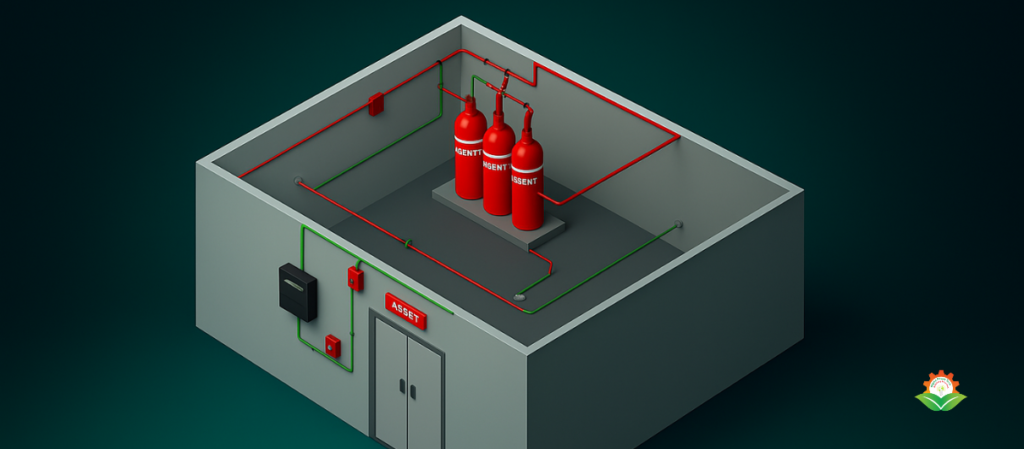
That hub then triggers the fire suppression system automatically. Doors might close to contain smoke, vents shut to starve flames of oxygen, and gas or mist releases precisely where needed. No waiting for someone to spot the issue or sound a manual alarm. Everything happens in seconds, tailored to the park’s layout, much like how data centres and server rooms use targeted protection to avoid widespread chaos.
Managers get alerts on their phones, with live video feeds showing exactly what’s happening. This real-time view lets them guide workers to safety or call help faster. For industrial parks handling diverse operations, this connected approach means one small glitch doesn’t shut down the whole site.
Sensors and Detection: The First Line of Defense
IoT starts with smart sensors placed strategically—near electrical panels, conveyor belts, chemical storage, and loading docks. These aren’t your old smoke detectors; they measure multiple signs of trouble at once, cutting down on false alarms from dust or steam common in factories.
Data flows to a cloud dashboard, where patterns emerge. Say temperatures rise steadily in a warehouse corner—it flags a potential short circuit before smoke appears. This early heads-up gives time to pause machines or vent heat naturally. In busy parks, where shifts change often, remote monitoring ensures oversight even during off-hours.
Linking these to your fire suppression system creates a seamless chain. A sensor ping triggers a pre-set response, like releasing cooling mist in one zone while alerting staff in others. It’s proactive, not reactive, saving time and resources every day.
Smart Automation in Action
Once danger is spotted, IoT automates the response beautifully. Imagine a conveyor belt sparks—the sensor network pinpoints it, shuts power to that line, and activates localised suppression. Gases fill just the affected area, leaving nearby operations untouched.
Valves open or close on their own, fans adjust airflow, and even lights guide people out. In large industrial parks with multiple buildings, IoT maps the site digitally, routing responses efficiently. This zoned approach mirrors server room setups, where precision prevents collateral damage.
For park owners, automation means less reliance on round-the-clock guards. Systems learn from past events too—adjusting sensitivity after a near-miss with oily rags, for example. Over time, it gets smarter, reducing risks across the entire facility.
Real-Time Monitoring and Alerts
One standout feature is the dashboard accessible anywhere. Managers in Delhi can check a Noida park’s status from their laptop. Alerts ping via app or SMS: “High heat in Zone 3—suppression engaged.” Attached clips show the scene, helping decide next steps.
This visibility shines during audits or insurance checks. Records of every alert, response, and test prove your setup works reliably. In India’s competitive industrial scene, this data also helps negotiate lower premiums, as insurers see the low-risk profile.
Workers benefit too—personal alerts on wearable devices tell them the safest exit. For parks with visiting drivers or contractors, it’s a simple way to keep everyone informed without confusion.
Maintenance Made Easy with IoT
Gone are the days of climbing ladders for checks. IoT systems self-monitor, reporting low gas levels or dusty sensors before problems arise. A quick app notification prompts a refill or clean, often scheduled around production downtime.
Predictive insights spot wear early—like a valve slowing down from constant use. Technicians fix it proactively, avoiding breakdowns during peak hours. Annual costs drop as maintenance shifts from guesswork to data-driven plans.
In humid or dusty industrial parks, this ongoing vigilance extends equipment life. Pair it with basic training, and your team handles routine tasks confidently, blending human smarts with machine precision.
Benefits Beyond Fire Safety
IoT-enhanced fire suppression does more than fight flames. It cuts energy waste by optimising vents and lights during alerts. Data on near-misses improves layouts—maybe shifting flammables away from hot zones.
Businesses gain an edge too. Safe parks attract top tenants and investors, especially with India’s manufacturing push. Compliance with local rules becomes straightforward, with digital logs ready for fire department visits.
Environmentally, precise releases mean less wasted gas, aligning with green goals. Overall, it’s a win for operations, people, and the bottom line.