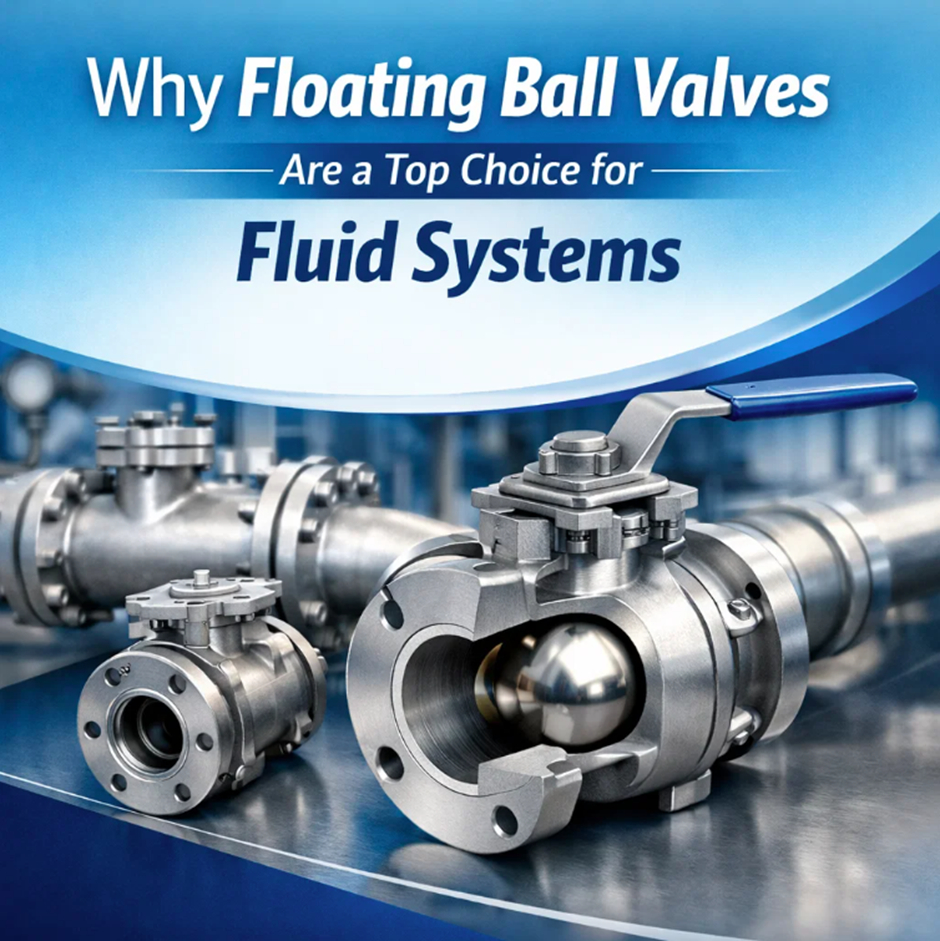

In industrial systems that control liquids and gases, you might hear about a floating ball valve as a key part that keeps things flowing the way they should. If you have ever wondered how simple movement can control big systems safely and reliably, this blog will break it down into easy explanations. Let’s begin with what makes this type of valve a dependable choice in many industries around the world.
What Is a Floating Ball Valve?
A floating ball valve operates by allowing the internal ball to “float” or move slightly under system pressure. When closed, upstream pressure pushes the ball against the downstream seat, creating a tight seal. A quarter-turn (90-degree) rotation of the stem closes the valve by blocking the flow path.
These valves come in different sizes, from ½ inch to 10 inches, and can handle various pressures, from light systems to tough industrial uses. There are two types: reduced bore (smaller opening than the pipe) and full bore (same size as the pipe).
How Floating Ball Valves Are Made
Component Manufacturing: The main body (forged steel, brass, or stainless steel) is cast or forged. The ball is machined and then polished to ensure a low-friction surface, sometimes plated with nickel or chrome for added durability
Design Standards: API 6D/ISO 14313: Specification for Pipeline Valves, crucial for oil and natural gas industry transportation systems.
API 608: Metal Ball Valves (flanged, threaded, and welding ends) commonly used in general industrial services.
ANSI B16.34: Valves-Flanged, Threaded, and Welding End, which provides pressure-temperature ratings and structural requirements
These valves have different body styles. You can find one piece, two piece, or three piece bodies. The choice depends on the system needs and how easy you want installation or maintenance to be. Bigger systems often use two- or three-piece bodies because these are more convenient to maintain without removing the valve.
Why Floating Ball Valves Are So Popular
Floating ball valves are popular because they have many built-in features that help them work well in tough places. These features are designed so the valve gives long life, low leakage, and easy operation. Some standard features include:
- Solid mechanical design that follows ASME B16.10 and MSS SP-72 standards.
- Fire-tested according to API 607 Fifth Edition, adding safety for high risk areas.
- Mounting pads for actuators that match ISO 5211, so you can add electric or pneumatic controls easily.
- Blow-out proof stem that stays secure even when pressure changes.
- Anti-static function to keep sparks from building up inside the valve.
- Options for operating the valve by hand or with gear, electric, pneumatic, or hydraulic drives.
- Bi-directional flow means these valves can stop flow from either side.
- Cup and cone packing for many sizes to stop leakage around the stem.
- Strong fasteners that hold all parts tightly, even under stress.
- Standard radiography checks on higher pressure classes like 600, 900, 1500, and 2500 to ensure no defects in the welds.
- Stem sealing that complies with low emission rules to protect the environment.
All these built-in features make floating ball valves very reliable across many industries that require safe and leak-free control.
Optional Add-Ons That Make a Difference
You can also choose extra features if your system has special demands. These include:
- Extensions on the stem or bonnet for hard-to-reach areas.
- Metal seats that can handle very hot or abrasive materials up to 1004°F.
- Cryogenic service ready valves certified to work at very cold temperatures down to -321°F.
- Materials that match NACE MR0175 and MR0103 standards for corrosion resistance in sour environments.
- Special testing options to confirm performance in your unique conditions.
These custom options help your valve serve better in extreme temperatures, tough chemicals, or systems that cycle often.
What Sizes and Connections Are Available?
Floating ball valves are made in a wide range of sizes from 1/2 inch up to 10 inches. The valves are available with flanged ends, socket weld (SW), and National Pipe Thread (NPT) connections. These connection choices help the valve fit many kinds of piping systems with ease.
Pressure ratings follow ANSI standards from 150 up to 2500 classes. This broad range makes these valves suitable for light applications and heavy industrial use. Leak testing follows API 598 or API 6D methods to verify quality before the valve leaves the factory.
Making the Right Choice for Your System
Choosing the right floating ball valve means matching size, pressure class, body style, and materials to your system’s needs. Consider what temperatures and pressures the system will face. Think about whether automation is needed. Ask if your system deals with corrosive fluids or gas. These details help ensure you pick a valve that will work well and last longer.
Installing valves correctly and performing regular checks help avoid unplanned stops in your system. Good maintenance keeps your system safe and stable.
Float Ball Valve in Everyday Use
A float ball valve works like a smart gate inside your system. It opens when you need flow and closes tight when you do not. Its floating design means the ball automatically pushes against the seat to block flow without an extra seal. This simple movement makes it dependable for many jobs.
Let’s Rewind
Choosing the right ball valve floating ball setup means you get strength, durability, and flexible use in your systems. These valves are designed to meet solid industry standards, include helpful optional features, and fit many sizes and pressure needs. When you need reliable flow control with easy operation and long life, floating ball valves stand out as a top choice. Their smart engineering and design help systems run smoothly and safely every day.