
In today’s crowded digital landscape, brands are fighting for something far more valuable than impressions or clicks—they are fighting for attention, trust, and meaningful engagement. Traditional advertising still plays an important role in visibility, but modern audiences increasingly expect experiences rather than promotional messages. This shift is one of the main reasons event marketing has become a powerful strategy for businesses across industries.
Unlike standard advertising campaigns that focus on pushing messages outward, event marketing creates opportunities for direct interaction between brands and audiences. Whether through conferences, webinars, product launches, trade shows, virtual summits, or experiential campaigns, event marketing helps companies build relationships that go beyond awareness.
The real value of event marketing is not just exposure—it is engagement.
Understanding Event Marketing Beyond Promotion
Many companies still confuse event marketing with event advertising. While event advertising is primarily about promoting an event through paid campaigns, event marketing is broader and more strategic. It focuses on creating experiences that connect audiences with a brand’s identity, expertise, and values.
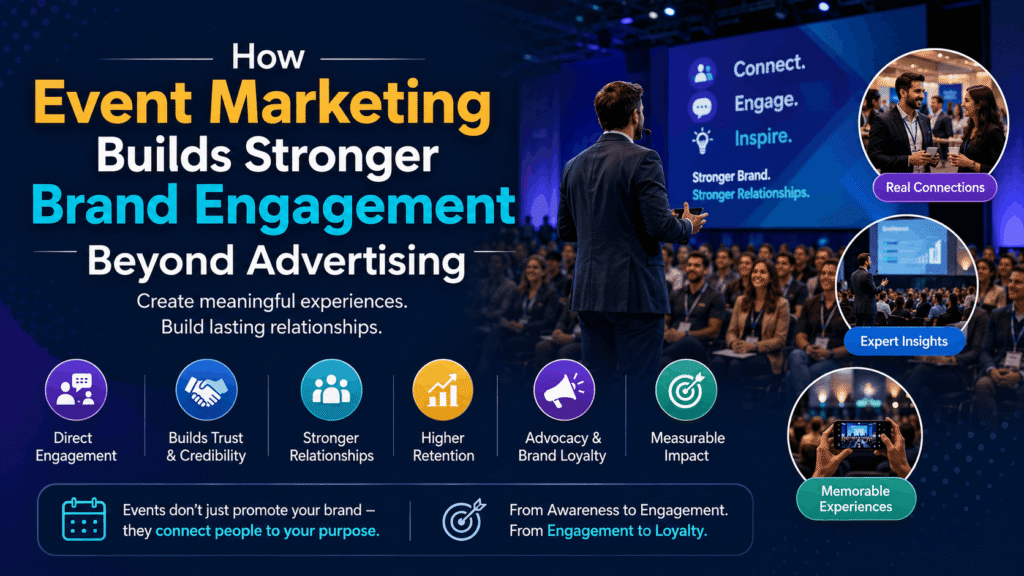
Event marketing allows businesses to:
- Build direct relationships with customers and prospects
- Create memorable brand experiences
- Encourage interaction and participation
- Strengthen credibility and trust
- Generate long-term audience loyalty
This is especially important in B2B industries where trust and relationship-building often influence purchasing decisions more than aggressive advertising.
Human Connection Drives Stronger Brand Recall
One of the biggest limitations of traditional advertising is that audiences are constantly exposed to promotional content. Social feeds, search engines, streaming platforms, and websites are filled with ads competing for attention. Over time, consumers develop “ad fatigue,” where promotional messages become easy to ignore.
Events break through this barrier because they create human interaction.
When attendees participate in a webinar, visit a trade show booth, attend a live product demonstration, or engage in networking sessions, they are actively experiencing the brand rather than passively viewing it.
This interaction creates stronger emotional and cognitive connections.
People are more likely to remember:
- Conversations with industry experts
- Hands-on demonstrations
- Valuable educational sessions
- Networking experiences
- Interactive discussions
Compared to static advertisements, live or virtual events provide multi-dimensional engagement that improves brand recall significantly.
Event Marketing Builds Trust Through Expertise
In modern marketing, expertise is one of the strongest drivers of credibility. Event marketing gives brands an opportunity to demonstrate knowledge instead of simply claiming authority through advertisements.
For example:
- Cybersecurity companies host threat intelligence webinars
- SaaS brands conduct product training workshops
- Technology firms organize innovation summits
- Healthcare companies lead educational conferences
These experiences position brands as trusted advisors rather than sellers.
This shift is critical because today’s buyers spend more time researching independently before engaging with sales teams. Event marketing helps companies become part of that research journey by offering insights, education, and industry perspectives.
When audiences learn something valuable from a brand, trust naturally increases.
Interactive Experiences Increase Audience Participation
Traditional advertising is mostly one-directional. Brands communicate messages, and audiences consume them passively. Event marketing changes that dynamic by encouraging participation.
Modern event experiences often include:
- Live Q&A sessions
- Polls and audience voting
- Networking opportunities
- Product demos
- Interactive booths
- Virtual engagement tools
- Real-time discussions
This participation creates a sense of involvement that standard advertising rarely achieves.
The more engaged attendees become, the more likely they are to associate positive experiences with the brand itself. Engagement is no longer measured only through impressions or clicks—it is measured through conversations, participation, and relationship depth.
Events Create High-Value Content Opportunities
Another major advantage of event marketing is content generation.
A single event can produce:
- Webinar recordings
- Social media clips
- Industry interviews
- Blog content
- Case studies
- Email campaigns
- Customer testimonials
- Thought leadership assets
This extends the value of an event far beyond the event day itself.
For example, a technology conference may generate months of reusable content that supports SEO, social engagement, lead nurturing, and brand visibility across multiple channels.
In this way, event marketing becomes both an engagement strategy and a long-term content engine.
Community Building Strengthens Brand Loyalty
One of the most overlooked benefits of event marketing is community creation.
Successful brands are no longer just selling products—they are building ecosystems of customers, partners, experts, and advocates. Events help strengthen these ecosystems by bringing people together around shared interests and industry challenges.
Communities formed through events often lead to:
- Stronger customer retention
- Increased advocacy
- Referral opportunities
- Peer-driven trust
- Long-term engagement
This is particularly important in B2B sectors where ongoing relationships often influence renewals, partnerships, and enterprise purchasing decisions.
Advertising may attract attention, but communities create loyalty.
Hybrid and Virtual Events Expanded Engagement Opportunities
The rise of virtual and hybrid events has transformed event marketing entirely. Businesses are no longer limited by geography, venue capacity, or travel costs.
Today, brands can engage global audiences through:
- Virtual conferences
- Online workshops
- Live-streamed product launches
- Interactive webinars
- Digital networking sessions
Hybrid models also combine physical and digital experiences, increasing accessibility while extending audience reach.
This evolution has made event marketing more scalable and measurable than ever before.
Brands now track:
- Attendance rates
- Session engagement
- Audience interaction
- Content downloads
- Conversion pathways
- Post-event pipeline impact
These insights help marketers understand how engagement translates into business outcomes.
Why Event Marketing Outperforms Traditional Advertising in Engagement
Traditional advertising is designed primarily for visibility. Event marketing is designed for interaction.
That distinction matters.
Advertising may generate awareness quickly, but events:
- Build deeper relationships
- Increase audience trust
- Create memorable experiences
- Encourage participation
- Generate valuable conversations
- Strengthen long-term loyalty
In competitive industries where differentiation is difficult, engagement becomes a major advantage. Buyers are more likely to trust brands they have interacted with directly rather than brands they have only seen in advertisements.
Final Thoughts
Event marketing has evolved far beyond promotional campaigns and branded booths. It has become one of the most effective ways for organizations to create authentic engagement in an increasingly crowded digital world.
While advertising remains important for visibility and reach, event marketing delivers something more valuable: human connection.
Brands that invest in meaningful experiences, education, interaction, and community-building are more likely to earn trust, loyalty, and long-term customer relationships.
In the modern marketing landscape, engagement is no longer about who shouts the loudest—it is about who creates the most meaningful experiences.
Read More: https://intentamplify.com/blog/the-difference-between-event-advertising-and-event-marketing/