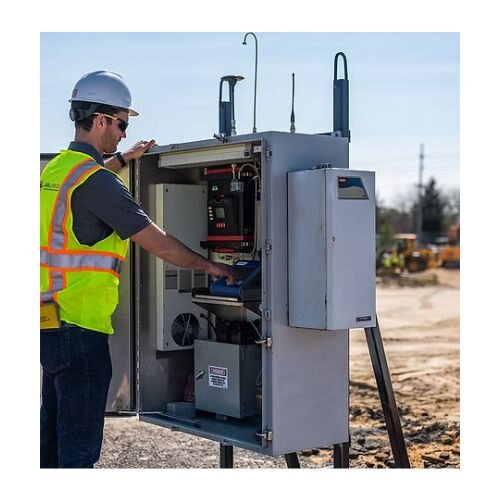

Effective industrial air quality monitoring is essential for keeping workplaces safe and maintaining compliance in facilities that handle chemicals or produce emissions. A well-planned perimeter air monitoring plan allows operators to track dust, volatile organic compounds (VOCs), and other airborne contaminants along the edges of a site, providing critical real-time data for decision-making. These systems help detect risks before they spread beyond the facility, protecting workers and surrounding communities. By placing monitoring points strategically, operators can observe air quality continuously. This ensures that particulate matter and chemical emissions are quickly identified, allowing immediate corrective actions. Advanced monitoring technology captures precise data to track fluctuations and identify potential contamination hotspots.
How Perimeter Monitoring Identifies Airborne Contaminants
Perimeter monitoring uses high-precision sensors to detect dust particles, VOCs, and other airborne pollutants. PM2.5, PM10, and total suspended particulates (TSP) are measured using infrared or laser-based sensors. VOCs are detected through portable gas chromatographs, which can measure both total VOC levels and individual compounds such as benzene.
This approach ensures that even subtle changes in air quality are captured. Early detection is critical for maintaining safe operations, especially during activities that release dust or chemical vapors. Accurate measurements allow operators to act swiftly, reducing exposure risks and maintaining operational efficiency.
By placing multiple sensors around the site perimeter, operators can identify where contaminants may be concentrated and take targeted action. For example, if one area shows high particulate levels, water sprays or localized ventilation can be used to control emissions. This method provides a clear picture of air quality across the site.
Real-Time Fenceline Air Monitoring for Safety
Modern monitoring devices support real-time fenceline air monitoring, providing continuous updates on airborne contaminants. Data is often sent to centralized systems, where operators can review trends, receive alerts, and take corrective measures immediately.
Real-time monitoring helps teams respond to sudden changes in air quality. For instance, if dust levels spike due to heavy vehicle movement or material handling, immediate interventions such as limiting access or activating suppression systems can be applied. Similarly, sudden VOC spikes during chemical processing can trigger temporary operational adjustments to reduce exposure risks. Continuous monitoring ensures that no risk goes unnoticed and allows teams to make informed decisions quickly.
Alerts and Data Analytics
Perimeter monitoring systems include automated alert systems that notify operators when pollutant levels exceed predetermined thresholds. These alerts can be sent to mobile devices, central control rooms, or cloud-based platforms, enabling prompt action.
Data analytics enhance the monitoring process by identifying patterns and trends over time. Historical data allows operators to review air quality fluctuations, assess the effectiveness of mitigation strategies, and provide documentation for regulatory compliance. This combination of alerts and analytics ensures that air quality is proactively managed rather than reacting to incidents after they occur.
Calibration and Accurate Detection
Reliable monitoring requires properly calibrated sensors and strategic placement. Perimeter air monitoring devices are routinely calibrated against reference standards to maintain accuracy. Calibration ensures that measurements remain precise, even under challenging environmental conditions such as high humidity, wind changes, or temperature variations.
Multiple monitoring points around the facility account for wind direction, airflow patterns, and contaminant distribution. This approach guarantees that all potential pollutant pathways are tracked. Additionally, combining particulate counting and gas detection ensures that operators can detect both visible dust and invisible chemical emissions.
Benefits of a Perimeter Air Monitoring Plan
Implementing a perimeter air monitoring plan provides multiple advantages. Continuous observation of dust, VOCs, and other contaminants allows teams to respond quickly to potential hazards. Workers, contractors, and neighboring communities benefit from reduced exposure risks, while operators maintain compliance with environmental regulations.
Perimeter monitoring also helps with operational planning. Teams can adjust work schedules, vehicle traffic, and equipment use based on real-time data. By having continuous information about air quality at all perimeter points, operators can prevent emissions from exceeding safe levels and minimize disruptions to production or construction activities.
Moreover, the data collected from these systems supports documentation for regulators or auditors. Accurate records of pollutant levels and interventions demonstrate accountability and adherence to air quality standards. Long-term data trends also allow operators to refine site procedures and improve safety measures for future projects.
Integrating Monitoring Into Operations
Perimeter air monitoring systems are designed for seamless integration into industrial operations. These devices can operate in hard-to-access areas, remote locations, or mobile setups. Modular systems allow rapid deployment, which is particularly useful for temporary projects, construction zones, or emergency response situations.
Automated data reporting and real-time alerts give operators immediate visibility into air quality conditions. This ensures proactive management of emissions, enabling quick interventions when thresholds are exceeded. Integrating monitoring into routine operations ensures continuous protection for both staff and the surrounding environment.
Final Thoughts:
A comprehensive refinery fenceline monitoring system ensures that dust, VOCs, and other airborne contaminants are detected and managed effectively. By combining real-time sensors, automated alerts, and precise analytics, operators can protect workers, surrounding communities, and compliance requirements. Effective perimeter monitoring provides actionable data, reduces risks, and supports safer operations.
Implement a robust perimeter air monitoring plan to continuously monitor air quality, respond to hazards immediately, and maintain safe industrial operations.