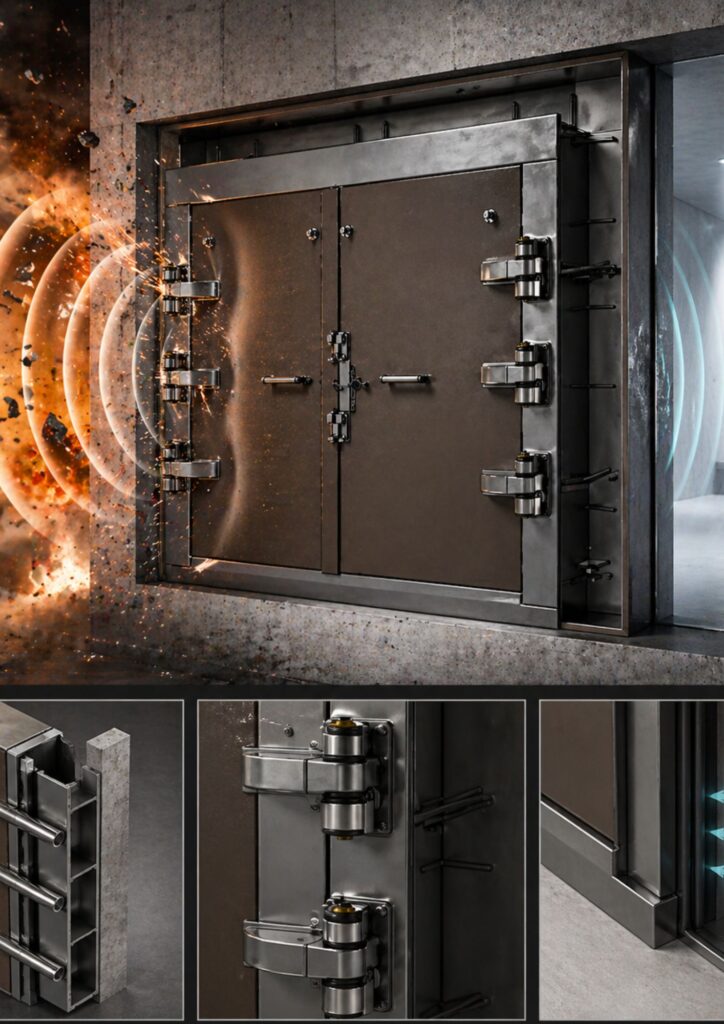

A control room located inside a petrochemical plant may sit only a few hundred meters away from high-pressure process equipment. Similarly, military facilities, ammunition depots, power plants, and critical infrastructure often operate in environments where accidental explosions or security threats cannot be completely eliminated. In such facilities, one of the most vulnerable parts of a building is its glazing system. Understanding how a blast window works is essential for improving occupant safety and maintaining operational continuity during a blast event.
Introduction
Explosions generate powerful pressure waves capable of causing severe structural damage and life-threatening injuries. While walls and roofs are often designed to withstand these forces, conventional windows frequently become the weakest element of the building envelope. A blast window is specifically engineered to resist blast loads, absorb energy, and reduce dangerous glass fragmentation.
Unlike standard glazing systems, blast-resistant windows are designed using specialized materials, structural engineering principles, and advanced testing methods. Their primary function is not simply to survive an explosion but to protect people and critical assets from the effects of blast pressure.
What is a Blast Window?
A blast window is a high-performance glazing system designed to withstand the pressure and impulse generated by an explosion. The system typically includes:
- Blast resistant glass
- Reinforced steel or aluminum frames
- Structural anchoring systems
- Energy-absorbing interlayers
- Specialized connection hardware
Each component works together to reduce the impact of blast forces and prevent catastrophic failure.
How Does a Blast Window Work?
The effectiveness of a blast window is based on controlled energy management rather than rigid resistance.
When an explosion occurs, a pressure wave travels outward at high speed and impacts the building facade. A blast-resistant window responds through several engineered mechanisms.
Blast Window Design and Pressure-Wave Mitigation
The first line of defense is the glazing system itself.
Instead of shattering immediately, laminated glass panels flex under pressure. This controlled deformation absorbs part of the blast energy before it reaches the interior of the building.
At the same time, reinforced frames distribute loads across the structure, while specialized anchoring systems transfer forces into surrounding walls.
The result is a significantly lower risk of glass fragments becoming dangerous projectiles.
Energy Absorption Through Laminated Glass
Modern blast window design relies heavily on laminated glazing technology.
Multiple layers of blast resistant glass are bonded together using resilient polymer interlayers. During a blast event:
- The glass may crack.
- The interlayer remains intact.
- Broken fragments stay attached.
- Occupants are protected from flying debris.
This fragment-retention capability is one of the most important safety features of any blast-resistant glazing system.
Structural Frame Performance
The glass alone does not provide blast protection.
Frames must be engineered to accommodate dynamic loading without detaching from the building. High-strength steel or reinforced aluminum frames are commonly used because they can deform without failing.
The frame, anchors, and surrounding structure must be designed as a complete system to ensure proper performance.
Key Features of Blast Proof Windows
Modern blast proof windows incorporate a range of advanced engineering features.
Blast Resistance: Designed to withstand specified blast pressures and impulse loads.
Impact Resistance: Capable of resisting debris generated during explosion events.
Fragment Retention: Helps prevent shattered glass from entering occupied areas.
Structural Reinforcement: Strengthened framing systems improve load transfer and structural stability.
Pressure-Wave Mitigation: Engineered components absorb and distribute blast energy.
Corrosion Resistance: Suitable for harsh industrial, marine, and chemical environments.
Weather Resistance: Provides protection against wind, rain, temperature changes, and environmental exposure.
Long Service Life: Designed for decades of reliable operation with relatively low maintenance requirements.
Security Enhancement: Many systems also improve resistance against forced entry and physical attacks.
Applications of Blast Windows
Blast-resistant glazing is commonly installed in facilities where safety and operational continuity are critical.
Typical applications include:
- Military facilities
- Defence installations
- Ammunition depots
- Oil and gas plants
- Petrochemical facilities
- Chemical processing facilities
- Power generation plants
- Government buildings
- Data centres
- Industrial control rooms
- Critical infrastructure facilities
- Security-sensitive buildings
Residential demand has also increased in certain locations. Homeowners interested in understanding residential applications can explore resources on Blast window for home to better understand system selection and performance requirements.
Factors That Influence Blast Window Price
The blast window price depends on engineering requirements rather than aesthetics.
Several factors affect project cost and long-term value:
- Blast rating requirements
- Glass thickness and glazing specifications
- Frame design complexity
- Material quality
- Structural reinforcement requirements
- Compliance standards
- Installation conditions
- Facility risk assessment
- Manufacturing precision
- Maintenance planning
Facilities with higher threat levels typically require more robust and technically sophisticated systems.
How to Select the Best Blast Window Supplier
Choosing the best blast window requires careful evaluation of both product performance and supplier expertise.
When assessing blast resistant window manufacturers, buyers should consider:
- Proven blast engineering experience
- Product testing capabilities
- Compliance with recognized standards
- Manufacturing quality control
- Customization capabilities
- Technical support services
- Installation expertise
- Detailed engineering documentation
- Maintenance support programs
- Long-term reliability record
When reviewing blast window manufacturers in india, it is advisable to verify actual project references and testing credentials rather than relying solely on product brochures.
Common Mistakes to Avoid
Several common mistakes reduce the effectiveness of blast-resistant glazing systems:
- Choosing products based only on cost
- Ignoring blast-load calculations
- Overlooking site-specific threat assessments
- Selecting inadequate glazing systems
- Neglecting compliance requirements
- Failing to evaluate structural integration
- Underestimating maintenance requirements
- Ignoring future facility expansion plans
Blast protection should always be approached as a complete engineering solution rather than a standalone product purchase.