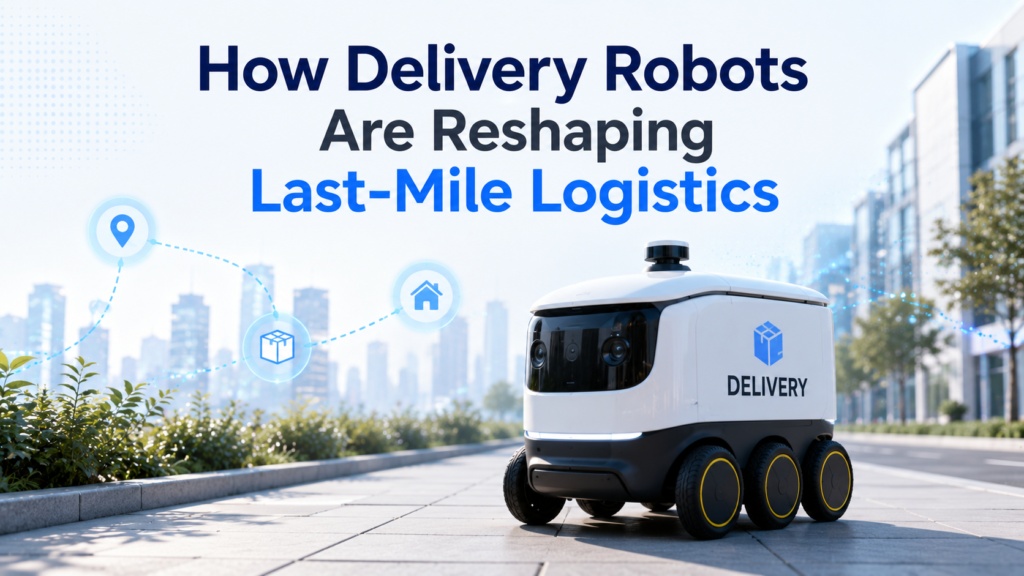

Autonomous delivery robots are steadily becoming part of modern urban logistics as businesses look for faster, more efficient, and cost-effective delivery methods. These compact robotic systems are increasingly being deployed across food delivery, retail distribution, healthcare logistics, and e-commerce operations. Their ability to operate with minimal human intervention is helping organizations address growing consumer demand for rapid and contactless deliveries.
The growing adoption of online shopping, rising urban congestion, and increasing labour shortages in logistics are creating strong momentum for automated delivery technologies. According to a recent delivery robots industry analysis, the industry is projected to grow significantly during the forecast period, driven by advancements in artificial intelligence, robotics, and autonomous navigation systems.
Growing Demand for Efficient Last-Mile Delivery
Last-mile delivery remains one of the most expensive and operationally challenging parts of the supply chain. Businesses are increasingly exploring delivery robots to reduce transportation costs and improve delivery efficiency in densely populated urban areas. These robots can operate continuously, optimize delivery routes, and reduce dependency on manual delivery personnel.
The rapid expansion of e-commerce platforms and food delivery services has further accelerated demand for autonomous delivery systems. Companies are increasingly integrating robotic delivery fleets into urban logistics strategies to improve turnaround times and enhance customer convenience.
According to the World Economic Forum, autonomous delivery technologies are expected to play an important role in improving urban logistics sustainability and reducing traffic congestion in major cities.
Artificial Intelligence Driving Smarter Navigation
Artificial intelligence and machine learning technologies are significantly improving the capabilities of delivery robots. Modern systems can detect obstacles, recognize pedestrians, adapt to changing road conditions, and optimize routes in real time. These advancements are making autonomous delivery solutions increasingly reliable for both indoor and outdoor operations.
Sensor fusion technologies, including LiDAR, cameras, radar, and GPS integration, are helping robots navigate complex urban environments more accurately. As AI algorithms continue to evolve, delivery robots are becoming more efficient in handling dynamic traffic situations and crowded pedestrian areas.
The National Institute of Standards and Technology (NIST) has highlighted the importance of robotics standards and autonomous systems research in improving operational safety and reliability across commercial robotic applications.
Healthcare and Retail Sectors Expanding Adoption
Healthcare facilities are increasingly deploying delivery robots for transporting medicines, laboratory samples, medical equipment, and supplies within hospitals. Autonomous robots help reduce human workload while supporting infection-control protocols in sensitive healthcare environments.
Retail businesses are also adopting robotic delivery systems to improve operational efficiency and enhance customer experience. Grocery chains, convenience stores, and quick-service restaurants are experimenting with autonomous sidewalk delivery robots to support faster local deliveries.
In addition, universities, business parks, and smart city projects are becoming important testing grounds for robotic delivery solutions. Controlled environments allow organizations to evaluate navigation accuracy, operational efficiency, and customer acceptance before broader deployment.
Sustainability Becoming a Key Industry Driver
Environmental sustainability is emerging as a major factor influencing the adoption of delivery robots. Many autonomous delivery systems are electrically powered and designed to reduce carbon emissions associated with conventional fuel-based delivery vehicles.
With governments and businesses focusing more heavily on climate goals, logistics companies are exploring low-emission delivery alternatives that align with sustainability objectives. Small autonomous robots can help reduce traffic congestion while supporting cleaner urban transportation systems.
The International Energy Agency (IEA) has emphasized the growing importance of low-emission transportation technologies in achieving long-term sustainability targets across the transportation and logistics sectors.
Regulatory and Infrastructure Challenges Remain
Despite the growing momentum, delivery robot deployment still faces several operational and regulatory challenges. Urban infrastructure limitations, pedestrian safety concerns, cybersecurity risks, and inconsistent regulations across regions continue to affect wider commercial adoption.
Many cities are still developing regulatory frameworks governing autonomous sidewalk delivery operations. Questions related to insurance liability, data privacy, and operational safety remain important considerations for both regulators and technology developers.
Weather conditions and uneven urban infrastructure can also impact robot performance. Snow, heavy rain, damaged sidewalks, and crowded public spaces may create operational challenges for autonomous navigation systems.
Technological Innovation Supporting Future Expansion
Continuous advancements in robotics engineering are expected to improve the performance and scalability of delivery robots in the coming years. Battery efficiency improvements, enhanced autonomous navigation systems, and real-time fleet management software are supporting broader commercial deployment.
Companies are also investing in cloud-based robotics platforms that allow centralized monitoring and coordination of autonomous delivery fleets. These systems help improve operational visibility while enabling predictive maintenance and optimized route planning.
Collaboration between robotics developers, logistics providers, retailers, and municipal authorities is likely to play an important role in accelerating industry growth. As smart city infrastructure continues to evolve, autonomous delivery robots may become increasingly integrated into urban mobility ecosystems.
Conclusion
Delivery robots are gradually transforming the future of urban logistics by improving efficiency, supporting sustainability goals, and enhancing last-mile delivery capabilities. The combination of artificial intelligence, autonomous navigation, and growing e-commerce demand is accelerating industry adoption across multiple sectors.
While regulatory complexities and infrastructure limitations remain challenges, ongoing technological innovation and rising investment activity continue to strengthen the long-term outlook for autonomous delivery solutions. As cities and businesses prioritize smarter logistics systems, delivery robots are expected to become an increasingly visible part of modern transportation networks.