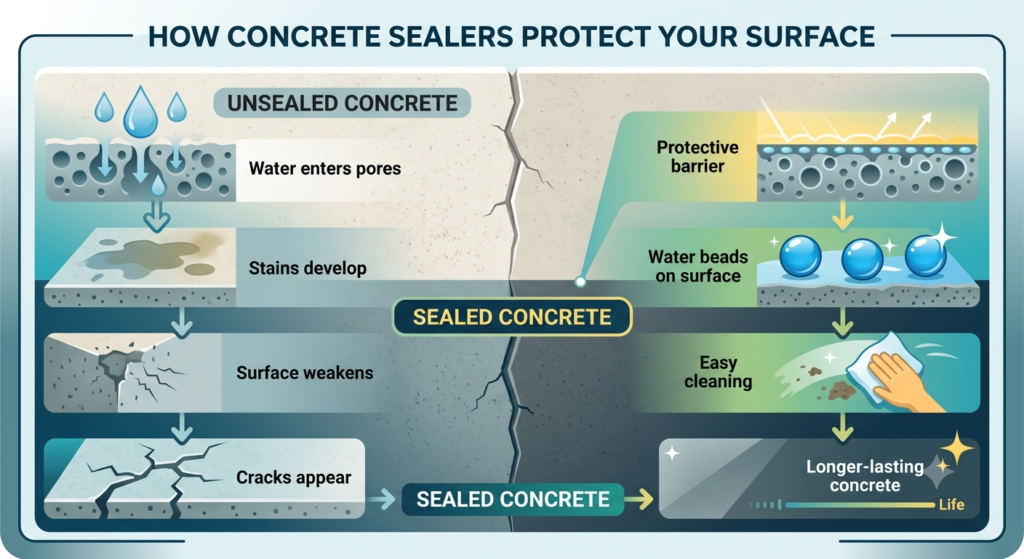

Concrete is one of the most durable building materials available, but it is not immune to damage. Whether it’s a driveway exposed to rain, a garage floor that sees daily vehicle traffic, or an outdoor patio facing constant sunlight, unprotected concrete gradually deteriorates over time. Moisture, oil, dirt, chemicals, and temperature changes all contribute to its wear.
This is where Concrete Sealers make a significant difference. A quality sealer acts as a protective barrier that helps extend the life of concrete while maintaining its appearance and structural integrity. Instead of waiting for cracks, stains, or surface deterioration to appear, sealing concrete is a proactive step that reduces maintenance costs and keeps surfaces looking their best.
In this guide, we’ll explain how concrete sealers work, the types available, and why they are one of the smartest investments for both residential and commercial properties.
Why Concrete Needs Protection
Although concrete appears solid, it contains thousands of microscopic pores. These tiny openings absorb water and other liquids over time.
When moisture enters the surface, several problems can develop:
- Cracking during freeze-thaw cycles
- Efflorescence (white powdery deposits)
- Mold and mildew growth
- Rust around reinforcing steel
- Surface scaling
- Premature ageing
Everyday contaminants like oil, grease, food spills, fertilizers, and vehicle fluids can also penetrate concrete, leaving permanent stains that are difficult to remove.
Protecting these pores is the primary purpose of a concrete sealer.
How Concrete Sealers Prevent Water Damage
Water is often the biggest threat to concrete surfaces.
When rainwater repeatedly enters the pores, it slowly weakens the concrete from within. Over time, moisture movement causes expansion and contraction that contributes to cracking and surface damage.
Concrete sealers create a protective layer or penetrate into the concrete to reduce water absorption while still allowing many surfaces to breathe.
Benefits include:
- Reduced moisture penetration
- Lower risk of cracking
- Protection against freeze-thaw damage
- Less chance of mould and algae growth
- Longer lifespan for the concrete
For outdoor areas such as driveways, pathways, retaining walls, and patios, this protection becomes especially valuable throughout changing weather conditions.
Protection Against Everyday Stains
Concrete can easily absorb liquids within minutes.
Common staining materials include:
- Engine oil
- Grease
- Coffee
- Wine
- Fertilisers
- Paint
- Leaf tannins
- Rust
- Food spills
Without protection, these substances soak beneath the surface and often become permanent.
A sealed surface gives homeowners more time to wipe away spills before they penetrate.
For commercial spaces, warehouses, restaurants, workshops, and garages, this can significantly reduce cleaning time and maintenance costs.
Reducing Surface Wear from Daily Use
Even without water damage, everyday traffic slowly wears down concrete.
Examples include:
Vehicle Traffic
Cars and heavy equipment gradually abrade driveways and garage floors.
Foot Traffic
Busy walkways and commercial entrances experience continuous surface friction.
Outdoor Weather
UV rays, wind, rain, and dirt slowly erode exposed concrete.
A suitable sealer helps reduce this wear by strengthening the surface and providing additional resistance against abrasion.
As a result:
- Surfaces stay smoother
- Colour remains more consistent
- Dusting is reduced
- Maintenance becomes easier
Different Types of Concrete Sealers
Not every project requires the same type of protection.
Here are the most common options.
Penetrating Sealers
These soak into the concrete and provide invisible protection against moisture.
Best suited for:
- Driveways
- Sidewalks
- Outdoor slabs
- Exposed concrete
Advantages include:
- Natural appearance
- Excellent water resistance
- Long service life
Acrylic Sealers
These create a thin protective film on the surface.
Often chosen for:
- Decorative concrete
- Coloured concrete
- Patios
- Pool surrounds
Benefits include:
- Enhanced appearance
- Quick drying
- Cost-effective protection
Epoxy Sealers
Epoxy coatings provide exceptional durability indoors.
Ideal for:
- Garages
- Warehouses
- Workshops
- Industrial floors
Advantages:
- Chemical resistance
- High durability
- Easy cleaning
Polyurethane Sealers
These offer excellent abrasion resistance and UV stability.
Suitable for:
- Commercial flooring
- Decorative concrete
- High-traffic areas
Signs Your Concrete May Need Sealing
If you’re unsure whether concrete requires protection, look for these warning signs:
- Water absorbs quickly instead of beading
- Surface colour appears faded
- Dust forms easily
- Small cracks are developing
- Oil stains remain visible
- Surface feels rough or worn
Addressing these signs early can help avoid more expensive repairs later.
Best Practices for Applying a Concrete Sealer
Proper application is just as important as choosing the right product.
For the best results:
- Clean the surface thoroughly.
- Remove grease, dirt, and previous coatings if required.
- Allow the concrete to dry completely.
- Follow the manufacturer’s coverage rates.
- Apply during suitable weather conditions.
- Allow adequate curing time before traffic resumes.
Careful preparation improves adhesion and helps maximise the life of the sealer.
Common Mistakes to Avoid
Many sealing problems result from simple application errors.
Avoid these common mistakes:
- Applying sealer to dirty concrete
- Sealing damp surfaces
- Using too much product
- Choosing the wrong sealer for the application
- Ignoring manufacturer instructions
- Skipping regular maintenance
A little preparation can prevent costly rework.
How Often Should Concrete Be Resealed?
The lifespan of a sealer depends on:
- Product type
- Weather exposure
- Traffic levels
- Surface condition
- Maintenance practices
As a general guide:
| Surface | Typical Resealing Interval |
|---|---|
| Residential driveway | Every 2–5 years |
| Decorative concrete | Every 2–4 years |
| Garage floor | Every 3–5 years |
| Commercial areas | Depending on traffic and wear |
Inspecting concrete annually helps determine when resealing is needed.
Choosing the Right Sealer for Your Project
The best product depends on how the concrete will be used.
Consider:
- Indoor or outdoor location
- Exposure to water
- Vehicle traffic
- Decorative finish
- Desired appearance
- Maintenance expectations
Selecting the right solution from the beginning provides better long-term performance and helps avoid unnecessary repairs.
Final Thoughts
Concrete is built to last, but it performs best when properly protected. Moisture, stains, heavy traffic, and weather exposure gradually take their toll on untreated surfaces, leading to unnecessary repairs and ongoing maintenance.
By using Concrete Sealers, property owners can reduce water penetration, prevent stubborn stains, minimise everyday wear, and extend the lifespan of their concrete. Whether you’re protecting a residential driveway, commercial floor, patio, or warehouse, choosing the right sealer and applying it correctly is a practical investment that pays off over time.
At The WaterStop Shop, we supply high-quality concrete sealing solutions for residential, commercial, and trade applications. If you’re unsure which product is best for your project, our team can help you select the right solution for long-lasting protection.