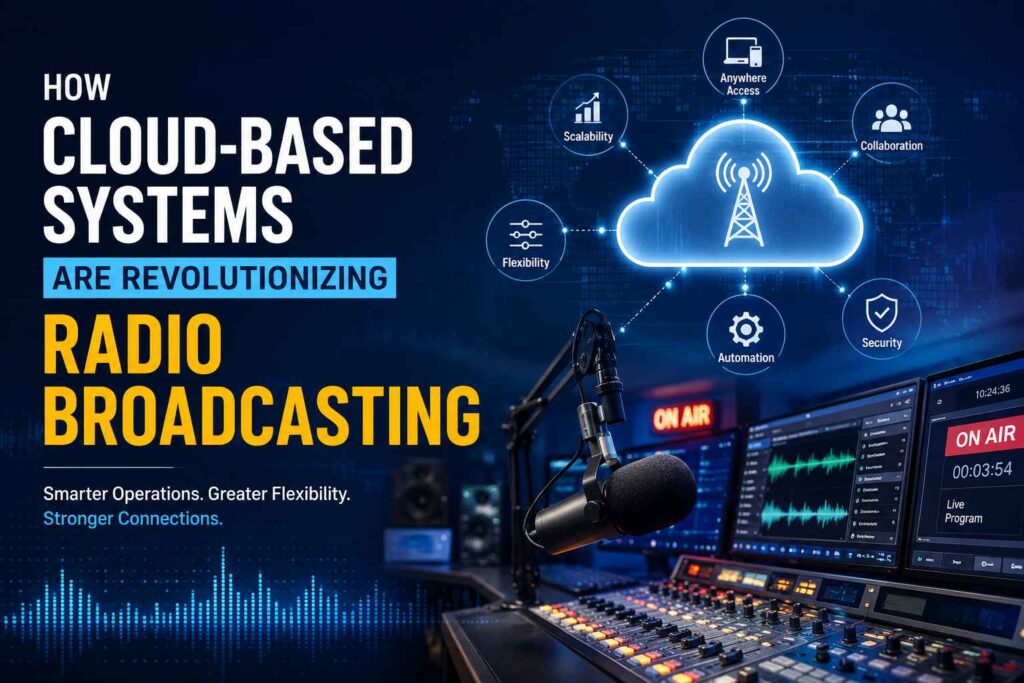

Radio broadcasting has remained one of the most trusted and accessible forms of media for decades. While the industry has evolved from traditional analog systems to digital platforms, the demand for efficient operations, seamless content management, and wider audience reach continues to grow. Today, broadcasters are embracing cloud technology to modernize workflows, improve scalability, and enhance operational flexibility.
Cloud-based radio broadcasting is transforming how stations manage content, schedule programming, collaborate with teams, and deliver broadcasts to audiences across multiple platforms. By moving critical operations to the cloud, broadcasters can reduce infrastructure complexity, streamline management processes, and adapt more quickly to changing audience expectations.
In this blog, we explore how cloud-based systems are revolutionizing radio broadcasting and why they have become an essential part of modern radio broadcast management.
The Evolution of Radio Broadcasting Technology
Traditional radio broadcasting relied heavily on on-premise hardware, dedicated servers, physical storage systems, and manual workflows. While these systems served the industry for many years, they often required significant investments in infrastructure, maintenance, and technical support.
As digital transformation accelerated across the media industry, radio stations began seeking more flexible and cost-effective solutions. This shift led to the adoption of cloud-based radio management systems that allow broadcasters to access critical tools and resources from virtually anywhere.
Today, cloud technology enables radio stations to manage programming, content libraries, advertising schedules, metadata, analytics, and broadcast operations through centralized platforms designed for efficiency and scalability.
What Is Cloud-Based Radio Broadcasting?
Cloud-based radio broadcasting refers to the use of internet-hosted infrastructure and software solutions to manage and deliver radio content. Instead of relying solely on physical servers located within a station’s facility, broadcasters use cloud platforms to store, process, manage, and distribute content.
Modern radio broadcasting software hosted in the cloud allows teams to access essential systems remotely while maintaining secure and reliable operations. These solutions support various broadcasting functions, including:
- Content management
- Program scheduling
- Advertisement management
- Audio storage and archiving
- Workflow automation
- Multi-location collaboration
- Broadcast monitoring
- Data reporting and analytics
As a result, broadcasters gain greater flexibility and operational control while reducing dependence on traditional infrastructure.
Enhanced Flexibility for Broadcasters
One of the most significant advantages of cloud-based radio broadcasting is flexibility.
Radio stations often operate across multiple locations, with presenters, producers, engineers, and management teams working from different environments. Cloud platforms make it easier for these teams to collaborate without being tied to a specific physical location.
With cloud-based radio management systems, authorized users can access programming schedules, upload content, manage playlists, and monitor broadcasts from anywhere with an internet connection. This flexibility supports remote work environments and ensures continuity even during unexpected disruptions.
For broadcasters managing multiple stations or regional networks, centralized cloud platforms simplify operations and improve coordination across locations.
Improved Scalability and Growth Opportunities
As radio stations expand their operations, technology requirements also increase. Traditional infrastructure often requires expensive hardware upgrades to accommodate growth.
Cloud-based radio broadcasting solutions offer a scalable alternative. Resources can be adjusted based on operational needs without major infrastructure investments.
Whether a broadcaster is launching a new station, expanding digital streaming services, or increasing content production, cloud systems provide the flexibility to scale efficiently. Organizations can add storage, users, workflows, and services without disrupting ongoing operations.
This scalability enables broadcasters to focus on audience engagement and content creation rather than infrastructure limitations.
Streamlined Radio Broadcast Management
Managing a radio station involves numerous interconnected processes. From scheduling programs and advertisements to managing content libraries and compliance requirements, operational efficiency is critical.
Modern radio broadcast management software centralizes these activities within a single platform. This integration helps broadcasters reduce manual tasks, improve visibility, and maintain consistent workflows.
Cloud-based radio broadcast management solutions often support:
Content Scheduling
Automated scheduling tools help stations organize programs, music playlists, commercials, and special broadcasts more efficiently.
Asset Management
Centralized content libraries allow teams to store, search, retrieve, and manage audio assets from one location.
Workflow Automation
Routine tasks such as content distribution, playlist updates, and metadata management can be automated to reduce administrative workload.
Real-Time Monitoring
Broadcasters can monitor system performance, content delivery, and operational status in real time, helping teams respond quickly to potential issues.
These capabilities contribute to more efficient operations and improved broadcast reliability.
Better Collaboration Across Teams
Radio broadcasting requires close collaboration among programming teams, producers, presenters, engineers, advertisers, and management personnel.
Cloud-based systems create a shared environment where teams can access the same information and resources regardless of their location. Content updates, scheduling changes, and workflow approvals can be managed in real time, reducing communication delays and operational bottlenecks.
This collaborative approach improves productivity and ensures that all stakeholders remain aligned throughout the broadcasting process.
For organizations operating multiple stations or networked broadcasting environments, cloud technology significantly enhances coordination and consistency.
Increased Reliability and Business Continuity
Maintaining uninterrupted broadcasting services is essential for audience trust and operational success.
Traditional systems can be vulnerable to hardware failures, local disruptions, and infrastructure challenges. Cloud-based radio broadcasting solutions help reduce these risks through distributed architectures and centralized management capabilities.
By hosting critical systems in the cloud, broadcasters gain access to more resilient environments designed to support continuous operations. Backup processes, content accessibility, and system redundancy contribute to stronger business continuity strategies.
This improved reliability helps stations maintain consistent service delivery and reduce downtime risks.
Supporting Digital Transformation in Radio
Modern audiences consume audio content through a variety of channels, including traditional radio receivers, websites, mobile applications, connected devices, and streaming platforms.
Cloud-based radio broadcasting software supports this digital transformation by enabling broadcasters to manage content distribution across multiple channels from a centralized platform.
This unified approach helps broadcasters:
- Deliver content to diverse audiences
- Maintain brand consistency across platforms
- Improve operational efficiency
- Adapt to evolving listener preferences
- Expand digital service offerings
As media consumption habits continue to evolve, cloud technology provides the flexibility needed to remain competitive in a rapidly changing landscape.
Data-Driven Decision Making
Successful broadcasting increasingly depends on understanding audience behavior, operational performance, and content effectiveness.
Cloud-based radio broadcast management systems often provide access to reporting tools and analytics that help broadcasters evaluate performance and optimize operations.
Insights related to programming schedules, content usage, advertising performance, and operational workflows can support more informed decision-making.
By leveraging centralized data and reporting capabilities, broadcasters can continuously refine strategies and improve overall efficiency.
The Future of Cloud-Based Radio Broadcasting
The future of radio broadcasting will be shaped by greater automation, improved workflow integration, enhanced audience engagement, and expanding digital distribution channels. Cloud technology provides the foundation for these innovations by offering the flexibility, scalability, and operational efficiency required in a modern media environment.
As broadcasters continue to embrace digital transformation, cloud-based radio management systems will play an increasingly important role in supporting content creation, distribution, collaboration, and operational management. Organizations that invest in modern radio broadcasting solutions today will be better positioned to adapt to future industry developments and evolving audience expectations.
Conclusion
Cloud technology is fundamentally transforming the radio broadcasting industry. From streamlined radio broadcast management and enhanced collaboration to improved scalability and operational flexibility, cloud-based systems are helping broadcasters modernize their workflows and prepare for future growth.
By adopting cloud-based radio broadcasting software, media organizations can simplify operations, improve efficiency, support remote teams, and deliver high-quality content across multiple platforms. As the industry continues to evolve, cloud-based radio management systems will remain a key driver of innovation, enabling broadcasters to meet the demands of an increasingly connected and digital-first world.