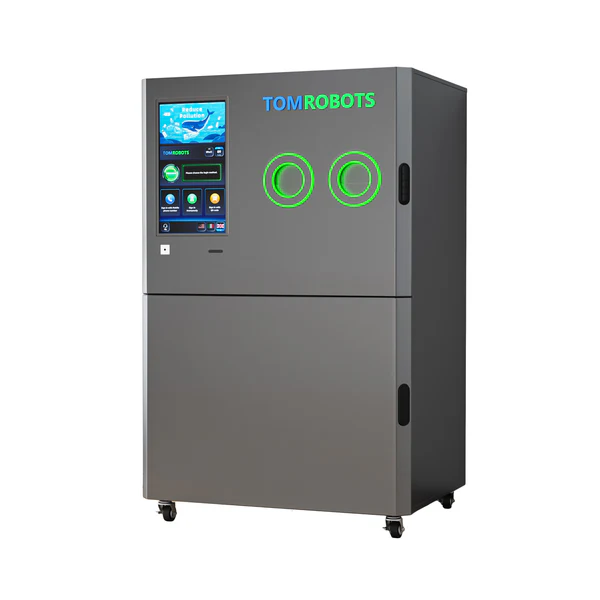

Most businesses think about recycling as a cost. Something that happens in the background, managed by whoever handles waste collection, and largely invisible until the invoice arrives. That framing tends to stick until someone starts looking at what a Recycling Vending Machine actually does for a business operationally and financially. The picture changes fairly quickly after that.
The honest case for reverse vending is not built on environmental messaging alone. It is built on what these machines do for foot traffic, customer behaviour, operational efficiency, and long term cost reduction.
The Basic Mechanics Worth Understanding First
A reverse vending machine accepts used bottles, cans, and containers from customers and issues a reward in return. That reward might be a discount voucher, loyalty points, or a charitable donation depending on how the business configures it. The machine sorts and compresses the material automatically, which removes the manual handling that makes traditional recycling inconvenient at scale.
For businesses considering a Reverse Vending Machine For Sale, the starting point is understanding that these machines do two things simultaneously. They handle waste processing and they create a customer interaction point. Both of those have measurable value.
Foot Traffic Increases When Incentives Are Involved
This is the part that surprises most business owners when they first look at the numbers. Customers return to locations where they can redeem containers for rewards. That return visit is not always planned as a shopping trip but it frequently becomes one.
A supermarket that installs a reverse vending machine near the entrance creates a reason for customers to visit that exists independently of their shopping needs. Once they are in the building, purchasing behaviour follows patterns that retail operators understand well. The machine brings people through the door. The store does the rest.
That dynamic works across different business types. Hospitality venues, retail outlets, and food service operations all see similar patterns once the return incentive is established and communicated clearly to customers.
Waste Handling Becomes Considerably Less Complicated
Manual waste sorting at business level is time consuming and inconsistent. Staff handle it differently depending on training, workload, and the systems in place. Errors create contamination issues that affect the entire waste stream and sometimes result in additional costs from waste contractors.
A Reverse Vending Machine removes that inconsistency entirely for the container waste it handles. Material goes in, gets sorted automatically, and comes out the other end compressed and ready for collection. The process does not depend on staff availability or attention. It runs the same way every time.
For businesses processing significant volumes of bottles and cans, that consistency translates directly into reduced handling time and cleaner waste streams. Both of those affect the bottom line in ways that are straightforward to calculate once the baseline data exists.
Customer Perception Shifts in Ways That Matter
Businesses that visibly support recycling infrastructure are perceived differently by customers who care about environmental responsibility. That group has grown considerably over the past several years and continues to grow. Having a reverse vending machine on premises signals commitment in a way that a recycling policy statement on a website rarely achieves.
The machine is physical evidence of investment. Customers can see it, use it, and associate the business with the behaviour it enables. That association builds over time and tends to influence where people choose to spend money when alternatives exist nearby.
This matters most in competitive retail environments where the product offering between nearby businesses is similar enough that secondary factors influence customer choice. Being the business with the recycling machine is a small but consistent differentiator.
The Financial Case Holds Up Under Scrutiny
Running costs for reverse vending machines are lower than most businesses expect when they first enquire. The machines require periodic servicing and collection of the compressed material, but the labour saving on manual waste handling often offsets a significant portion of that cost.
Reward vouchers issued to customers return to the business as purchases in most implementations, which means the incentive cost is largely recovered through sales. The net cost of running the machine ends up being considerably lower than the headline figures suggest when the full picture is calculated properly.
Some businesses also access rebates or compliance credits depending on the jurisdiction and the volume of material processed. These vary by location and scheme but add another layer of financial return that makes the investment case stronger.
Scalability Makes Sense for Growing Operations
One machine works well for a single location. The same system scales across multiple sites without requiring a fundamentally different operational approach. Businesses with several locations can run consistent recycling programmes across all of them with centralised reporting on volumes and performance.
That scalability matters for businesses planning growth. Installing the right system early means, adding locations later does not force a rethink of the entire operational setup. The process stays consistent across sites without needing to start from scratch each time.
The Decision Comes Down to What the Business Values
Reverse vending does not suit every business at every stage. A small operation with low container volumes and limited customer movement through the premises may not see enough return to make the investment worthwhile straight away.
The stronger case exists for businesses already handling meaningful container volumes, running in competitive retail or hospitality settings, or wanting a tangible way to build repeat visits through incentive programmes. For those businesses the numbers tend to work out without much convincing.
Tom Robots carries a range of Reverse Vending Machine suited to different business sizes and operational setups, making it easier to find something that fits where the business currently stands without taking on more than is actually needed.