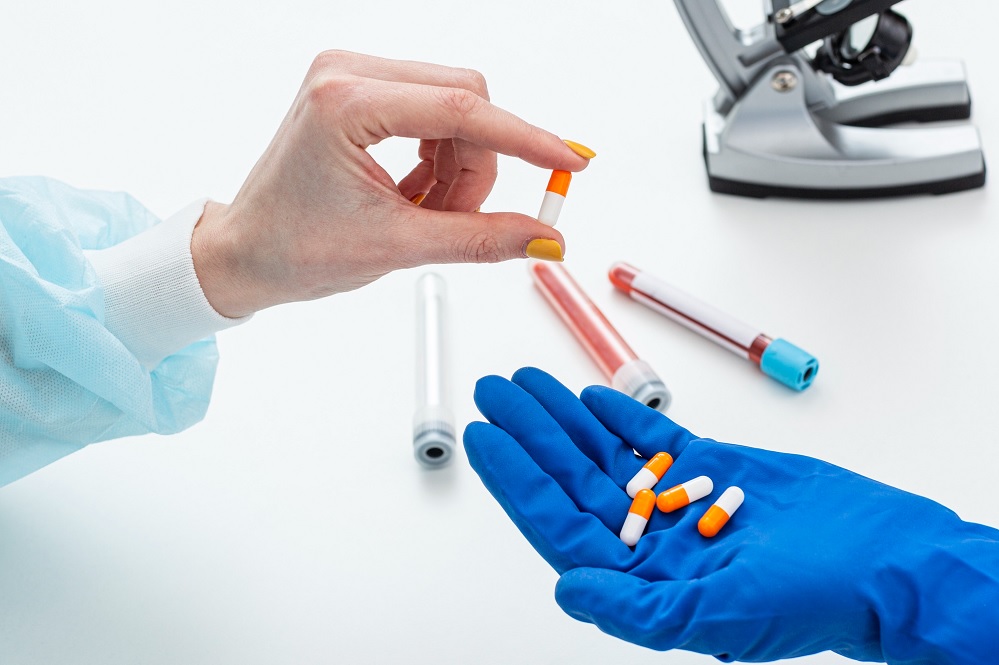

Drug discovery has always been one of the slowest and most expensive processes in modern healthcare. Creating a single drug can take 10–15 years, cost more than $2 billion, and most candidates fail before they ever reach human testing. Even with progress in chemistry, biology, and high-throughput screening, the complexity of human biology keeps the process slow and heavily dependent on repeated experimentation.
That dynamic is shifting quickly. Artificial Intelligence is no longer a theoretical upgrade for pharma, it’s becoming a core operating system for how decisions are made across the entire R&D pipeline. AI now supports target identification, molecule design, preclinical evaluation, clinical trial planning, and even regulatory preparation. The result: faster cycles, fewer dead ends, and a clearer path to what actually works.
AI is beginning to redefine how drugs are discovered and developed, and the momentum is only accelerating.
AI Is Revolutionizing Target Identification and Validation
Identifying the right biological target is the foundation of drug discovery, but it is also one of the most error-prone steps. Historically, researchers relied on limited datasets, labor-intensive experiments, and incomplete biological knowledge.
AI changes this dramatically. Machine learning models can analyze:
- Multi-omics datasets
- Protein interaction networks
- Gene expression profiles
- Disease pathways
- Clinical records
- Real-world patient data
By processing millions of data points simultaneously, AI systems uncover biological patterns that would take humans decades to detect. They can highlight previously unknown disease mechanisms or identify which proteins are most likely to influence disease progression.
For example, deep learning algorithms can predict whether modulating a specific protein will actually produce therapeutic benefit, reducing the risk of pursuing dead-end targets.
The result: smarter target selection, fewer failures downstream, and more strategic R&D investment.
AI Is Designing Novel Drug Candidates in Minutes Instead of Months
One of AI’s most celebrated breakthroughs is its ability to design completely new molecules with optimal biological and chemical properties.
Generative AI models, using neural networks similar to those behind advanced text and image generation, can create molecular structures that satisfy:
- Potency
- Selectivity
- Solubility
- Toxicity thresholds
- Pharmacokinetic requirements
- Synthetic feasibility
What used to take medicinal chemists months of iterative design can now occur in minutes.
Companies like Insilico Medicine, Exscientia, and several biotech AI startups have already produced AI-designed molecules that entered human trials, shrinking early discovery timelines by up to 70%.
Even more impressive, AI doesn’t just generate random structures, it learns from existing compounds and biological rules, allowing it to create molecules that would be nearly impossible for humans to design manually.
AI Accelerates Virtual Screening and Predicts Molecule Behaviour at Scale
Traditional high-throughput screening requires physical assays, reagents, and weeks of lab time. AI has made it possible to screen billions of molecules digitally before committing a single compound to the bench.
Advanced ML models can evaluate:
- Binding affinity
- Drug-likeness
- Off-target effects
- Toxicity risk
- ADME properties (Absorption, Distribution, Metabolism, Excretion)
This scale of analysis is something wet labs simply cannot match. Tools like AlphaFold and other AI-driven structural prediction systems have further accelerated screening by generating highly accurate 3D protein structures, critical for docking and binding analysis.
In 2025 and 2026, companies began integrating AI-native tools that combine physics-based simulations with deep learning, dramatically improving early prediction accuracy and reducing testing cycles.
AI Reduces the Dependence on Animal Studies Through Predictive Toxicology
One of the biggest challenges in drug development is predicting safety. Historically, regulators relied heavily on animal studies, but animal biology does not always translate well to humans.
AI is now filling this gap. Modern predictive toxicology platforms can:
- Identify likely toxic functional groups
- Predict organ-specific toxicity
- Estimate cardiotoxicity risks
- Flag metabolic issues
- Recognize immunogenic triggers
These models are trained using decades of toxicity datasets, clinical records, and biological annotations.
In combination with human-relevant models like organoids and 3D cell cultures, AI enables researchers to assess toxicity far earlier and far more accurately than traditional in vivo testing.
This not only reduces ethical concerns around animal use but also lowers costs and improves safety predictions for human trials.
AI Is Transforming Clinical Trial Design and Recruitment
Clinical trials represent the most expensive and time-consuming phase of drug development. Delays, recruitment issues, protocol deviations, and patient dropouts can derail entire programs.
AI is solving many of these long-standing challenges by:
- Identifying optimal patient subgroups using genetic and clinical data
- Predicting patient responses
- Flagging ideal trial sites
- Forecasting recruitment timelines
- Reducing protocol complexity
- Personalizing dose selection
NLP models can also analyze vast volumes of clinical notes and real-world evidence to detect patterns relevant to trial design.
Meanwhile, AI-powered patient-matching algorithms are helping trials enroll faster and more accurately, accelerating timelines by months.
AI Enhances Regulatory Submissions and Risk Assessment
Regulatory bodies like the FDA and EMA are increasingly incorporating AI in:
- Reviewing datasets
- Detecting statistical anomalies
- Evaluating modeling assumptions
- Predicting benefit–risk outcomes
With over 500+ FDA submissions including AI components between 2016–2023, regulators are now building frameworks specifically for AI-driven drug development.
AI-generated insights can also help companies prepare cleaner submissions by identifying missing data, improving documentation, and ensuring reproducibility. AI will become a core requirement, not just a competitive advantage, in regulatory science.
AI + Genetics = The Future of Precision Medicine
AI is accelerating one of the biggest revolutions in healthcare, precision medicine. By combining genetic data with ML algorithms, drug developers can:
- Identify mutation-specific drug targets
- Predict patient subgroups likely to respond
- Prioritize biomarkers
- Design targeted therapies
- Understand tumor heterogeneity
- Reduce trial failures caused by genetic variability
This is already reshaping oncology, where nearly half of FDA-approved cancer drugs in the last 25 years are biomarker-guided.
AI ensures the right patients get the right drug at the right time, and that clinical trials are built around scientifically meaningful populations.
Conclusion
AI is not here to replace researchers, chemists, or clinicians. Instead, it amplifies human expertise by eliminating inefficiencies, surfacing hidden insights, and speeding up decision-making.
Pharma companies that embrace AI now will lead the next decade of innovation, while those that hesitate will struggle to compete in a data-driven future.
Drug discovery is finally entering a new era, one that is faster, smarter, more predictive, and more human-centered. And AI is the engine powering that transformation.