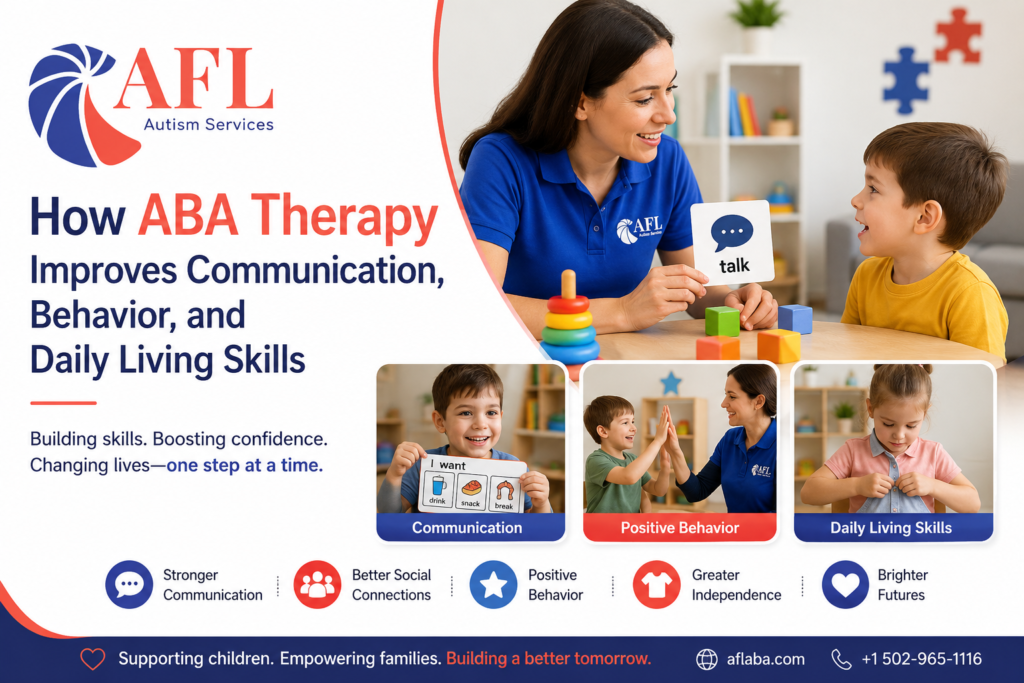

Every parent wants to see their child thrive, connect with others, and feel confident in their own skin. For families raising a child on the autism spectrum, that journey often comes with extra questions. How does my child communicate what they need? Why do certain situations lead to meltdowns? Will they ever be able to dress themselves or join in playtime with other kids?
Autism spectrum disorder affects each child differently. Some children struggle mainly with speech, others with social interaction, and many face a mix of communication, behavioral, and daily living challenges. That’s exactly why skill development matters so much early on. The right support at the right time can open doors that otherwise stay closed for years.
This is where Applied Behavior Analysis, better known as ABA therapy, comes in. It’s one of the most researched and widely used approaches for helping children with autism build real, usable skills, not just in a clinic, but in everyday life.
What Is ABA Therapy?
Applied Behavior Analysis is a structured, evidence-based therapy that looks at how behavior and learning connect. Instead of guessing what might help, ABA therapy relies on data. Therapists observe a child’s behavior, identify patterns, and design specific strategies to encourage helpful skills while reducing behaviors that get in the way of learning or daily functioning.
What makes ABA therapy different from a one-size-fits-all program is the individualized treatment plan. No two children with autism are the same, so no two ABA plans should look identical either. A board-certified behavior analyst (BCBA) typically leads the process, working closely with registered behavior technicians who deliver hands-on sessions with the child. Together, they track progress, adjust goals, and make sure therapy stays aligned with what the child and family actually need.
How ABA Therapy Improves Communication Skills
Communication struggles are one of the most common reasons families seek ABA therapy. When a child can’t express themselves, frustration builds quickly, for both the child and the parents trying to understand them.
Expressing Wants and Needs
One of the earliest goals in ABA therapy is helping a child communicate basic wants and needs. This might start with pointing, using picture cards, or simple gestures before moving toward words. The goal is reducing frustration by giving the child a reliable way to ask for what they want, whether that’s a snack, a toy, or a break.
Building Verbal Communication
For children who are developing speech, ABA therapy breaks language down into manageable steps. Therapists might work on single words first, then short phrases, building toward full sentences. Repetition paired with positive reinforcement helps these skills stick.
Improving Nonverbal Communication
Not every child will communicate primarily through speech, and that’s okay. ABA therapy also strengthens nonverbal communication, including eye contact, gestures, facial expressions, and the use of communication devices or picture exchange systems. These tools give children a voice even before verbal speech develops.
Strengthening Conversation Skills
As communication grows, so does the focus on back-and-forth interaction. Children learn how to answer questions, take turns speaking, and stay on topic during a conversation. These skills matter just as much at home with family as they do in a classroom.
How ABA Therapy Supports Positive Behavior
Behavior is communication too. A meltdown, a refusal, or repetitive behavior often signals something the child can’t yet express in words.
Understanding Behavior Triggers
A core part of ABA therapy involves figuring out what triggers certain behaviors. Is it sensory overload? A change in routine? Difficulty communicating? Identifying the trigger is the first step toward addressing the behavior in a meaningful way, rather than just reacting to it.
Positive Reinforcement Strategies
ABA therapy leans heavily on positive reinforcement. When a child uses a helpful skill, whether that’s asking for help instead of shouting or sitting calmly during a task, that behavior gets reinforced with praise, a preferred activity, or another meaningful reward. Over time, this builds motivation to repeat the helpful behavior.
Reducing Challenging Behaviors
Rather than punishing unwanted behavior, ABA therapy focuses on teaching replacement skills. If a child throws objects when overwhelmed, therapy might teach them to ask for a break instead. This shift, from reaction to replacement, is part of what makes ABA therapy effective long term.
Building Confidence and Independence
As challenging behaviors decrease and communication improves, something else happens too: confidence grows. Children start to trust their own ability to handle situations, which leads to more independence both inside and outside therapy sessions.
Developing Social Skills Through ABA Therapy
Many children with autism want connection but don’t always know how to navigate the unwritten rules of social interaction. ABA therapy helps make those rules clearer and more learnable.
Learning Turn-Taking and Sharing
Simple as it sounds, turn-taking and sharing are skills that often need direct teaching. ABA therapy uses structured activities and games to practice these skills in a low-pressure setting before applying them with peers.
Understanding Social Cues
Reading facial expressions, tone of voice, and body language doesn’t always come naturally. Therapists work on helping children recognize these cues and respond appropriately, which makes everyday interactions feel less confusing.
Building Relationships with Peers
Through guided practice, children learn how to initiate play, respond to others, and build friendships. These social wins often carry the most meaning for families, watching their child connect with another kid for the first time is a milestone many parents never forget.
Participating in Group Activities
Group settings, whether at school, a birthday party, or a sports activity, require a different skill set than one-on-one interaction. ABA therapy helps children practice following group instructions, waiting their turn, and staying engaged in shared activities.
Improving Daily Living Skills
Communication and behavior matter, but so do the everyday tasks that make life run smoothly. ABA therapy puts real focus here too.
Personal Hygiene Skills
Brushing teeth, washing hands, and getting dressed can be broken down into small, teachable steps. ABA therapy uses repetition and reinforcement to help these routines become second nature.
Following Daily Routines
Predictability helps children with autism feel secure. ABA therapy often works on building and following daily routines, like morning and bedtime sequences, so transitions throughout the day feel less stressful.
Mealtime and Feeding Skills
Some children with autism struggle with food textures, mealtime behavior, or trying new foods. ABA therapy can gradually expand a child’s comfort with different foods and improve mealtime behavior in a way that feels manageable, not forced.
Independent Living Skills
As children grow, ABA therapy shifts toward bigger independence goals: tidying up, following multi-step instructions, or managing simple chores. These skills build the foundation for greater self-sufficiency as the child gets older.
The Importance of Family Involvement
ABA therapy doesn’t stop when the session ends. Parents and caregivers play a huge role in making progress stick.
When families actively participate, practicing skills at home, reinforcing what the child learns in therapy, and staying consistent, progress tends to move faster and last longer. Consistency matters because children learn best when expectations stay the same across different environments, not just during therapy hours. Therapists often coach parents directly, giving them tools to reinforce communication, behavior, and daily living skills in everyday family life.
What Results Can Families Expect?
Every child’s path through ABA therapy looks different. Some children make rapid progress in communication but need more time with social skills. Others show steady, gradual growth across every area. Progress isn’t about a fixed timeline, it’s about consistent, measurable steps forward.
Long-term benefits often extend well beyond the specific skills taught. Many families see improvements in overall quality of life: less daily stress, more confidence, and stronger connections within the family. The common thread across nearly every success story is consistency. Children who receive regular, individualized ABA therapy paired with supportive family involvement tend to see the most meaningful, lasting outcomes.
Conclusion
ABA therapy offers children with autism a structured, evidence-based path toward stronger communication, healthier behavior patterns, better social connection, and greater independence in daily life. It’s not a quick fix, but with consistency, the right support team, and active family involvement, the progress can be life-changing.
If you’re a parent wondering where to start, know that you don’t have to navigate this alone.
Adapt For Life – AFL Autism Services provides ABA therapy, autism testing, and family-centered support designed to help children build communication, social, behavioral, and daily living skills. Learn more at aflaba.com or call +1 502-965-1116.