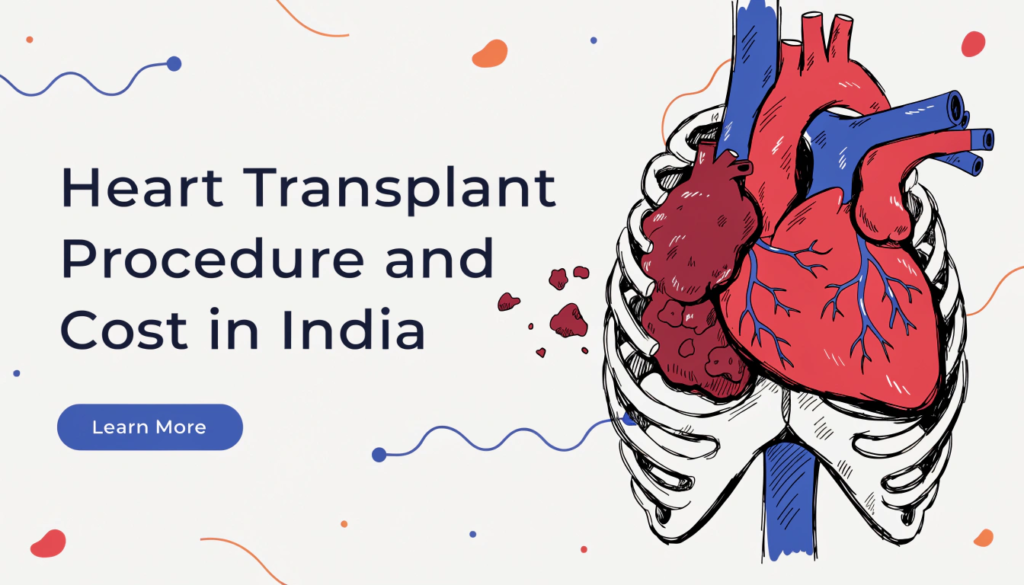

Heart Transplant Treatment in India: Procedure, Cost, Eligibility and Outcomes
Heart transplant treatment in India is a highly specialized procedure offered at a select few centers equipped with the expertise and infrastructure required for such complex surgery. While the procedure is demanding, it represents the best option for patients with end-stage heart failure who have not responded to any other treatment. India has made significant progress in heart transplantation and outcomes are steadily improving.
What Is a Heart Transplant?
A heart transplant involves replacing a failing heart with a healthy heart from a brain-dead donor. It is considered only when the heart is so severely damaged that it cannot pump enough blood to sustain life and no other surgical or medical intervention can help. The procedure requires a perfectly matched donor heart that must be transplanted within 4 to 6 hours of retrieval.
Indications for Heart Transplant
- End-stage heart failure (ejection fraction below 20 to 25 percent)
- Dilated cardiomyopathy unresponsive to medication
- Ischemic heart disease with severe ventricular damage
- Congenital heart defects not correctable by other means
- Hypertrophic cardiomyopathy with severe symptoms
- Viral myocarditis causing irreversible heart damage
Heart Transplant Procedure: Step by Step
The recipient is placed on cardiopulmonary bypass. The diseased heart is removed leaving the posterior walls of the atria intact. The donor heart is sutured into position and connected to the major blood vessels. The heart-lung machine is then removed as the new heart begins to beat. Surgery typically takes 4 to 6 hours.
Heart Transplant Cost in India
The total cost of heart transplant in India ranges from INR 25 lakh to INR 50 lakh covering surgery, hospitalization, and initial post-operative care. Long-term immunosuppression medications add INR 2 to 4 lakh annually.
| Cost Component | Estimated Cost (INR) |
| Pre-transplant evaluation | 2,00,000 to 4,00,000 |
| Surgery and ICU | 15,00,000 to 30,00,000 |
| Post-operative hospital stay (2 to 4 weeks) | 5,00,000 to 10,00,000 |
| First year medications | 2,00,000 to 4,00,000 |
Best Hospitals for Heart Transplant in India
- AIIMS, New Delhi
- Medanta The Medicity, Gurugram
- Apollo Hospitals, Chennai and Hyderabad
- Fortis Escorts Heart Institute, Delhi
- Amrita Institute of Medical Sciences, Kerala
- Narayana Health, Bangalore
Heart Transplant Success Rate in India
India’s top cardiac transplant centers report one-year survival rates of 85 to 90 percent. The five-year survival rate ranges from 70 to 80 percent. These numbers have been improving steadily with better immunosuppression protocols and post-transplant care management.
Life After Heart Transplant
Many heart transplant recipients live for 10 to 20 years or more with the new heart. Patients must take immunosuppressive medications for life, undergo regular cardiac biopsies and echocardiograms in the first year, maintain a heart-healthy lifestyle, and avoid exposure to infections. Most patients are able to return to work and lead active lives.
For comprehensive support on heart transplant treatment in India including hospital identification, waiting list navigation, and post-transplant planning, divinheal.com offers expert medical assistance tailored to each patient’s needs.
Frequently Asked Questions
| Question | Answer |
| How long does a transplanted heart last? | The average survival of a transplanted heart is about 12 to 15 years, though many patients live 20 years or more with good care. |
| What is the waiting time for a heart transplant in India? | Wait times are unpredictable and depend entirely on donor availability. Some patients receive a heart within weeks while others wait months. |
| Can a heart transplant be rejected? | Yes. Rejection can be acute (within weeks) or chronic (over years). Regular biopsies and immunosuppression manage rejection risks. |
| What are the eligibility requirements for heart transplant? | Patients must have end-stage heart failure unresponsive to other treatments, be below 65 to 70 years, have no active malignancy or severe systemic illness, and demonstrate commitment to post-transplant care. |
| How soon can a patient walk after heart transplant? | Most patients begin walking within 1 to 2 weeks after surgery. Cardiac rehabilitation starts during hospitalization. |
| Are there alternatives to heart transplant? | LVADs (Left Ventricular Assist Devices) are used as a bridge to transplant or as destination therapy. However transplant remains the gold standard for eligible patients. |
| Is alcohol allowed after heart transplant? | Alcohol consumption should be completely avoided or strictly limited as it can damage the new heart and interact with immunosuppressive medications. |