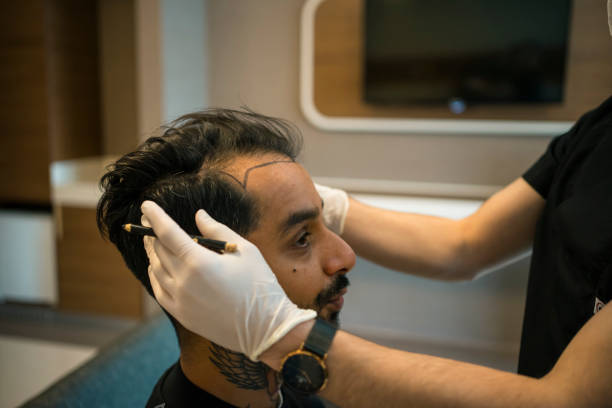

The fear of visible scarring is a primary concern for many patients considering a Hair Transplant in Dubai. While every surgical incision technically results in a scar, modern hair restoration has evolved to make these marks virtually undetectable to the naked eye. The goal of a “scarless” result is achieved through a combination of micro-instrumentation, surgeon precision, and the patient’s adherence to post-operative protocols. By understanding how different techniques impact the skin and utilizing advanced healing therapies, you can ensure that your surgical footprint remains a secret, even with a very short hairstyle.
How Do Modern Techniques Minimize Visible Marks?
In clinical settings, we observe that the size and visibility of a scar are directly proportional to the diameter of the tool used and the depth of the incision.
The primary surgical strategies for scar prevention include:
-
Micro-Punch FUE: Utilizing punches with a diameter of 0.7mm to 0.85mm, which leave tiny, circular white dots that are hidden by surrounding hair.
-
Sapphire Blades: Using gemstone tips that are significantly sharper than steel, creating “v-shaped” rather than “u-shaped” channels, which leads to tighter, cleaner closure.
-
Randomized Extraction: Avoiding “over-harvesting” in one specific area to prevent the appearance of thinning or “moth-eaten” patches in the donor site.
-
DHI Implanter Pens: Eliminating the need for pre-cut channels in the recipient area, which reduces the overall “crusting” and potential for tiny pits.
-
Trichophytic Closure: A specialized suturing technique used in FUT (strip) cases that allows hair to grow through the scar, camouflaging the line.
Is FUE Truly a “Scarless” Procedure?
It is a common marketing claim that FUE is scarless; however, a more accurate clinical description is “minimally scarring.”
What does an FUE scar actually look like?
Because FUE involves removing a small cylinder of tissue, it leaves a tiny, pinpoint-sized mark. In clinical settings, we find that once the skin heals, these marks appear as microscopic white dots. Because they are scattered across the donor area, they are entirely hidden by hair at a “Grade 2” clipper length or longer. Unlike the linear scar of the older FUT method, FUE scars do not distort the natural direction of hair growth or create a “pulled” appearance on the scalp.
What are the Actual Pain Levels During Scar Healing?
During the first week of recovery, the sensations you feel are directly related to the “micro-wounds” closing and the nerves in the scalp regenerating.
What sensations should I expect as the donor site heals?
Based on post-procedure follow-ups, patients describe the first 48 hours as a “mild sunburn” or “prickly” sensation. Between days 3 and 7, as the tiny scabs begin to form and the skin contracts, you may feel an intense “itchiness.” This is a critical safety milestone; scratching the area can widen the micro-scars or cause infection. Most patients rate the discomfort at a 2/10, and applying a medical-grade saline spray or aloe vera gel can immediately soothe the “tight” feeling without damaging the healing tissue.
Realistic Timeline for Scar Maturation
A scar is not a static mark; it is a living tissue that undergoes a transformation over several months before reaching its final, “mature” state.
How does the appearance of the donor area change?
-
Week 1: The area is covered in tiny red crusts; these are protective and should not be picked.
-
Week 2: The crusts fall off, leaving behind small pink dots. This is the peak of the “healing” phase.
-
Month 1–3: The redness fades into a tan or skin-toned color. Some temporary “shock loss” of surrounding hair may occur but will regrow.
-
Month 6: The scars “mature,” turning into tiny, pale white dots that blend with the scalp’s natural pigment.
-
Year 1: The remodeling process is complete; the donor area should look entirely natural, with no visible evidence of the 3,000+ follicles that were moved.
Safety Considerations: Factors That Can Worsen Scarring
Even the most skilled surgeon cannot prevent poor scarring if the patient’s biological environment or post-op behavior is unfavorable.
What are the primary risks for thickened or visible scars?
-
Smoking and Vaping: Nicotine restricts oxygen flow to the skin, which is the leading cause of “wide” or dark scars.
-
Infection: Any localized infection (folliculitis) that is left untreated can destroy the surrounding tissue and leave a larger mark.
-
Tension and Exercise: Returning to heavy lifting too early can stretch the donor skin, causing micro-scars to “ovalize” or become more prominent.
-
UV Exposure: Direct Dubai sun on a healing scalp (in the first 3 months) can cause “permanent hyperpigmentation,” turning the scars dark brown.
-
Genetic Keloid Tendency: Individuals who naturally form thick, raised scars must be identified during the consultation for specialized preventative care.
Why Choose Tajmeels Clinic for Scar-Minimization?
At Tajmeels Clinic, our surgical philosophy is built on “Tissue Preservation.” Our approach to a Hair Transplant in Dubai utilizes the latest Sapphire and DHI technology to ensure the smallest possible incisions. We prioritize a “Low-Density Extraction” strategy, meaning we never take too many grafts from one square centimeter, ensuring your donor area remains look-appropriate even if you choose to shave your head later in life. By choosing Tajmeels Clinic, you are opting for a clinical team that treats your scalp’s integrity with the same importance as your new hairline’s density.
Genuine Patient Perspectives
“I was so worried about the ‘dots’ at the back of my head. I have very dark hair and pale skin, so I thought they’d be obvious. But the team at Tajmeels used a tiny 0.7mm punch, and now, six months later, even my barber can’t find where the hair was taken from.” — Abdullah K.
“The itching in the first week was the hardest part, but following the ‘no-scratch’ rule was worth it. My scalp healed so cleanly. I can wear my hair quite short now and there’s absolutely no sign of a linear scar or any patchy spots.” — Michael B.
Frequently Asked Questions
Can I get a hair transplant if I already have scars from a previous surgery?
Yes, we can often “repair” old linear scars by transplanting new hair directly into the scar tissue using the FUE method.
Does the “Sapphire” blade really reduce scarring?
Clinically, yes; the smoother, sharper edge creates a cleaner wound that heals with less fibrous tissue (scarring) than traditional steel.
What is Scalp Micropigmentation (SMP)?
If a patient has naturally very thin hair and is worried about FUE dots, SMP can be used to “tattoo” tiny pigment dots that perfectly camouflage any micro-scars.
Will the donor area look “thin” after harvesting?
Not if the extraction is randomized correctly. We only take about 15-20% of the available hair in the donor zone, leaving plenty to cover the area.
When can I use scar-fading creams?
You should wait at least 4 weeks and consult your surgeon, as most hair transplant patients do not require any topical scar creams.
Is the “DHI” method better for preventing scars?
DHI is excellent for the “recipient” area because it avoids the need for slits, resulting in a smoother, bump-free skin surface as the hair grows.