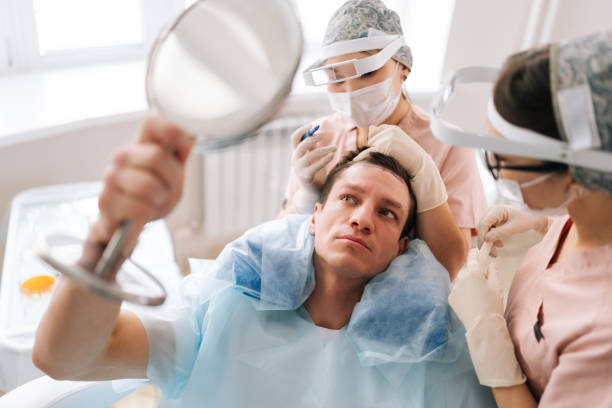

For many patients, a hair transplant is the single most significant investment they will make in their personal appearance. Naturally, the most pressing questions center on longevity: Will it last forever? What is the actual survival rate of the grafts? In 2026, a hair transplant in Abu Dhabi is no longer a “gamble.” With the integration of robotic precision and regenerative holding solutions, success rates for follicular survival have climbed to between 95% and 98% in elite clinical settings.
However, “success” in hair restoration is not just about the hair growing; it is about how that hair matures over five, ten, and twenty years as the rest of your natural hair continues to age.
Defining Success: Graft Survival vs. Aesthetic Longevity
What is the success rate of a hair transplant in 2026?
Success is measured by the percentage of transplanted follicles that successfully “take” and produce a permanent hair shaft. In clinical settings, we observe that the most critical factor for a high success rate is the “Out-of-Body Time”—the duration the graft spends without a blood supply.
The Pillars of Long-Term Success:
-
Follicular Unit Vitality: Using chilled, nutrient-rich solutions (like Hypothermosol) ensures the grafts remain in a state of “suspended animation” until they are implanted.
-
Vascular Integration: The speed at which the scalp’s blood vessels connect to the new bulb. In 2026, we often use PRP (Platelet-Rich Plasma) to “fertilize” the scalp, accelerating this connection.
-
Donor Management: Success also means leaving the back of the head looking natural. We utilize “Safe Zone” harvesting, only taking hair from areas genetically programmed never to fall out.
The Patient Experience: Sensory Walkthrough
What are the actual sensations of a “successful” long-term recovery?
A successful transplant follows a specific biological “clock.” Understanding the sensations associated with each phase helps patients remain confident during the growth journey.
-
Months 1–3 (The “Ugly Duckling” Phase): You will feel a “tingling” or “electric” sensation as the nerves in the scalp heal. The transplanted hair shafts will fall out—this can be alarming, but it is a sign of a successful “reset” of the follicle.
-
Months 4–6 (The Sprouting Phase): You will feel small, firm “stubble” appearing. This can sometimes cause “ingrown hair” sensations (folliculitis), which are easily managed with warm compresses.
-
Year 1 and Beyond: The hair feels like your own because it is your own. You can cut, style, and dye it. Based on post-procedure follow-ups, the “psychological relief” of no longer checking the mirror is the most cited sensory result.
Long-Term Results: The 20-Year Outlook
Will the transplanted hair eventually fall out?
The short answer is no. Hair taken from the “Donor Zone” (the occipital area) is biologically resistant to Dihydrotestosterone (DHT), the hormone responsible for male pattern baldness. Even when moved to the front of the head, these hairs retain their genetic resistance.
-
Year 1: The peak result. Maximum density and thickness are achieved.
-
Year 5: The transplanted hair remains stable. However, your native (non-transplanted) hair may continue to thin if not managed with medical therapy.
-
Year 10+: In clinical settings, we observe that the transplant holds its ground. A successful long-term result is one where the surgeon “future-proofed” the design, ensuring the hairline still looks natural even as the patient’s face matures.
2026 Success Rate Comparison
| Factor | Traditional FUE (Pre-2020) | Advanced FUE/DHI (2026) |
| Graft Survival Rate | 80% – 85% | 95% – 98% |
| Growth Onset | 6–9 Months | 4–6 Months |
| Density Consistency | Variable | Uniform / High-Definition |
| Natural Appearance | Moderate | Superior (Artistic Etching) |
| Long-term Stability | Dependent on luck | Scientifically Verified |
Clinical Insights on Results
“I had my transplant three years ago. The best part isn’t just that the hair is there; it’s that I don’t have to think about it anymore. It survived the ‘shedding’ phase exactly like the doctors said it would, and it’s been thick ever since.” — Yousuf
“I was worried the success rate wouldn’t be as high for my age (55). But because they used the PRP and the specialized holding solution, the growth was incredible by month seven. It’s been five years now, and it still looks as dense as day one.” — Geoffrey
Frequently Asked Questions
What causes a hair transplant to “fail”?
In 2026, the most common cause of failure is poor aftercare (scratching or improper washing) in the first 7 days, or “over-harvesting” by an inexperienced technician. Choosing a clinical environment significantly mitigates these risks.
Do I need a second transplant later in life?
If your hair loss is aggressive, you might need a second procedure to address new balding areas. However, the hair transplanted in the first session will stay. We design our 2026 hairlines to be “conservative yet dense” to preserve donor hair for any future needs.
Does smoking affect the success rate?
Yes. Nicotine constricts blood vessels, reducing the oxygen available to the new grafts. In clinical settings, we observe that smokers have a slightly lower survival rate (around 90%) compared to non-smokers. We recommend quitting at least two weeks before and after.
How do I maintain my long-term results?
While the transplanted hair is permanent, we often recommend “maintenance therapy” (such as Minoxidil, Finasteride, or annual PRP sessions) to protect the other hairs on your head that weren’t part of the transplant.
Why Choose Tajmeels Clinic
At Tajmeels Clinic, we define success by the permanence of your confidence. Our approach to a hair transplant in Abu Dhabi is built on 2026’s most rigorous graft-survival protocols, ensuring that every follicle we move has the highest probability of thriving for a lifetime.
Our male and female-led specialist teams focus on “Future-Proof” design, ensuring your results look as good in twenty years as they do after twelve months. We provide a private, luxury environment where your transformation is supported by clinical excellence and a deep commitment to long-term hair health. We are dedicated to providing a clinical experience that leaves you with a profoundly clear, naturally dense, and expertly managed head of hair.