
There’s something almost magical about the first time you see a gucchi mushroom. Those honeycomb caps, the deep earthy aroma, the way people in the Himalayan belt treat it like gold rather than just another vegetable.
It’s not hype—there’s a reason chefs, nutritionists, and grandmothers all talk about gucchi in the same breath. In 2025, as more people look for natural, whole-food ways to boost health, this wild morel is finally getting the attention it deserves.
This guide walks you through what makes gucchi mushroom so special, how it supports your body from immunity to heart health, and why its price tag actually tells a bigger story.
What Exactly Is Gucchi Mushroom?
Gucchi mushroom (also known as morel mushroom or Morchella esculenta) is a wild mushroom that grows naturally in the forests of the Himalayas and other hilly, cold regions. It doesn’t behave like your regular farmed mushrooms. It refuses to grow easily in controlled environments, which is why people trek through forests after spring rains to collect it by hand.
Because it’s rare, seasonal, and hand-foraged, gucchi mushroom price is much higher than common mushrooms. But you’re not just paying for a trend—you’re paying for dense nutrition, old folk wisdom, and a completely natural food that hasn’t been “designed” in a lab.
Core Gucchi Mushroom Benefits for Your Health
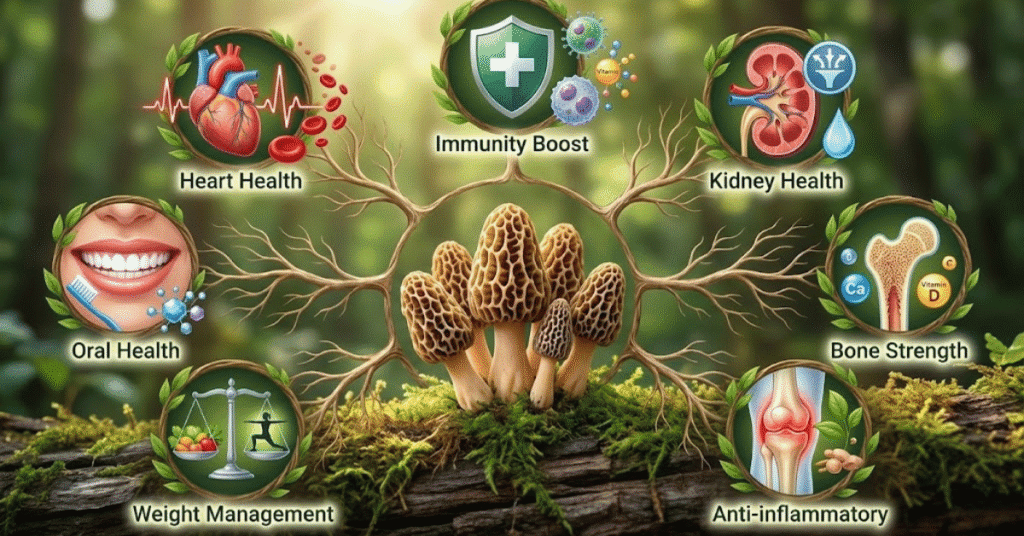
When you look beyond the fancy reputation, gucchi mushroom benefits come down to a powerful mix of protein, fiber, vitamins, minerals, and unique plant compounds. Together, they touch almost every part of your health.
1. Natural Immune System Support
Gucchi mushrooms are rich in antioxidants and certain polysaccharides that support immune function. These compounds help your body fight oxidative stress (the same thing that accelerates ageing and weakens your defenses) and support the activity of immune cells.
In simple words: regular, moderate intake can help your body respond better to everyday infections, seasonal changes, and pollution-heavy days.
2. A Great Protein Option for Vegetarians
If you’re vegetarian or trying to reduce meat, gucchi mushroom can be a pleasant surprise. It contains a meaningful amount of protein along with essential amino acids, making it a smart addition to curries, pulao, or gravies in place of meat.
Unlike many high-protein packaged foods, you’re getting that protein along with fiber, minerals, and almost no junk ingredients.
3. Gut-Friendly Fiber
One of the most underrated gucchi mushroom benefits is its fiber. Good gut health is at the root of good immunity, mood balance, and stable energy. The fiber in gucchi behaves like food for your healthy gut bacteria. Over time, that can mean smoother digestion, better nutrient absorption, and a lower chance of constipation.
If you tend to feel heavy or bloated after rich meals, pairing your diet occasionally with gucchi-based dishes can help balance things out.
4. Vitamin D and Bone Support
Mushrooms are one of the rare plant-based sources of vitamin D, and gucchi is especially valued for this. Vitamin D supports bone health, immunity, and overall hormonal balance. For people who don’t get enough sunlight or don’t consume fish and fortified products regularly, this is a valuable bonus.
Stronger bones and better mineral absorption are part of the long-term gucchi mushroom benefits that don’t make noise immediately but matter a lot as you age.
5. Heart and Metabolic Health
Thanks to its mix of potassium, fiber, and antioxidants, gucchi supports a healthy heart and circulation. Potassium helps balance sodium in the body, which is important for maintaining normal blood pressure. Fiber and antioxidant compounds may also support healthier cholesterol and better blood sugar control when combined with an overall balanced diet.
It’s not a magic cure, but adding gucchi to your meals a few times a season is a smart choice if you care about long-term heart and metabolic health.
Nutrient Highlights: What’s Inside Gucchi?
While exact values can vary based on where and how it grows, gucchi mushroom typically contains:
- Protein
- Dietary fiber
- B-complex vitamins (especially B2, B3, B5)
- Vitamin D
- Minerals like iron, potassium, copper, zinc, and magnesium
This combination explains why people feel more energetic, less sluggish, and more “stable” when they start including gucchi-based dishes occasionally in their diet.
Why Is Gucchi Mushroom Price So High?
If you’ve ever searched online or in local stores, you already know: gucchi mushroom price can be shocking at first glance. It’s often one of the most expensive mushrooms in South Asia.
Here’s why it makes sense:
- It grows wild, not easily farmed.
- It appears only in specific seasons after snowmelt and rain.
- Foraging is done manually over long distances in tough terrains.
- Demand has grown in cities and globally, but supply is still limited.
You’re essentially paying for rarity, hard work, and an intense concentration of nutrition. The good news is, you don’t need to eat it daily. Even a small portion, a few times in a season, can give you a good share of gucchi mushroom benefits.
When comparing options, don’t just look at gucchi mushroom price per kilo—look at whether it’s naturally dried, properly cleaned, and from a trusted region. A slightly higher price from a reliable source often means better quality and fewer impurities.
How to Use Gucchi Mushroom in Your Kitchen
You don’t need to be a chef to enjoy this ingredient. The beauty of gucchi mushroom is that simple recipes bring out its best.
A few ideas:
- Rehydrate dried gucchi in warm water, then use it in a light onion-tomato gravy with basic spices.
- Add it to pulao or biryani to bring smoky, earthy depth.
- Combine it with fresh cream or yogurt-based sauces for a rich, restaurant-style dish at home.
Once you taste it, you’ll understand why people are willing to pay the gucchi mushroom price and still come back for more.