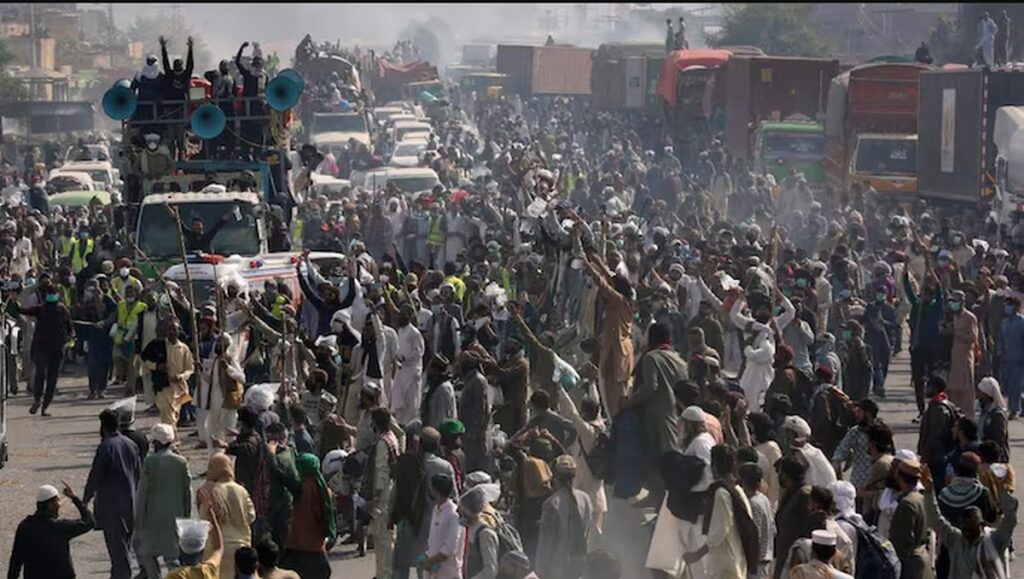

In a decisive move aimed at restoring order and reinforcing the rule of law, the state has launched a robust campaign against violent extremism associated with the Tehreek-e-Labbaik Pakistan (TLP). While the group has long been known for its street power and aggressive protest tactics, recent escalations compelled authorities to take a firmer stance to prevent instability, protect citizens, and uphold national security.
This crackdown marks one of the most significant efforts in recent years to curb politically motivated violence. It reflects a larger shift in the government’s operational strategy toward groups that use agitation, intimidation, and religious sentiment as tools for pressure.
Background: A History of Escalation
TLP emerged as a powerful force by mobilizing large-scale street demonstrations, often tied to sensitive religious issues. Over the years, the group has:
- Blocked major highways
- Organized sit-ins that lasted weeks
- Confronted law enforcement
- Stoked public outrage through fiery rhetoric
While many supporters claim the party is defending core religious values, critics argue that its approach undermines the state by weaponizing religious emotions and encouraging mob behavior.
The most recent wave of unrest escalated into violent clashes, leading to injuries, economic losses, and disruptions across multiple cities. Videos of confrontations between protesters and police added further urgency for officials who feared the situation could spiral out of control.
State’s New Policy: Zero Tolerance for Violence
Responding to the unrest, the state has adopted a zero-tolerance policy toward violent extremism. This approach focuses on:
- Swift arrests of individuals involved in violent acts
- Targeted operations against organizers of unrest
- Enhanced intelligence monitoring of extremist networks
- Strict enforcement of anti-terrorism and public order laws
Officials emphasize that the action is not aimed at silencing political or religious groups but at stopping unlawful behavior that threatens public safety.
Authorities also made it clear that tolerance for street violence and coercive protests has diminished. Any group — regardless of ideology — that resorts to violence will face consequences.
Major Arrests and Investigations
In the aftermath of clashes, law enforcement agencies carried out a series of arrests aimed at holding perpetrators accountable and dismantling the networks behind the violence. These include:
- Key organizers who allegedly coordinated violent demonstrations
- Individuals involved in attacking public property or security personnel
- Social media agitators who circulated inflammatory content to incite unrest
According to security officials, investigations are now focused on financial supporters, digital propagandists, and logistics planners who help sustain on-ground disturbances.
Authorities say the crackdown is designed to prevent repeat incidents—not just punish past offenses.
Why the State Is Taking a Harder Line
Several factors pushed the government toward tougher action:
1. Public Safety
Repeated violent protests have resulted in:
- Injuries to civilians and police
- Disruptions to transportation and daily life
- Damage to public and private property
The government argues that it cannot allow a cycle of recurring unrest to put ordinary citizens at risk.
2. Economic Impact
Cities like Lahore, Karachi, Rawalpindi, and Faisalabad have suffered from suspended business activities and blocked supply routes during TLP-led protests. Prolonged instability scares investors and burdens the national economy.
3. Institutional Integrity
Frequent challenges to state authority undermine confidence in government institutions. Officials maintain that failing to respond firmly sends a message of weakness and emboldens other groups to follow similar tactics.
4. International Pressure
Global bodies and foreign governments have expressed concerns over extremist violence in Pakistan. A firm response helps demonstrate Pakistan’s commitment to countering radicalization and upholding global security standards.
Reactions From Political and Religious Circles
The crackdown has generated mixed reactions:
Support for Government Action
Many political leaders, civil society groups, and security analysts argue that the government’s move was long overdue. They say no group should have the right to:
- Paralyze cities
- Attack police
- Interfere with governance
- Force policies through mob pressure
Supporters also highlight that extremist rhetoric threatens social harmony and religious tolerance.
Criticism From TLP and Its Supporters
TLP leaders reject the state’s narrative, asserting that their movement is peaceful and only seeks to defend religious values. They accuse the government of targeting them unfairly and claim that the crackdown is politically motivated.
The party has vowed to challenge the arrests legally and continue its struggle “through constitutional means.”
Human Rights Debate: Balancing Security and Freedoms
Human rights organizations have raised questions about ensuring:
- Due process in investigations
- Transparency in arrests
- Protection of peaceful protest rights
- Prevention of excessive force by police
Analysts argue Pakistan must find a balance between combating violent extremism and protecting civil liberties. A heavy-handed approach could risk alienating communities, while weak enforcement could encourage radical groups.
The government insists that all actions are within legal bounds and focused solely on individuals involved in violence.
Role of Technology and Digital Monitoring
Experts note that the state has vastly expanded its digital surveillance capabilities in recent years. During the crackdown, authorities monitored:
- Encrypted messaging channels
- Social media accounts
- Coordinated online campaigns
- Propaganda networks spreading misinformation
This digital intelligence has helped identify organizers and prevent future mobilization efforts. Officials say technology will continue playing a central role in tracking violent extremist activity.
Impact on the Public and the Political Landscape
The crackdown has reshaped political realities:
Strengthening State Authority
The government’s decisive action signals it is unwilling to tolerate groups that challenge its writ through force.
Shift in Public Mood
Many citizens, especially those in major cities, are increasingly frustrated with disruptive protests. The crackdown may restore confidence that public order will be preserved.
Pressure on TLP
The party now faces:
- Legal cases
- Internal leadership challenges
- A weakened ability to mobilize supporters
- Declining tolerance from the public and state institutions
Long-Term Implications
Experts foresee several long-term consequences:
1. Reduced Street Power of Extremist Groups
Consistent enforcement of the law could discourage violent protest strategies and restore democratic order.
2. Improved National Security
Monitoring and dismantling extremist networks enhances stability and reduces the risk of radicalization.
3. Need for Dialogue and De-radicalization
Security measures alone cannot address the root causes of extremism. Analysts stress the need for:
- Community engagement
- Educational reforms
- Counter-narratives that challenge extremist ideology
4. State Credibility
Taking decisive action strengthens the state’s legitimacy—both domestically and internationally.
Final Thought
The state’s strong action against violent extremism linked to TLP represents a turning point in how Pakistan addresses radical street movements. By choosing a firm yet legally grounded response, the government aims to restore order, protect public safety, and reaffirm that no group—political or religious—can impose its will through violence.
Whether this marks the beginning of sustained stability or just another brief confrontation will depend on how responsibly political actors behave and how consistently the state upholds the rule of law. But for now, one message is clear: violent extremism will no longer be tolerated, and actions against it will be decisive.