
Few fashion houses have blurred the line between runway and real life as radically as Comme des Garçons. https://commedesgarcons.jp/ Founded in 1969 by Rei Kawakubo, the Japanese label has never followed fashion’s traditional rules. Instead, it rewrote them—shaping not only high fashion but also influencing the evolution of modern streetwear. From avant-garde Paris runways to global street style, Comme des Garçons has become a cultural force rather than just a brand.
Breaking the Rules of High Fashion
When Comme des Garçons first appeared on the Paris fashion scene in the early 1980s, it shocked audiences. Kawakubo’s designs rejected glamour and convention, embracing asymmetry, deconstruction, monochrome palettes, and unconventional silhouettes. Critics initially dismissed the collections as “anti-fashion,” but that rejection became the brand’s greatest strength.
By challenging Western ideals of beauty and luxury, Comme des Garçons expanded what high fashion could be. Clothing became conceptual—more about ideas, emotion, and form than seasonal trends. This intellectual approach influenced countless designers and helped redefine the role of fashion as cultural commentary.
The Bridge Between Runway and Street
While Comme des Garçons is known for its experimental runway collections, its impact extends far beyond elite fashion circles. The brand’s ability to translate avant-garde ideas into wearable pieces made it deeply influential in streetwear culture.
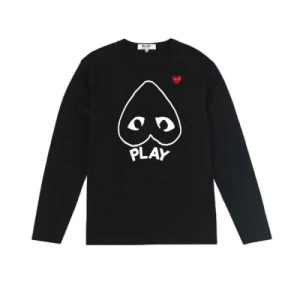
Lines like Comme des Garçons Homme, Homme Plus, and especially Comme des Garçons Play introduced accessible designs without sacrificing identity. The iconic heart logo with eyes became a global streetwear symbol, worn by everyone from fashion insiders to casual consumers. This balance between concept and wearability allowed Comme des Garçons to exist simultaneously in luxury boutiques and everyday street style.
Collaborations That Changed the Industry
Comme des Garçons played a crucial role in redefining collaborations in fashion. Long before brand partnerships became industry standard, Kawakubo was working with global names like Nike, Converse, Supreme, and Louis Vuitton. These collaborations fused high fashion credibility with streetwear authenticity.
Rather than simply placing logos on products, Comme des Garçons approached collaborations as creative experiments. This strategy influenced how modern brands collaborate today, setting a blueprint for meaningful cross-cultural partnerships that merge luxury, street culture, and art.
Breaking the Rules of High Fashion
When Comme des Garçons first appeared on the Paris fashion scene in the early 1980s, it shocked audiences. Kawakubo’s designs rejected glamour and convention, embracing asymmetry, deconstruction, monochrome palettes, and unconventional silhouettes. Critics initially dismissed the collections as “anti-fashion,” but that rejection became the brand’s greatest strength.
Shaping Modern Streetwear Aesthetics
Streetwear as we know it—experimental, oversized, layered, and expressive—owes much to Comme des Garçons. The brand normalized nontraditional fits, gender-fluid fashion, distressed fabrics, and conceptual styling, elements now central to contemporary street fashion.
Designers and labels across the globe have drawn inspiration from Kawakubo’s fearless creativity. What once felt radical on the runway now appears in everyday wardrobes, proving how deeply Comme des Garçons has influenced mainstream fashion culture.
Fashion as Culture, Not Trend
Perhaps the greatest contribution of Comme des Garçons is its insistence that fashion is culture. Kawakubo rarely explains her collections, allowing interpretation and conversation to flourish. This approach has inspired a generation of designers and consumers to view clothing as a form of self-expression rather than a response to trends.
From museum exhibitions to independent street boutiques, the brand’s presence is felt far beyond seasonal fashion cycles. Comme des Garçons doesn’t chase relevance—it defines it.
Conclusion
From runway to culture, Comme des Garçons has reshaped both high fashion and streetwear through innovation, rebellion, and artistic integrity. By refusing to conform, Rei Kawakubo created a brand that transcends clothing and speaks directly to culture itself. Decades later, https://www.postscontent.com/ Comme des Garçons remains proof that true influence comes not from following trends, but from daring to challenge them.