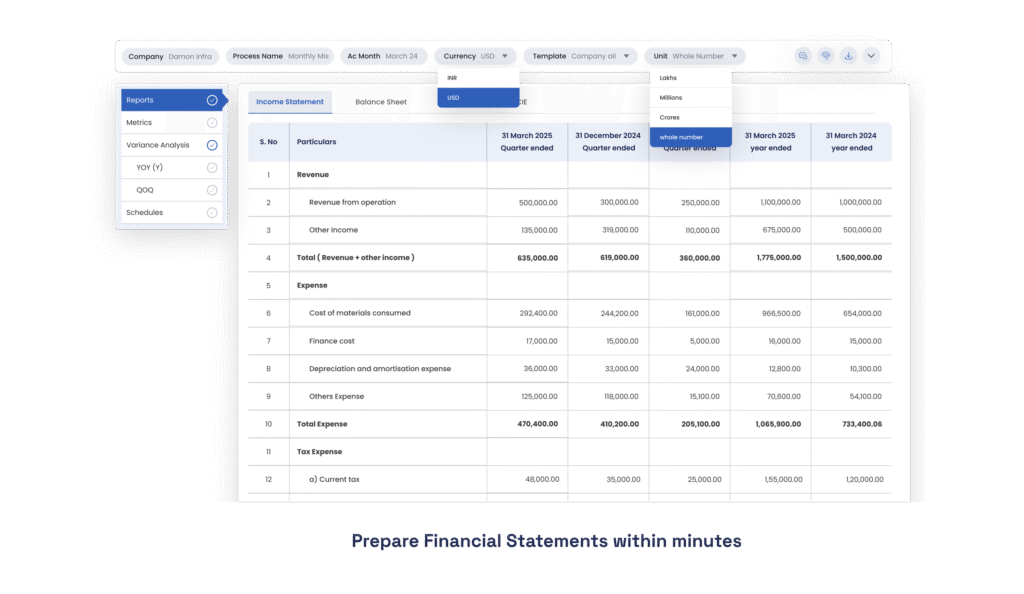

In modern finance, understanding changes in financial performance is critical for strategic decision-making. Flux Analysis is a key tool that allows finance teams to analyze variances between financial statements over different periods, pinpointing the causes of unexpected changes in revenue, expenses, or balance sheet items. By leveraging digital platforms like Result Lane, organizations can perform flux analysis efficiently, reduce manual effort, and generate actionable insights that improve financial planning, reporting, and performance management.
What is Flux Analysis?
Flux analysis, sometimes called variance analysis, is the process of examining differences between financial statement line items over time. It helps finance professionals understand why numbers have increased or decreased from one period to another. Typically, flux analysis focuses on:
* Revenue and Sales Variances: Identifying increases or decreases in sales performance.
* Expense Variances: Highlighting unexpected changes in costs or overhead.
* Balance Sheet Variances: Tracking changes in assets, liabilities, and equity over time.
* Profitability Analysis: Understanding fluctuations in net income or gross margins.
The goal is not only to identify differences but also to investigate underlying causes, such as operational inefficiencies, market fluctuations, or accounting adjustments.
Why Flux Analysis Matters for Finance Teams
For finance teams, flux analysis is more than a compliance or reporting exercise—it is a strategic tool that enhances decision-making. The key benefits include:
1. Enhanced Financial Visibility
Flux analysis provides detailed insight into what drives changes in financial performance. By breaking down variances, finance teams can identify trends, potential risks, and areas of opportunity.
2. Faster and More Accurate Reporting
Manual variance tracking is time-consuming and prone to errors. By using digital flux analysis tools, finance teams can automate calculations, quickly detect anomalies, and generate reliable reports for management or auditors.
3. Supports Strategic Decision-Making
Understanding why revenues, costs, or balance sheet items fluctuate enables executives to make informed decisions, allocate resources effectively, and plan for future growth.
4. Improves Compliance and Audit Readiness
Flux analysis provides detailed explanations for financial changes, creating a transparent audit trail. This documentation is invaluable for regulators, auditors, and internal controls.
5. Identifies Operational Inefficiencies
By analyzing unexpected increases in costs or drops in revenue, flux analysis helps organizations uncover inefficiencies, optimize processes, and implement cost-saving measures.
Common Challenges in Traditional Flux Analysis
While flux analysis is critical, many finance teams struggle with traditional methods due to:
* Manual Spreadsheet Errors: Reliance on spreadsheets increases the risk of miscalculations.
* Time-Intensive Processes: Reviewing variances across multiple accounts and periods can take days or weeks.
* Limited Insight: Basic variance reports may show the “what” but not the “why” behind fluctuations.
* Data Silos: Consolidating data from multiple systems or subsidiaries can be cumbersome and error-prone.
These challenges often limit the value of flux analysis and reduce the speed at which finance teams can respond to financial issues.
How Digital Tools Improve Flux Analysis
Modern digital platforms, like Result Lane’s Flux Analysis solution, address these challenges by automating processes, providing real-time insights, and enhancing collaboration. Key improvements include:
1. Automation of Calculations
Digital tools automatically calculate variances between periods, reducing manual effort and minimizing errors. Finance teams can focus on investigating causes rather than performing repetitive calculations.
2. Drill-Down Capabilities
Advanced platforms allow users to drill down from high-level variances to individual transactions, enabling a clear understanding of underlying factors driving changes.
3. Real-Time Reporting
Cloud-based flux analysis tools provide real-time dashboards, giving management up-to-date insights into financial performance without waiting for month-end reports.
4. Customizable Thresholds and Alerts
Finance teams can set thresholds for acceptable variances and receive alerts when unexpected changes occur. This proactive approach ensures that potential issues are identified early.
5. Integration with Financial Systems
Flux analysis platforms integrate seamlessly with ERP, accounting, and reporting systems, consolidating data from multiple sources and ensuring consistency and accuracy across all reports.
Key Features of Result Lane’s Flux Analysis Tools
Result Lane provides a comprehensive platform for flux analysis that enables finance teams to operate more efficiently and strategically. Key features include:
* Automated Variance Calculations: Compare multiple periods, entities, or accounts automatically.
* Interactive Dashboards: Visualize trends, anomalies, and variances in real-time.
* Detailed Drill-Down: Trace changes from high-level summaries to individual journal entries.
* Threshold-Based Alerts: Receive notifications for significant or unusual variances.
* Regulatory Compliance Support: Maintain audit trails and detailed documentation for internal and external review.
* Scalable Platform: Supports small businesses to multinational organizations with multiple subsidiaries and currencies.
By combining automation, analytics, and cloud accessibility, Result Lane enables finance teams to extract maximum value from flux analysis, improving accuracy, efficiency, and strategic insight.
Best Practices for Effective Flux Analysis
To ensure that flux analysis drives actionable insights, finance teams should adopt the following practices:
1. Establish Clear Reporting Periods: Consistent periods allow meaningful comparisons.
2. Set Materiality Thresholds: Focus on significant variances that impact business decisions.
3. Document Causes: Record reasons behind fluctuations to improve transparency and audit readiness.
4. Leverage Digital Tools: Use platforms like Result Lane to automate calculations and enhance analysis.
5. Review Regularly: Incorporate flux analysis into monthly or quarterly reporting cycles to stay proactive.
Conclusion
Flux analysis is a vital tool for finance teams seeking to understand financial changes, improve reporting accuracy, and support strategic decision-making. By leveraging modern digital platforms like Result Lane’s Flux Analysis solution, organizations can automate variance calculations, gain real-time insights, and create detailed audit-ready documentation, transforming flux analysis from a manual, time-consuming process into a strategic advantage.
For CFOs, controllers, and finance professionals, integrating digital flux analysis tools ensures timely, accurate, and actionable financial insights, empowering organizations to identify risks, optimize performance, and make informed decisions that drive sustainable growth.