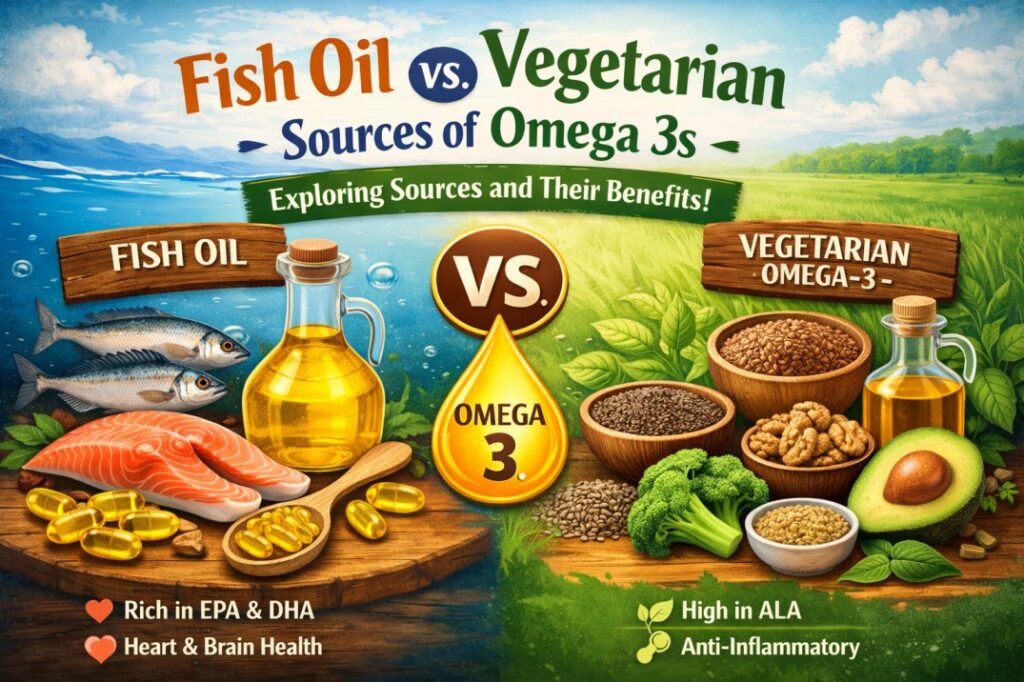

Omega 3 fatty acids are essential nutrients that play a critical role in maintaining overall health. They are vital for heart health, brain function, and reducing inflammation. However, when it comes to Omega 3 sources, many people often wonder whether fish oil or vegetarian options are the better choice. While fish oil has been the most widely known and recommended source, vegetarian sources of Omega 3 are gaining popularity, especially among those following plant-based diets. In this blog, we’ll explore the key differences between fish oil and vegetarian Omega 3 sources, and help you understand which is best for your health goals.
1. What Are Omega 3 Fatty Acids?
Omega 3 fatty acids are polyunsaturated fats that are crucial for various bodily functions. These essential fats are divided into three primary types: EPA (eicosapentaenoic acid), DHA (docosahexaenoic acid), and ALA (alpha-linolenic acid).
- EPA and DHA are found predominantly in marine sources like fish and algae, while ALA is mainly present in plant-based sources such as flaxseeds, chia seeds, and walnuts.
- Health Benefits: Omega 3s are known to support heart health, reduce inflammation, enhance brain function, and improve joint health. They can also help maintain a healthy immune system and provide numerous other benefits that contribute to a balanced and healthy body.
While EPA and DHA have been linked to numerous health benefits, ALA must be converted by the body into EPA and DHA for it to be fully effective. However, this conversion process is inefficient, making EPA and DHA more readily available from marine sources.
2. Fish Oil as a Source of Omega 3s
Fish oil is one of the most popular and well-known sources of Omega 3 fatty acids, specifically EPA and DHA. It is derived from the tissue of oily fish like salmon, mackerel, sardines, and anchovies. These fish are rich in Omega 3s, making fish oil an excellent supplement for those who need a higher intake of EPA and DHA.
Benefits of Fish Oil:
- Heart Health: Fish oil is widely known for its ability to promote heart health. Omega 3s help reduce triglyceride levels, lower blood pressure, and prevent the buildup of plaque in arteries.
- Brain Function: EPA and DHA are essential for maintaining brain health. They contribute to cognitive function, enhance mood, and may reduce the risk of neurological disorders like Alzheimer’s disease.
- Inflammation: Fish oil’s anti-inflammatory properties help reduce joint pain and the risk of chronic diseases associated with inflammation.
- Fish Oil Supplements: For those who do not consume fish regularly, omega 3 fish oil supplements are an easy and convenient alternative. High-quality fish oil supplements are available in various forms, including capsules, liquid, and soft gels.
Considerations: While fish oil provides many benefits, it is important to choose high-quality, purified supplements to avoid contaminants like mercury and PCBs, which can accumulate in fish tissues.
3. Vegetarian Sources of Omega 3s
For those who follow a vegetarian or vegan lifestyle, vegetarian Omega 3 sources are an excellent option. These plant-based sources are primarily rich in ALA, although some, like algae oil, also provide EPA and DHA.
Top Vegetarian Sources of Omega 3s:
- Flaxseeds and flaxseed oil are among the richest sources of ALA.
- Chia seeds, hemp seeds, and walnuts are also great sources of ALA, which can be converted into EPA and DHA by the body, albeit inefficiently.
- Algae oil is a unique plant-based source that provides DHA and EPA, similar to fish oil, making it a great option for vegans and vegetarians.
Benefits of Vegetarian Omega 3 Sources:
- Heart Health: Just like fish oil, plant-based Omega 3s help support heart health by reducing triglycerides, improving cholesterol levels, and lowering the risk of cardiovascular diseases.
- Anti-inflammatory: ALA from vegetarian sources is known to have anti-inflammatory properties, helping to reduce joint pain and promote overall well-being.
- Sustainable and Vegan-friendly: Algae oil and other plant-based Omega 3 sources are ideal for those following a vegan or vegetarian diet. Algae oil, in particular, is a great alternative to fish oil for those looking to avoid animal products.
- Easy to Incorporate into Diet: Plant-based Omega 3s can be easily added to smoothies, baked goods, salads, and other dishes.
4. Fish Oil vs. Vegetarian Omega 3 Sources: Key Differences
While both fish oil and vegetarian Omega 3 sources offer significant health benefits, there are some important differences between the two:
- Omega 3 Types: Fish oil provides EPA and DHA, which are the most bioavailable forms of Omega 3s. Vegetarian sources primarily provide ALA, which must be converted by the body into EPA and DHA. This makes fish oil more efficient in delivering these essential fatty acids.
- Conversion Efficiency: The body’s conversion of ALA to EPA and DHA is limited. This means that vegetarian sources like flaxseeds and walnuts may require a larger intake of ALA to achieve the same benefits that fish oil provides with EPA and DHA.
- Vegan and Vegetarian Options: For those avoiding animal products, algae oil is the best alternative to fish oil. It provides both EPA and DHA, making it the most comparable plant-based source to fish oil.
5. How Much Omega 3 Do You Need?
The recommended daily intake of Omega 3 varies depending on age, health status, and lifestyle. However, general guidelines suggest:
- General Health: Around 250-500 mg of combined EPA and DHA per day.
- Heart Disease: Up to 1,000 mg of EPA and DHA per day.
- Pregnancy: Pregnant women should aim for about 300 mg of DHA per day.
If you’re getting your Omega 3 from vegetarian sources, you may need to consume higher amounts of ALA to achieve the same benefits, as ALA is not as efficiently converted into EPA and DHA.
Vegetarian Options: For example, 1 tablespoon of flaxseed oil contains around 7,000 mg of ALA, while 1 ounce of chia seeds contains about 5,000 mg.
6. Which Omega 3 Source Is Right for You?
The decision between fish oil and vegetarian Omega 3 sources depends largely on your dietary preferences and health goals.
- If you follow a vegetarian or vegan diet, plant-based sources like flaxseeds, chia seeds, walnuts, and algae oil are your best options.
- If you’re looking for the most bioavailable source of Omega 3s and don’t follow a vegetarian or vegan diet, fish oil or algae oil are excellent choices.
- Health Concerns: If you’re focused on heart health or brain function, both fish oil and algae oil provide EPA and DHA directly, which are more effective than ALA.
Conclusion
Both fish oil and vegetarian Omega 3 sources offer remarkable health benefits, but the best source depends on your dietary preferences and health goals. Fish oil is a powerful source of EPA and DHA, while vegetarian sources like flaxseeds and algae oil provide a plant-based alternative. For those following a vegan or vegetarian lifestyle, algae oil is a great option as it provides both EPA and DHA, making it comparable to fish oil. Ultimately, choosing the right Omega 3 source depends on your unique needs and preferences.
Prioritize Omega 3-rich foods in your diet for better heart health, improved brain function, and reduced inflammation, regardless of whether you choose fish oil or vegetarian Omega 3 sources.