
Are you still relying on physical force to divert fish runs? Why do we spend millions on massive concrete walls when the fish often ignore them? Have you ever wondered if your bypass system is actually causing more stress than it solves? For many dam operators, the answer is a quiet “yes.” It is time for a fresh perspective on fish guidance tools. We need to stop treating fish like objects to be diverted. Instead, we must treat them as biological partners that respond to specific water cues. A smarter river isn’t one with more concrete; it is one with more intelligence.
Why are traditional barriers failing our native species?
For decades, the industry standard was the physical screen. We built walls to keep fish out of turbines. But these methods often create “confusion zones.” In these areas, water flow is turbulent and loud. Fish stall and get exhausted. This is where migration fails. According to NOAA Fisheries, passage must be “safe, timely, and effective” to meet recovery goals. If a fish spends two days trying to find a ladder entrance, your system is a bottleneck. We need tools that work with instincts, not against them.
How does behavioral guidance change the journey?
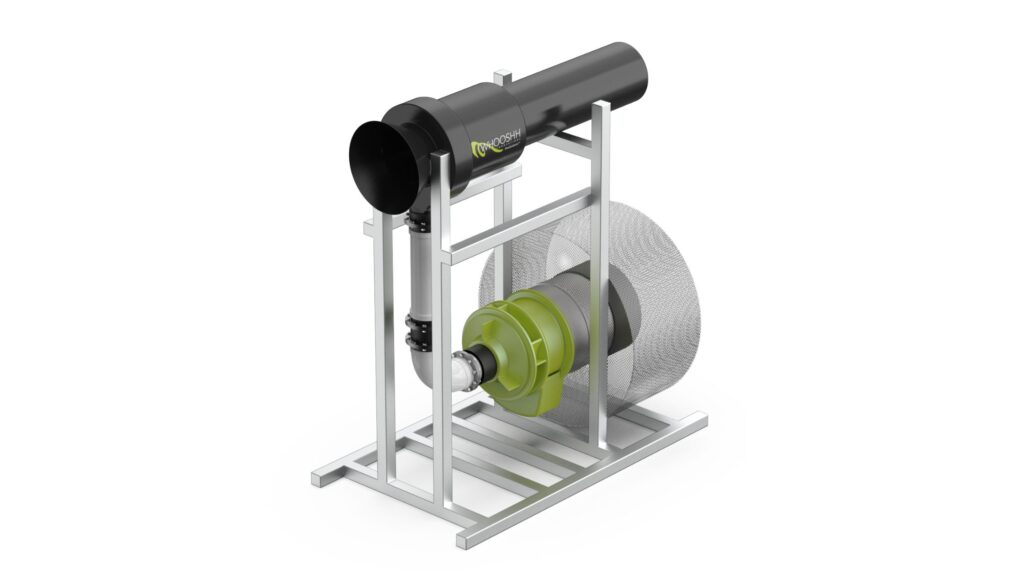
What if we used the water itself as a roadmap? This is the core of FlowGuidance™ technology. Rather than just blocking a path, we enhance the flow to create a signal fish want to follow.
- Natural Response: Velocity triggers a “rheotactic” swimming response.
- Low Stress: Fish glide toward the entry without hitting physical mesh.
- Fewer Clogs: Behavioral tools don’t catch river debris like screens do.
- Modular Design: Our tools adjust easily as river levels fluctuate.
By using water as a guide, we keep fish moving. We reduce “search time” at the dam. This saves vital energy for the journey ahead.
Can we automate the search and sort process?
The biggest challenge in guidance is the “mix.” Not everything in the water is a native salmon. Invasive species are a constant threat. This is where modern fish guidance meets artificial intelligence. Traditional systems let everything through. This is an ecological nightmare. Whooshh uses a different approach. As fish enter our portals, they are scanned instantly. The AI recognizes species in milliseconds. If an invasive fish enters, the system triggers a gate. The intruder is diverted. Native fish continue upstream. This happens 24/7 without a human in sight.
Why is “Best Available Science” the new compliance standard?
Federal regulators are tightening the screws. The U.S. Fish and Wildlife Service emphasizes that data-driven restoration is the only way forward. Manual clickers and murky windows are no longer enough. You need proof. Our scanning portals create a “digital twin” of every fish. We capture 18 high-definition images per migrant. This provides a verifiable audit trail for your annual reports. You can prove to stakeholders that your tools are working. This transparency builds trust with federal agencies.
Is modular infrastructure the answer to climate change?
Our rivers are changing faster than our concrete. Warmer water and unpredictable flows are making old ladders obsolete. We need infrastructure that can move. Whooshh systems are modular. You can deploy them in weeks. You can adjust the angle of the ASP Fishway. You can move transport tubes as the bank shifts. This flexibility is vital for the current regulatory environment. We aren’t just building for today. We are building for a resilient future where hydropower and healthy fish coexist.
Bridging the gap with Whooshh Innovations
The future of the river is a partnership between engineering and biology. We don’t have to choose between clean energy and healthy runs. Whooshh Innovations is proud to offer a smarter way home for our native fish. By using intelligent guidance and pneumatic transport, we reclaim the water that drives your business. Let’s modernize your facility together. Let’s replace those outdated plumbing solutions with a high-speed data highway. Your fish are ready for a better glide. Are you?
Frequently Asked Questions
- How do behavioral guidance tools save hydropower water?
Traditional ladders require a massive attraction flow. Behavioral guidance uses targeted water velocity to lure fish into a smaller portal. This allows you to redirect the majority of that “spilled” water back into your turbines.
- Can the AI distinguish between wild and hatchery fish?
Yes. The 18-angle scan identifies the presence or absence of an adipose fin in milliseconds. This allows for automated sorting and more accurate broodstock management without human handling.
- Is the pneumatic tube safe for sensitive species?
Absolutely. The system uses a misted, frictionless environment. Fish glide on a cushion of air and moisture. This keeps their heart rate low and protects their slime coat better than traditional hauling.
- How does the system handle invasive species?
When the AI detects an invasive marker, it triggers an automated gate. The invasive fish is diverted to a removal tank, while native fish proceed upstream without interruption.
- What is the installation timeline for modular guidance tools?
Unlike concrete projects that take years, Whooshh systems can be deployed in weeks. They are designed to retrofit into existing dams or function as standalone remote stations.