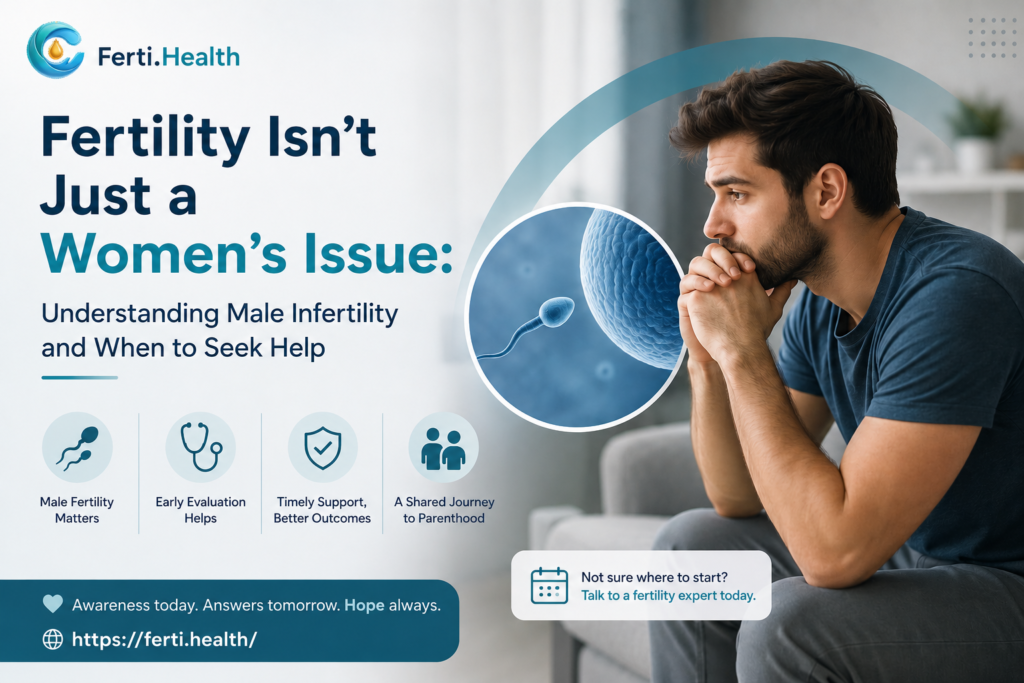

When couples struggle to conceive, the focus often falls on women’s reproductive health. However, fertility is a shared responsibility, and male factors contribute to nearly half of all infertility cases. Despite this, many men delay seeking medical advice due to misconceptions, stigma, or the assumption that fertility challenges only affect women.
Understanding male infertility, recognizing its causes, and seeking timely medical evaluation can make a significant difference in improving the chances of conception. The good news is that many causes of male infertility are treatable, especially when identified early.
What Is Male Infertility?
Male infertility refers to a man’s inability to contribute to pregnancy after a couple has been trying to conceive for at least 12 months through regular, unprotected intercourse. It is commonly linked to issues with sperm production, sperm quality, sperm movement, or the delivery of sperm.
While infertility can be emotionally challenging, it is important to remember that experiencing fertility issues does not reflect masculinity or overall health. Many men with fertility problems are otherwise healthy and can become fathers with the right medical support.
Common Causes of Male Infertility
Several medical, lifestyle, and environmental factors can affect male fertility.
Low Sperm Count
A lower-than-normal sperm count reduces the likelihood of fertilizing an egg. This is one of the most common causes of male infertility and may result from hormonal imbalances, genetic conditions, infections, or certain medications.
Poor Sperm Motility
Healthy sperm need to swim effectively to reach and fertilize the egg. Reduced sperm motility can significantly lower the chances of natural conception.
Abnormal Sperm Morphology
The shape and structure of sperm play an important role in successful fertilization. Abnormally shaped sperm may have difficulty penetrating the egg.
Varicocele
A varicocele is an enlargement of veins within the scrotum. It can affect sperm production by increasing the temperature around the testicles. Fortunately, this condition is often treatable through minor surgical procedures.
Hormonal Imbalances
Hormones regulate sperm production. Low testosterone levels or disorders affecting the pituitary gland or thyroid can interfere with normal fertility.
Lifestyle Factors
Everyday habits can also influence reproductive health. Smoking, excessive alcohol consumption, recreational drug use, obesity, chronic stress, lack of sleep, and poor nutrition have all been associated with reduced sperm quality.
Medical Conditions
Diabetes, sexually transmitted infections, previous surgeries, cancer treatments, and certain chronic illnesses may also affect male fertility.
Signs That Shouldn’t Be Ignored
Unlike many other health conditions, male infertility often develops without noticeable symptoms. However, some men may experience:
- Difficulty conceiving after one year of trying
- Pain or swelling in the testicles
- Changes in sexual function
- Reduced facial or body hair
- Problems with ejaculation
- A history of undescended testicles or previous reproductive surgery
Even if no symptoms are present, couples experiencing difficulty conceiving should consider fertility assessments for both partners rather than focusing on only one individual.
How Is Male Infertility Diagnosed?
A fertility specialist will usually begin with a detailed medical history and physical examination before recommending diagnostic tests.
Semen Analysis
This is the most important test for evaluating male fertility. It measures:
- Sperm count
- Sperm motility
- Sperm morphology
- Semen volume
- Overall sperm health
Sometimes, more than one semen analysis is recommended because sperm quality naturally fluctuates over time.
Blood Tests
Hormone testing helps identify imbalances that may affect sperm production.
Ultrasound
Scrotal ultrasound can detect conditions such as varicocele or blockages within the reproductive tract.
Genetic Testing
In selected cases, genetic screening may be recommended, particularly when sperm counts are extremely low or absent.
Can Lifestyle Changes Improve Male Fertility?
For many men, healthier lifestyle choices can support better reproductive health.
Some practical steps include:
- Maintain a healthy body weight.
- Eat a balanced diet rich in fruits, vegetables, whole grains, nuts, and lean protein.
- Exercise regularly without excessive overtraining.
- Stop smoking and avoid recreational drugs.
- Limit alcohol intake.
- Get 7-9 hours of quality sleep each night.
- Manage stress through meditation, walking, or relaxation techniques.
- Avoid prolonged exposure to excessive heat, such as frequent hot tubs or saunas.
- Minimize exposure to environmental toxins whenever possible.
Although lifestyle improvements may not solve every fertility problem, they can significantly enhance overall reproductive health and complement medical treatments.
Treatment Options for Male Infertility
Treatment depends on the underlying cause.
Possible options include:
- Medication to correct hormonal imbalances
- Antibiotics for infections
- Surgery for varicocele or reproductive tract blockages
- Assisted reproductive techniques such as intrauterine insemination (IUI)
- In vitro fertilization (IVF)
- Intracytoplasmic sperm injection (ICSI) for severe male infertility
Advances in reproductive medicine have made parenthood possible for many couples who previously had limited options.
When Should You See a Fertility Specialist?
It is generally recommended to seek medical advice if:
- You have been trying to conceive for 12 months without success.
- The female partner is over the age of 35 and pregnancy has not occurred after six months.
- There is a known medical condition affecting fertility.
- You have previously undergone chemotherapy or reproductive surgery.
- You have concerns about sperm health or hormonal issues.
Early evaluation helps identify potential problems sooner and allows couples to explore the most appropriate treatment options.
Healthcare providers that focus on comprehensive fertility evaluation, such as Ferti Health, assess both male and female reproductive health to develop personalized treatment plans based on each couple’s unique circumstances.
Breaking the Stigma Around Male Fertility
Male infertility remains surrounded by misconceptions, causing many men to delay seeking support. Open conversations, routine fertility assessments, and greater awareness can help remove unnecessary stigma.
Infertility is a medical condition, not a personal failure. Seeking professional advice early can improve treatment outcomes and reduce the emotional stress associated with prolonged uncertainty.
Conclusion
Fertility challenges affect both partners, making it essential for couples to approach diagnosis and treatment together. Male infertility is more common than many people realize, and modern medical advances offer a wide range of effective diagnostic tools and treatment options.
Whether fertility concerns stem from lifestyle factors, medical conditions, or unexplained causes, early intervention can make a meaningful difference. If conception has been difficult despite regular attempts, consulting an experienced fertility specialist is a positive step toward understanding the cause and exploring the most suitable path to parenthood.
Frequently Asked Questions
1. Can male infertility be treated?
Yes. Many cases can be managed with lifestyle changes, medication, surgery, or assisted reproductive technologies, depending on the underlying cause.
2. Does age affect male fertility?
Yes. Although men remain fertile for longer than women, sperm quality and DNA integrity can gradually decline with age.
3. How long does it take to improve sperm quality?
Sperm production takes approximately 70-90 days, so lifestyle changes typically require at least three months before measurable improvements may be seen.
4. Is a semen analysis painful?
No. A semen analysis is a simple, non-invasive laboratory test used to evaluate sperm health.
5. Can healthy men still experience infertility?
Yes. Many men with no obvious health concerns may still experience fertility issues, which is why professional evaluation is important when pregnancy does not occur as expected.