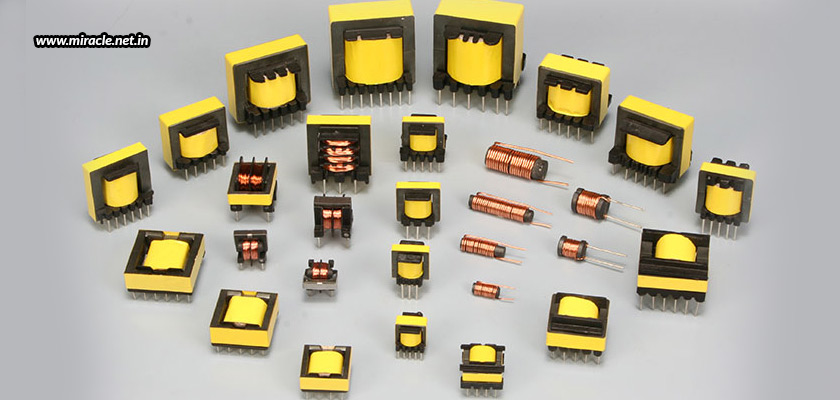

Ferrite inductors are essential components in modern electronic systems. Their ability to operate efficiently at high frequencies while maintaining compact dimensions makes them widely used across industries such as telecommunications, automotive electronics, industrial automation, renewable energy systems, and consumer electronics. However, performance is only one aspect of a successful inductor design. Safety is equally important. Inadequate insulation, poor thermal management, excessive current stress, and improper handling can lead to equipment failures, reduced efficiency, electrical hazards, and even fire risks. Ensuring inductor safety has become a critical aspect of product reliability and regulatory compliance. This blog explores the key safety considerations associated with ferrite inductors, focusing on insulation systems, thermal management techniques, electrical stress management, and handling practices.
Why safety matters in ferrite inductors
Although a ferrite inductor may seem like a straightforward component, it functions under conditions that expose it to considerable electrical, thermal, and mechanical stresses. During operation, inductors encounter voltage fluctuations, temperature changes, electromagnetic forces, and environmental factors that can gradually impair performance if not adequately addressed. Designing inductors with a focus on safety not only protects the equipment but also ensures the safety of operators, maintenance staff, and end users. An inductor built with appropriate safety margins is more likely to enjoy a longer lifespan, sustain efficiency, and meet international standards. As electronic systems grow increasingly compact and powerful, the repercussions of insufficient safety measures become more pronounced, underscoring the necessity for meticulous inductor design.
Insulation
Insulation in ferrite inductors helps prevent electrical leakage, short circuits, and dielectric breakdown by providing safe separation between winding turns, the ferrite core, and nearby conductive components. Multiple insulation layers work together to enhance dielectric strength, reliability, and operational safety.
- Choosing appropriate insulation materials
The selection of insulation material significantly influences the safety and longevity of the inductor. These materials must endure operating voltages, extreme temperatures, humidity, and long-term aging. Commonly used insulation materials include polyester films, polyimide films, fiberglass sleeves, epoxy resins, and specialized insulating papers. The chosen material should retain its electrical and mechanical properties throughout the expected lifespan of the inductor. Engineers must also take into account insulation class ratings, which indicate the maximum temperature that the insulation can safely tolerate without degradation.
- Creepage and clearance distances
A crucial aspect of inductor safety is ensuring proper creepage and clearance distances. Clearance is defined as the shortest distance through air between conductive components, while creepage is the shortest distance along an insulating surface. Inadequate spacing can lead to arcing, electrical tracking, flashover incidents, and premature insulation failure. Designers are required to adhere to relevant standards to guarantee sufficient spacing based on operating voltage and environmental factors.
- Avoiding insulation failure
Insulation degradation typically occurs gradually. Factors such as excessive heat, moisture, contamination, vibration, and voltage stress can hasten the aging process. Preventive strategies include utilizing high-quality insulation materials, keeping operating temperatures within specified limits, safeguarding inductors against moisture ingress, and performing regular inspections during maintenance intervals.
Thermal management
Heat poses a major risk to the reliability and safety of ferrite inductors. Even the best-designed inductors can experience premature failure if thermal conditions are not adequately managed. While ferrite materials have lower core losses than traditional iron cores at high frequencies, heat generation is still an inevitable issue.
- Sources of heat generation
Temperature increases in ferrite inductors can be attributed to several factors, including core losses, copper losses, skin effect, and proximity effect. Ferrite cores produce magnetic losses that escalate with frequency and flux density, resulting in elevated temperatures and diminished efficiency. Additionally, the resistance in inductor windings generates heat, with losses amplifying as load current increases. At high frequencies, current tends to concentrate near the surface of the conductor, which raises effective resistance and heat production. Moreover, magnetic interactions between neighbouring conductors lead to uneven current distribution, causing further losses and heating.
- Consequences of excessive heat
Excessive heat can lead to severe issues such as insulation breakdown, core damage, solder joint failures, decreased efficiency, shortened component lifespan, and heightened fire risk. In extreme cases, prolonged overheating may result in total inductor failure.
- Designing for effective thermal management
These challenges can be addressed through thoughtful design. Emphasizing the selection of appropriately sized cores, strategic component placement, optimized winding configurations, loss reduction, and ensuring sufficient airflow around the inductor can help mitigate localized heat accumulation.
- Material selection and thermal performance
The selection of ferrite material significantly affects thermal performance. Various ferrite formulations are tailored for specific frequency ranges and operating temperatures. Choosing the right material minimizes core losses and curtails heat generation.
- Cooling methods
Depending on the specific application, various cooling strategies can be utilized. For example, numerous ferrite inductors depend on natural convection for heat dissipation. Conversely, in systems with higher power requirements, fans may be employed to enhance airflow and facilitate better heat transfer. In specialized scenarios, further thermal management solutions like heat sinks and thermally conductive materials can be integrated to boost cooling efficiency. Additionally, encapsulation can enhance mechanical protection and resistance to environmental factors; however, designers must ensure that heat can still be effectively released.
Electrical safety considerations
Many ferrite inductors operate in power electronic systems where significant voltages and currents are present. As a result, maintaining electrical safety is essential to ensure reliable performance, prevent component damage, and reduce the risk of system failures.
- Managing voltage and current stress
High operating voltages and currents can place substantial stress on an inductor’s insulation system and winding structure. Excessive electrical stress may lead to insulation degradation, localized heating, dielectric breakdown, or reduced performance over time. Designers often optimize winding arrangements, conductor sizing, insulation systems, and core selection to ensure electrical stress is distributed safely and efficiently.
- Protection against voltage surges
Electronic systems often face transient voltage spikes resulting from switching activities, lightning strikes, or disturbances in the power grid. These surges can surpass the insulation rating of the inductor, leading to immediate damage. Protective devices such as surge suppressors, MOVs, transient voltage suppressors, and snubber circuits are employed to shield inductors from abrupt voltage fluctuations.
- Safe testing procedures
Electrical testing is a critical component of inductor qualification and quality assurance. Testing may include insulation resistance measurements, inductance verification, thermal performance evaluation, surge testing, and reliability assessments under simulated operating conditions. Proper lockout, isolation, and safety procedures should always be followed when evaluating inductors used in high-power applications.
Mechanical safety and handling practices
While electrical and thermal considerations are often emphasized, the significance of mechanical safety should not be overlooked. Ferrite materials are naturally brittle and may fracture when exposed to excessive force.
- Proper handling of ferrite cores
Ferrite cores must be handled with care throughout transportation, assembly, and maintenance processes. Dropping a core or applying uneven pressure during assembly can result in cracks that may not be immediately apparent but can greatly impact inductor performance.
- Secure mounting
Inductors need to be mounted securely to reduce vibration and mechanical stress. Inadequate mounting can cause structural damage, increase noise levels, lead to premature failure, and diminish reliability. Utilizing appropriate fixtures and mounting methods is essential for ensuring long-term stability.
Quality manufacturing and compliance with safety standards
Quality manufacturing ensures ferrite inductors meet strict safety and performance requirements through precise production processes, material selection, and rigorous testing, resulting in reliable operation, long service life, and compliance assurance.
- Quality manufacturing
Safety starts with quality manufacturing. Each phase, from selecting materials and ensuring precise winding to insulation and testing, impacts the reliability of inductors. Miracle Electronics is one of the leading ferrite inductor exporters India to the USA, specializing in high-frequency magnetic components designed for demanding industrial and electronic applications. With strong engineering capability, strict quality control systems, and compliance-driven manufacturing processes, the company ensures reliable inductor performance across global markets.
- Compliance with safety standards
The safety of inductors is regulated by various international standards and regulatory frameworks. Compliance guarantees that inductors satisfy established criteria for electrical safety, thermal performance, insulation integrity, and reliability. These standards typically cover insulation requirements, isolation distances, temperature limits, flammability ratings, and testing protocols. Manufacturers must integrate these criteria throughout the design and manufacturing processes to ensure safe operation in practical environments.
Ferrite inductors play a critical role in modern electronic systems, but achieving reliable performance requires more than selecting the appropriate core material and electrical specifications. Safety considerations must be integrated throughout the entire product lifecycle. From preventing insulation failure and managing temperature rise to controlling electrical stress and complying with industry standards, every safety measure contributes to long-term reliability and performance. As electronic systems continue to demand higher power densities, greater efficiency, and increased miniaturization, the importance of inductor safety will only continue to grow. By combining sound engineering practices, quality manufacturing, and proactive maintenance, organizations can ensure that ferrite inductors operate safely, efficiently, and dependably for years to come.
Resource: Ferrite Inductor Safety Considerations