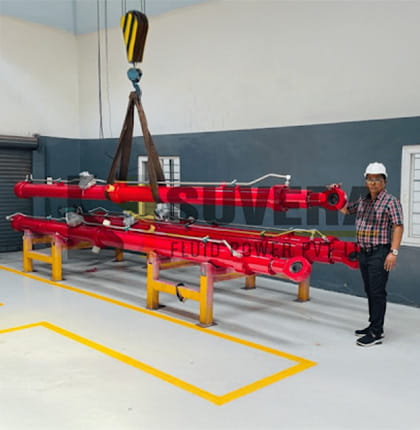

Hoists play a crucial role in modern industries by making it possible to lift, lower, and move heavy loads safely and efficiently. From construction sites and manufacturing plants to warehouses and workshops, hoists reduce manual labor, improve productivity, and enhance workplace safety. While they all serve the same basic purpose, hoists come in several types, each designed for specific applications and operating conditions. Understanding these differences helps in selecting the right hoist for the job.
What Is a Hoist?
A hoist is a mechanical device used to lift or lower loads using a drum, chain, or rope. It is powered manually, electrically, pneumatically, or hydraulically, depending on the design. Hoists are typically used vertically, often in combination with cranes or fixed structures, to handle materials that would otherwise be too heavy or dangerous to move by hand.
Manual Hoists
Manual hoists are operated by human effort and are commonly used for light to moderate lifting tasks.
Chain Hoists:
Hand chain hoists use a looped chain that the operator pulls to raise or lower the load. They are simple, durable, and do not require electricity, making them ideal for remote locations, maintenance work, or occasional lifting tasks.
Lever Hoists:
Lever hoists use a ratcheting lever mechanism instead of a hand chain. They are compact and versatile, often used for pulling, tensioning, or positioning loads in tight spaces. Lever hoists are common in equipment installation, rigging, and alignment tasks.
Electric Hoists
Electric hoists are powered by electricity and are widely used in industrial environments where frequent or heavy lifting is required.
Electric Chain Hoists:
These hoists use an electric motor to drive a chain, providing smooth and consistent lifting. They are suitable for assembly lines, workshops, and warehouses where loads need to be lifted repeatedly with minimal operator effort.
Electric Wire Rope Hoists:
Wire rope hoists use a steel cable wound around a drum. They are designed for higher lifting capacities and longer lifting heights compared to chain hoists. These hoists are commonly found in construction, heavy manufacturing, and material handling applications.
Pneumatic Hoists
Pneumatic hoists operate using compressed air and are often chosen for environments where electricity may pose a risk.
These hoists are commonly used in hazardous or explosive settings, such as chemical plants, oil refineries, and mines. Since they do not generate sparks, pneumatic hoists offer a safer alternative in such conditions. They also perform well in high-temperature or wet environments and are known for their durability and smooth load control.
Hydraulic Hoists
Hydraulic hoists use pressurized fluid to generate lifting force. They are capable of handling very heavy loads and are often integrated into specialized equipment.
Applications include automotive service lifts, industrial platforms, and heavy-duty material handling systems. Hydraulic hoists provide excellent load control and high lifting power, but they are typically more complex and require regular maintenance to prevent leaks and ensure reliable operation.
Overhead and Trolley Hoists
Hoists are often mounted on overhead beams or trolleys to allow horizontal movement in addition to vertical lifting.
Fixed Hoists:
These are mounted in a stationary position and lift loads straight up and down. They are suitable for dedicated lifting points, such as workstations or loading areas.
Trolley-Mounted Hoists:
These hoists are attached to a trolley that moves along a beam, enabling the load to be positioned across a wider area. They are commonly used in warehouses, factories, and maintenance bays to improve material flow and efficiency.
Applications Across Industries
Hoists are used across a wide range of industries, including construction, manufacturing, logistics, mining, automotive repair, and shipbuilding. They assist in lifting raw materials, positioning machinery, loading and unloading goods, and performing maintenance tasks. By reducing physical strain on workers and improving precision, hoists contribute significantly to safer and more productive workplaces.
Conclusion
Hoists are indispensable tools in material handling, offering reliable solutions for lifting tasks of varying complexity and scale. From simple manual hoists to advanced electric, pneumatic, and hydraulic systems, each type serves a specific purpose and environment. Choosing the right hoist depends on factors such as load capacity, frequency of use, operating conditions, and safety requirements. By understanding the different types of hoists and their applications, industries can optimize efficiency while maintaining high safety standards.
Other recommended Link: Hydraulic Scissor Lift Supplier in India