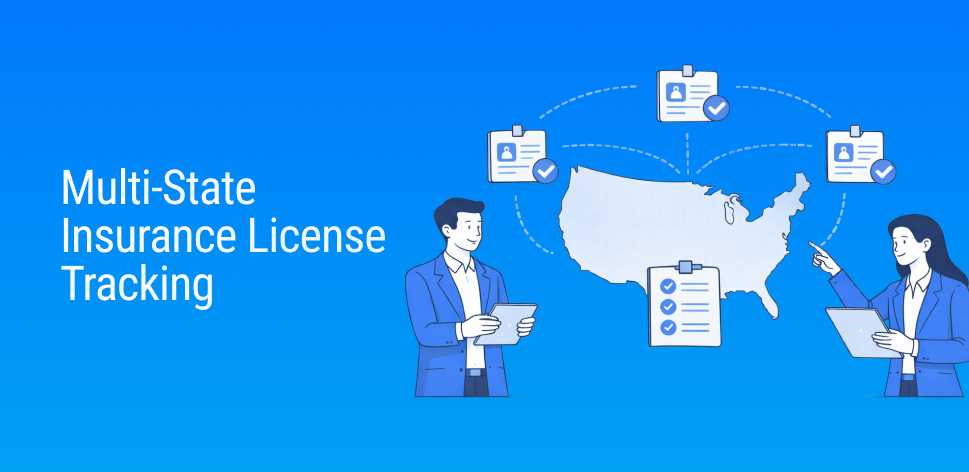

In modern insurance operations, agencies are expanding beyond single-state boundaries and operating across multiple jurisdictions. This growth introduces a new level of complexity in managing producer licensing and regulatory compliance. Each state enforces its own licensing requirements, renewal timelines, and appointment rules, making compliance a continuous operational responsibility.For insurance agencies, maintaining accurate and up-to-date licensing data is not optional. It is a regulatory requirement. Compliance teams must ensure that every producer is licensed, properly appointed, and authorized before conducting business. As the number of producers and states increases, manual processes quickly become inefficient and prone to error.This is why many agencies are turning to centralized compliance solutions like Agenzee to streamline operations.
Understanding the Complexity of Multi-State Licensing
The insurance industry in the United States operates under a decentralized regulatory model. Each state has its own department of insurance, which defines licensing rules and compliance standards.
This means a producer working in multiple states must:
- Maintain active licenses in each state
- Follow different renewal cycles
- Complete state-specific continuing education
- Meet appointment requirements for each carrier
Insurance compliance means consistently meeting these requirements. Without a centralized system, tracking this information becomes fragmented and difficult to manage.
Key Compliance Risks Agencies Face
Compliance teams often deal with recurring operational risks that can impact business continuity. These risks are typically caused by outdated systems or manual tracking methods.
Common issues include:
- Expired licenses that are not identified in time
- Missing or inactive carrier appointments
- Incorrect or duplicated producer records
- Lack of real-time visibility into compliance status
A producer code is a unique identifier assigned by an insurance carrier. It connects a producer to the carrier’s system. If licensing and appointment data are not aligned with the producer code, inconsistencies can occur.Regulatory guidelines state that insurance carriers must verify a producer’s license before allowing them to sell or service policies. Non-compliance can result in penalties and audits.
How License Tracking Works in Practice
A structured workflow is essential for managing multi-state licensing effectively. Most insurance organizations follow a standardized process to maintain compliance.
A typical workflow includes:
- License Verification
Validate the producer’s license using systems such as NIPR. - State Requirement Check
Review expiration dates, education requirements, and status in each state. - Carrier Appointment Validation
Ensure the producer is properly appointed with the relevant carrier. - Producer Code Management
Assign or verify the producer code used by carriers for tracking. - Renewal Tracking
Monitor upcoming expirations and send alerts for renewals. - Reporting and Documentation
Maintain audit-ready records for regulatory inspections.
A structured license tracking system helps agencies automate these steps and reduce manual workload.
The Role of Automation in Compliance
As agencies scale, manual processes are no longer sustainable. Automation plays a critical role in improving efficiency and reducing compliance risk.
Modern compliance platforms provide:
- Real-time license verification
- Automated renewal reminders
- Centralized producer data
- Integrated appointment tracking
- System-wide synchronization
Reduce compliance risk with a centralized license tracking solution tailored for insurance agencies.
Best Practices for Agencies Managing Licensing at Scale
To effectively manage multi-state licensing, agencies should follow proven best practices:
Centralize Data Management
All licensing, appointment, and producer data should be stored in a single platform.
Automate Verification Processes
Automated checks ensure licenses remain active and compliant.
Align Licensing and Appointments
Tracking both together prevents compliance gaps.
Maintain Audit-Ready Records
Documentation should be easily accessible for audits and reporting.
Adopt Scalable Systems
Platforms like Agenzee help agencies handle growth without increasing operational complexity.
Conclusion
Managing multi-state license tracking is a critical responsibility for insurance agencies operating in regulated environments. As operations grow, the complexity of compliance increases, making manual tracking inefficient and risky.By implementing structured workflows and adopting automation, agencies can reduce compliance risks, improve efficiency, and maintain accurate records across all jurisdictions. Centralized systems provide the foundation needed to support long-term growth and regulatory compliance.