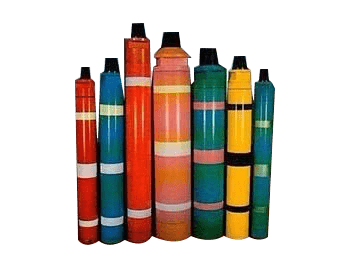

In the dynamic world of mining, construction, and quarrying, the DTH (Down-The-Hole) hammer plays a pivotal role in achieving efficient and precise rock drilling. DTH hammers are indispensable for deep hole drilling applications where conventional drilling tools fall short. Behind these heavy-duty tools are manufacturers committed to engineering excellence, material science, ergonomic design, and innovation. This blog explores the critical role of DTH hammer manufacturers, the evolution of their products, core design principles, quality benchmarks, and how they influence performance across industries — without focusing on individual company names.
What Is a DTH Hammer? A Quick Overview
A DTH hammer is a percussion drilling tool used primarily in rock drilling. Installed directly behind the drill bit and driven by compressed air, the hammer delivers powerful, high-frequency impacts to break rock efficiently. This technology allows:
- Deeper penetration rates
- Improved hole straightness
- Higher productivity in hard rock formations
Their applications span mining, water well drilling, geothermal energy projects, construction piling, and infrastructure development.
The Heart of Production: How Manufacturers Approach DTH Hammers
Manufacturing DTH hammers requires a blend of engineering precision and material expertise. The process typically involves:
1. Material Selection and Metallurgy
The quality of steel and alloy composition determines a hammer’s durability. Manufacturers focus on:
- High-grade steels with excellent impact resistance
- Heat treatment techniques that enhance toughness
- Wear-resistant alloys that withstand abrasive environments
These materials ensure the hammer sustains high-velocity impacts and prolonged service life even in the harshest drilling conditions.
2. Precision Machining and Component Engineering
A DTH hammer comprises several critical parts: piston, bit, housing, valves, and seals. Precision engineering ensures:
- Accurate fit and alignment of components
- Optimal airflow for efficient energy transfer
- Enhanced sealing to prevent performance loss
Modern machining technologies like CNC (Computer Numeric Control) ensure consistency and high tolerances, crucial for reliability and performance.
3. Innovative Design Features
Manufacturers invest in continuous product development to improve:
- Energy transfer efficiency — maximizing impact power with minimal compressed air wastage
- Ease of maintenance — designs that simplify part replacement in field conditions
- Weight optimization — balancing tool mass for enhanced handling without compromising strength
Manufacturers often collaborate with drilling professionals to understand field challenges and tailor their designs accordingly.
Ensuring Performance: Testing and Quality Assurance
Before a DTH hammer reaches the market, stringent testing is conducted. Manufacturers typically focus on:
1. Field Testing
Drills are tested in real rock formations to measure:
- Penetration rate (meters per hour)
- Air consumption efficiency
- Durability over extended drilling cycles
Field tests replicate real job site conditions to benchmark performance.
2. Laboratory Analysis
In controlled environments, components undergo:
- Impact resistance testing
- Fatigue testing
- Vibration analysis
These tests determine how well parts endure repeated stress and help improve future iterations.
3. Quality Certifications and Standards
Adherence to industrial and safety standards ensures consistency. Leading manufacturing facilities implement:
- ISO quality management systems
- Standardized inspection protocols
- Traceability of materials and processes
These practices build reliability and trust for operators who depend on DTH hammers for critical drilling tasks.
Meeting Market Demands: Customization and Versatility
No two drilling projects are exactly the same. Manufacturers recognize this by offering:
1. Multiple Hammer Sizes
From smaller bores for exploration to large diameters for heavy applications, manufacturers provide a range of sizes and pressure ratings to match equipment specifications.
2. Tailored Solutions
Based on geological surveys and drilling objectives, customized configurations help optimize performance. For example:
- Hard rock formations
- Mixed or fractured rock
- Water well drilling
Customization ensures that hammer design, bit type, and operating parameters align with the drilling environment for higher productivity.
Sustainability and Operational Efficiency
As industries become more environmentally conscious, manufacturers are focusing on:
- Reduced energy consumption — efficient hammer designs that lower compressed air requirements
- Longer service life — decreasing part replacements and material waste
- Improved ergonomics — lighter, user-friendly tools that reduce operator fatigue
These efforts not only improve sustainability but also enhance cost-effectiveness over project lifecycles.
Challenges and Innovations Ahead
Like any engineering segment, DTH hammer manufacturing faces challenges:
- Balancing strength and weight — optimizing durability without making tools too heavy
- Adapting to diverse geological conditions — developing versatile products that maintain high performance in variable rock types
- Integrating digital technologies — smart tools, sensors, and data analytics could redefine drilling predictive maintenance
Innovation remains central to meeting these challenges, driving manufacturers to explore new materials, designs, and technologies.
Conclusion: The Backbone Behind Efficient Drilling
Manufacturers of DTH hammers serve as the backbone of drilling operations across multiple industries. Their commitment to material excellence, precision engineering, quality testing, and continuous improvement ensures that drillers can rely on tools that are robust, efficient, and suited to diverse field conditions.
Whether drilling deep into the earth for mineral extraction, laying foundations for infrastructure, or reaching groundwater reserves, the craftsmanship and innovation behind DTH hammers empower industries to accomplish more with reliability and performance.
In an era where efficiency, sustainability, and adaptability matter more than ever, the role of DTH hammer manufacturers continues to be vital — shaping not just tools, but the future of drilling technology.
Other recommended Link : Button Bits Manufacturers