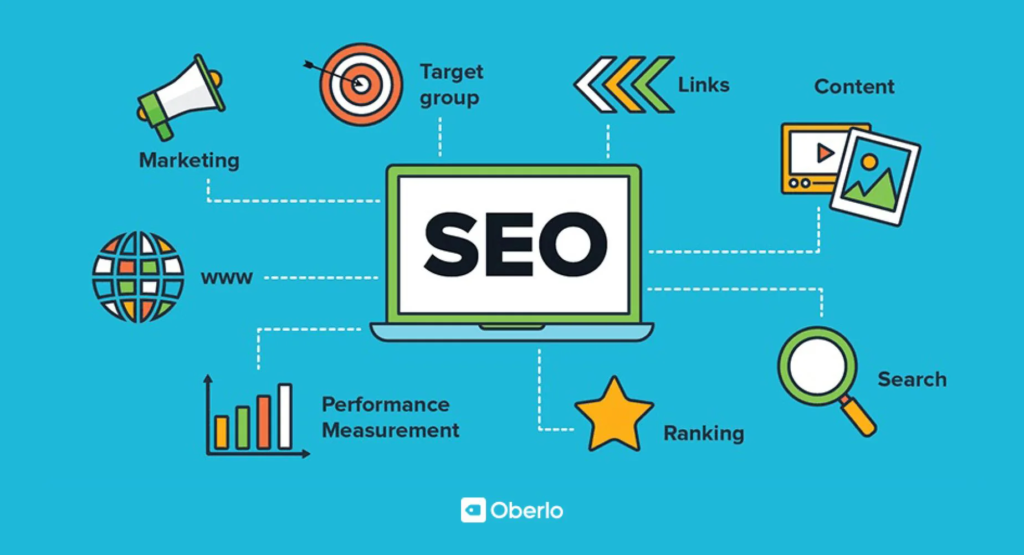

In today’s competitive digital economy, businesses are no longer fighting just for traffic — they are competing for control. Not control in an aggressive sense, but control over visibility, authority, and customer attention within their niche. That’s where Search Engine Optimization evolves from a marketing tactic into a strategic growth system.
Designing Search Engine Optimization for long-term market control means building an ecosystem that consistently positions your brand at the center of your industry’s search landscape. It’s not about chasing keywords randomly. It’s about owning conversations, dominating search intent, and becoming the most trusted answer source in your market.
Understanding Market Control in SEO
Market control in search doesn’t mean ranking for one keyword. It means:
-
Ranking for core commercial terms
-
Appearing for informational queries
-
Dominating related long-tail searches
-
Building brand recognition within search results
When someone searches for services in your niche, your brand should appear repeatedly — across blog posts, service pages, FAQs, and even featured snippets.
Search engines like Google reward brands that demonstrate depth and consistency. The more comprehensive your coverage, the more authority you gain.
Step 1: Build Topical Dominance
Long-term market control begins with topical authority. Instead of creating scattered content, structure your website around core themes.
For example:
-
Create a comprehensive pillar page for your main service.
-
Develop supporting articles addressing subtopics.
-
Interlink all related content strategically.
-
Update content regularly to maintain relevance.
This cluster-based structure signals expertise. When search engines recognize that your website covers a subject thoroughly, they are more likely to prioritize your pages.
Topical dominance reduces competition because you are not fighting for isolated keywords — you are owning an entire subject area.
Step 2: Align Content with Intent Layers
Search behavior follows stages:
-
Awareness (informational searches)
-
Consideration (comparisons, reviews)
-
Decision (service-based or transactional queries)
To control your market, your SEO strategy must cover all three layers.
Many businesses only optimize service pages. That limits reach. Instead, design content that guides users from awareness to conversion — keeping them within your ecosystem.
When users repeatedly interact with your content across different search stages, brand authority strengthens. This consistent engagement builds trust signals that improve long-term rankings.
Step 3: Engineer Technical Strength
Long-term control is impossible without technical stability.
A strong SEO foundation includes:
-
Optimized site architecture
-
Fast loading speeds
-
Mobile-first design
-
Structured data implementation
-
Clean internal linking
-
Proper indexing management
Major algorithm shifts, such as the Google Core Update, often reward technically sound websites while penalizing weak infrastructures.
Technical SEO ensures your growth remains stable instead of vulnerable.
Step 4: Strategic Authority Acquisition
Authority determines who leads and who follows.
Market leaders earn backlinks through:
-
Original research
-
Industry insights
-
Expert-driven content
-
Digital PR campaigns
-
Partnerships and collaborations
Instead of chasing random backlinks, focus on strategic authority building. Each high-quality backlink strengthens your domain’s competitive power.
Over time, authority compounds. New pages rank faster. Competitive keywords become easier to capture. Market visibility becomes more predictable.
Step 5: Optimize for Brand Recall
Search Engine Optimization for market control goes beyond keywords — it integrates branding.
When users:
-
Search your brand directly
-
Recognize your name in results
-
Click your listing consistently
-
Spend more time on your website
Search engines interpret this as trust and relevance.
Strong brand signals increase click-through rates and reduce dependency on constant optimization tweaks. Over time, your brand becomes synonymous with your service category.
That’s real market control.
Step 6: Focus on Sustainable Growth Metrics
Instead of tracking daily ranking fluctuations, measure:
-
Growth in total ranking keywords
-
Organic traffic consistency
-
Share of voice within your niche
-
Conversion performance from organic traffic
-
Keyword footprint expansion
Market control is visible in long-term trend lines — not short-term spikes.
The Competitive Advantage of Long-Term SEO Design
Businesses that design SEO strategically gain multiple advantages:
-
Reduced reliance on paid advertising
-
Greater resilience during algorithm updates
-
Higher customer trust
-
Improved lead quality
-
Lower customer acquisition cost
Most competitors focus on immediate wins. Very few design systems for dominance. That gap creates opportunity.
When your content ecosystem is comprehensive, technically optimized, and authority-driven, competitors struggle to penetrate your search presence.
Final Thoughts
Designing Search Engine Optimization for long-term market control requires patience, structure, and strategic thinking. It’s about building a digital infrastructure that positions your brand as the primary answer source within your industry.
Instead of asking, “How do we rank today?” ask, “How do we own this market for the next five years?”
When SEO is designed with long-term intent — supported by technical excellence, authority building, and strategic content architecture — it becomes more than a marketing channel. It becomes a competitive advantage.
And in a digital economy driven by search visibility, long-term control is the ultimate goal.